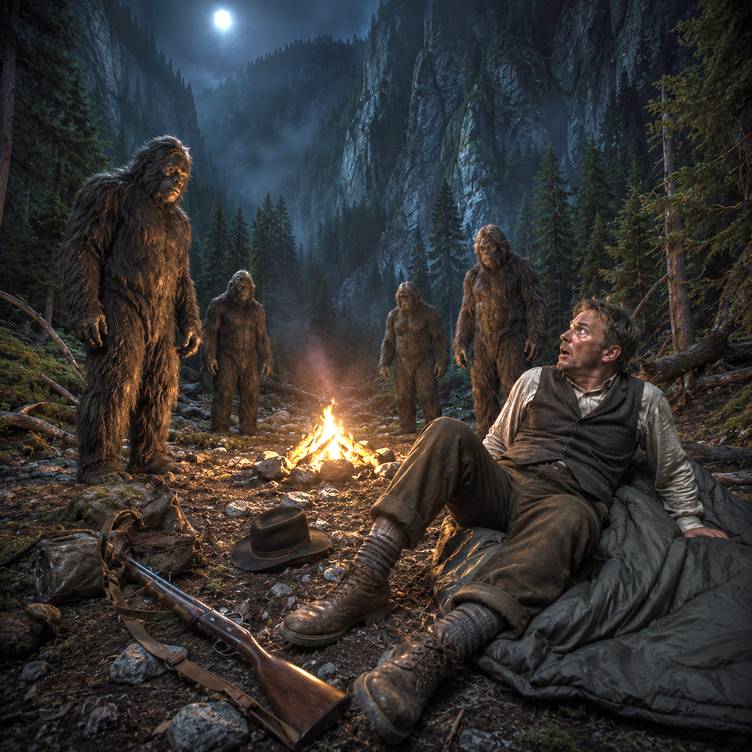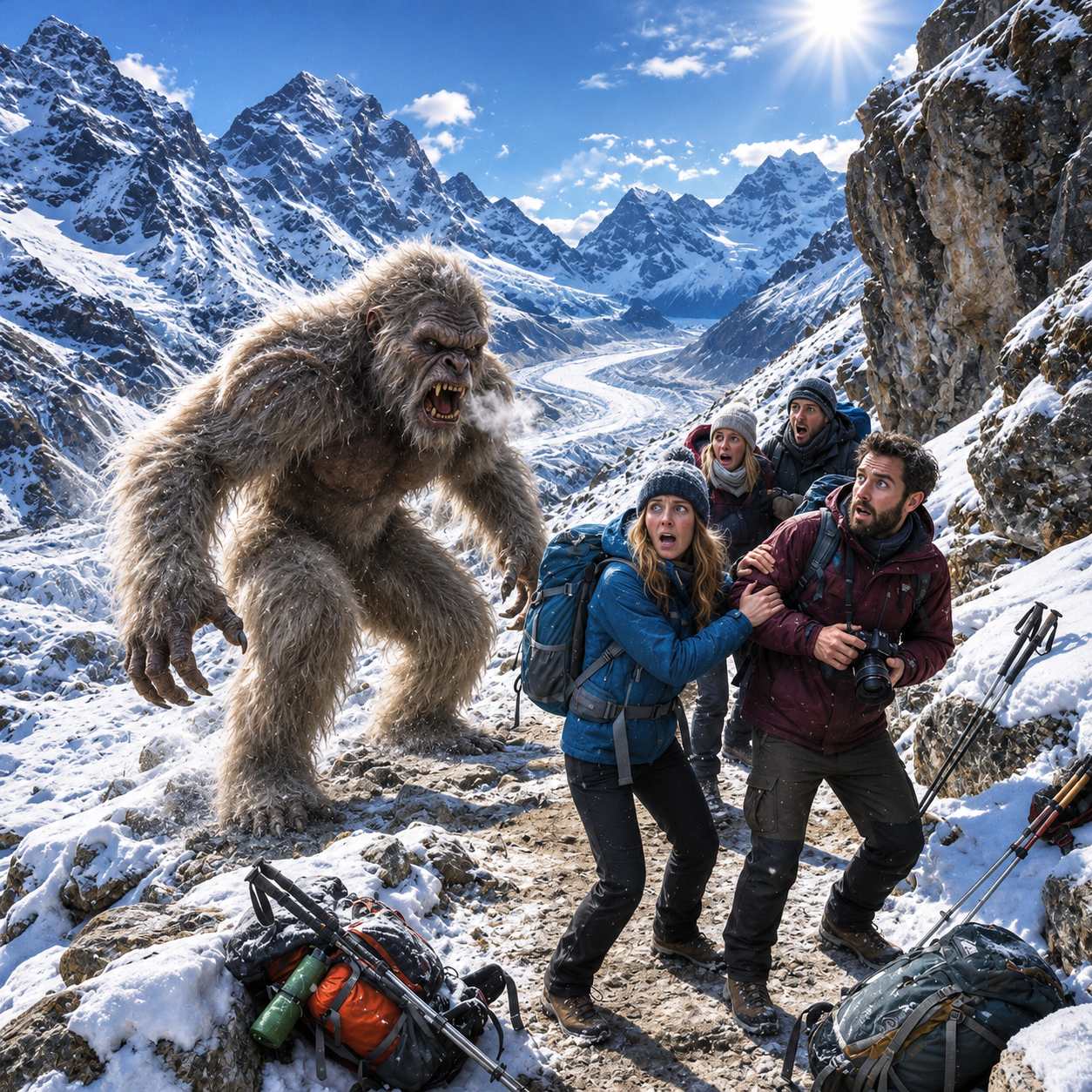
The 1957 Oilman Sightings in Nepal and term “Yeti” Explained
In the late 1950s, reports circulated about American oilman Tom Slick, who organized several expeditions searching for the Yeti. The Tibetan and Sherpa word “Yeti” when directly translated is “g.ya dred, meaning “rock bear” and Dzuteh “cattle bear”. The reason for Yeti meaning a bear is because the people of the Himalayas, for many centuries, are unfamiliar with apes.
No apes are scientifically known to live in the Himalayas. The only known fossils of apes in the Himalayas goes back millions of years even before that great mountain range ever existed, but the territory did. And these apes were the reddish brown haired ancestors of the orangutans who last lived in that territory millions of years ago because of changing climates and habitat loss made them leave. Yet they stood only three and half feet to five feet tall and were very muscular.
These very early orangutans walked on all fours, were not bi-pedal. They would stand at times by hoisting themselves up against a tree. Some people wonder if a few of these ancestor orangutan account for at least part of the yeti legend, even if that legend is very ancient. An interesting feature of the yeti is that it often called “The Abominable Snowman” which gives the impression of the creature being related to humans rather than a big ordinary bear.
There are many, many people who believe the yeti is actually a bigfoot creature; also known as a “sasquatch”; an ape-like creature that has partly human-looking face which is of yet officially undocumented by modern science to exist.
There are four types of bears scientifically known to live in Himalayas are the brown bear, blue bear, black bear, and the sloth bear. In the eastern Himalayas, there is the red panda, but actually it does not belong to the true bear species but into its own taxonomic family. And monkeys live there. True apes are much larger than monkeys and lack tails.
The type of monkeys living in the Himalayas are the gray langur, rhesus macaque, assamese macaque, and the arunachal macaque. Members of the expeditions searching for the yeti have collected reports from local people who claimed to have encountered strange, large, hairy creatures in remote mountain regions.
Descriptions varied. Some witnesses described a creature walking upright, while others described something more animal-like. The yeti hunting expeditions reportedly found tracks and gathered local testimony, but they never obtained a living or dead specimen that could establish the Yeti as a scientifically recognized animal according to the reports.

Various Yeti Encounters And Sightings
In 1974, in Machhermo, Nepal, near Mount Everest, a 19 year old Sherpa yak herder named Lhakpa Domani reported being attacked near the pastures of the village by a giant ape or bear resembling creature. She survived the attack, but several of her yaks were murdered by the creature that broke their necks or twisted their horns. Numerous Himalayan villagers have reported encounters with creatures that they believed were Yetis.
In one common type of account, a witness sees a large, dark, hairy figure moving across a mountain slope or through a forest. The creature may initially appear to be walking upright. Because sightings often occur at a considerable distance, in poor weather, or at dusk, it can be difficult to determine exactly what the witness saw. A large bear can sometimes stand upright or move briefly on its hind legs.
From a distance, particularly in snow or heavy clothing-covered terrain, this could appear remarkably humanlike.Such reports remain interesting because witnesses often insist that the creature was not an ordinary bear.
The Soviet Yeti Expeditions
During the Soviet era, scientists and researchers became interested in reports of wild, humanlike creatures living in remote regions of Asia. Expeditions investigated reports of strange footprints, unusual animal remains, and eyewitness accounts.
Some researchers believed that an undiscovered population of large primates might exist in isolated mountain areas. Others suspected that the sightings involved bears, known animals, or misidentification. In August of 1957, a Russian hydrologist named Alexander Pronin on the Pamir Mountains (primarily in modern day Tajikistan) reported the twice he had seen a stocky, bi-pedal hair covered creature near the Balyandkhik River.
After the Pronin reported was published in “Komsomolskaya Pravda” tremendous public interest caused two prominent academics- geologist Sergei Obruchev and historian Boris Porshnev to successfully lobby the USSR Academy of Sciences to conduct a formal investigation of the observations.
In 1958, a huge expedition of zoologists, botanists, anthropologists, ethnographers, and specially trained hunting dogs covered thousands of square kilometers on the Pamir Mountains, collected many stories from local of hairy wild men, but found no evidence at all of any apes, nor hairy wild men, nor hominids nor even verifiable footprints. Most of the tracks they found were from bears, snow leopards, and even snow piles. No usual anatomical tracks were found.
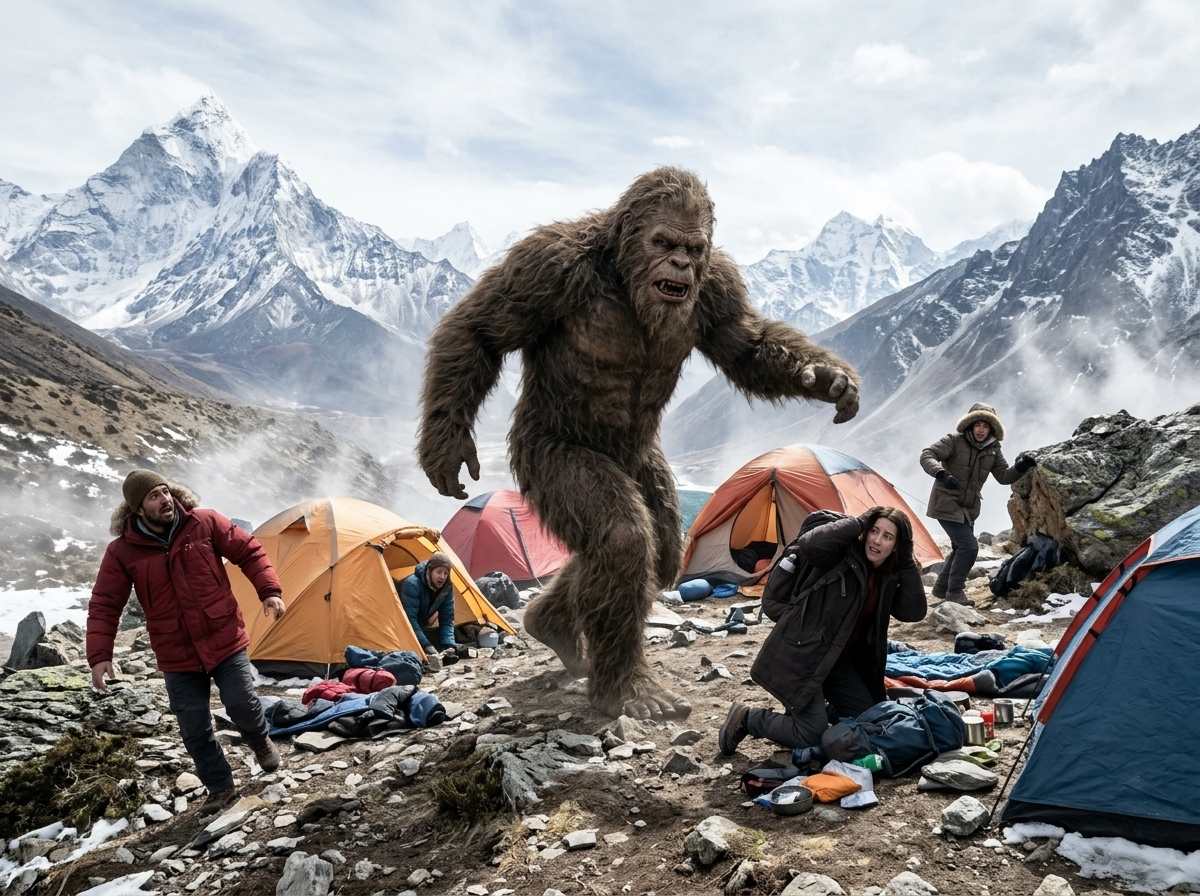
The Dyatlov Expedition’s Himalayan Parallel — The Russian Snowman Reports
In the remote mountain regions of Russia and Central Asia, stories resembling Yeti encounters have also been reported. One of the most dramatic types of accounts involves hunters or herders finding enormous tracks crossing snow-covered valleys.
In one recurring pattern, witnesses describe following a trail of footprints for a considerable distance. The tracks may begin clearly, then gradually become distorted as the snow melts or blows into them. Observers sometimes report that the prints appear to move in a nearly straight line, giving the impression that a two-legged creature was walking across the landscape.
However, wildlife researchers point out that bears can sometimes produce surprising track patterns. When a bear’s hind foot lands partly over the impression made by its front foot, the resulting track can appear unusually long and humanlike.
This possibility has led some investigators to suggest that at least some “snowman” tracks could be distorted bear tracks.
The Dark Figure Above the Tree Line
A number of Himalayan mountaineers have reported seeing dark, upright figures moving at great distances across snowy slopes. One type of account describes a climber looking across a valley and noticing a dark object moving slowly along a ridge.
At first, it may appear to be a person. But when the observer considers the extreme altitude and isolation of the location, the possibility of an unknown creature enters the story. In some reports, the figure disappears behind rocks before it can be approached. By the time investigators reach the area, changing weather and snow conditions have erased any possible tracks.
Such sightings are extremely difficult to evaluate. A distant bear standing or walking briefly on two legs could potentially appear humanlike. A lone climber, a dark rock, or even shifting shadows may also be mistaken for a creature. But to the witness, especially in a silent and isolated mountain environment, the experience can be unforgettable.
The Footprints That Seemed to Change Direction
One of the strangest types of reported Yeti track stories involves footprints that witnesses claim suddenly changed direction, disappeared, or seemed to become impossible to follow.
Imagine a group of travelers crossing a snow-covered pass. Ahead of them, they notice a trail of unusually large impressions. The prints continue across the snow for some distance, apparently made by something walking on two legs. The group follows the tracks.
Then, according to some accounts, the trail suddenly changes direction toward a rocky slope. In other versions, the tracks become increasingly unclear until they disappear completely. To believers, this can sound mysterious: What creature was walking through such an isolated region, and where did it go?
But snow is constantly changing. Wind fills impressions, sunlight melts their edges, and falling snow can partially erase a trail within a short period.
A sequence of overlapping tracks from different animals can also create a confusing pattern. Still, standing in a remote Himalayan valley and seeing enormous, strange-looking tracks stretching into the distance would undoubtedly be an eerie experience—whether the explanation turned out to be a bear, another known animal, distorted snow, or something still unidentified.
Here are four more alleged Yeti encounters involving people who claimed to have actually seen the creature. These reports are eyewitness claims, not scientifically proven facts, and some have alternative explanations.
The 1925 Nanga Parbat Sighting — A. Tombazi One of the better-known early accounts came from A. Tombazi, a photographer associated with a British expedition in the Himalayas. According to his account, while the expedition was in the mountains near Nanga Parbat, the ninth tallest mountain in the world in Pakistan, Tombazi reportedly saw a strange dark figure at a considerable distance.
He described it as looking human-like and walking upright across a snowy slope. The figure reportedly moved toward an area where it disappeared from sight. Later, expedition members examined tracks in the snow.
The footprints were said to resemble bare human footprints, despite the extreme cold and snowy environment. Skeptics have suggested that distorted tracks, snow conditions, or an ordinary animal could have produced the strange appearance. Nevertheless, Tombazi believed he had seen something unusual.
The 1942 Himalayan Encounter — S. L. A. Marshall, During World War II, British explorer and military officer S. L. A. Marshall later described an unusual sighting in the Himalayan region. Marshall claimed that he and others observed several strange, dark, humanlike creatures on a mountainside.
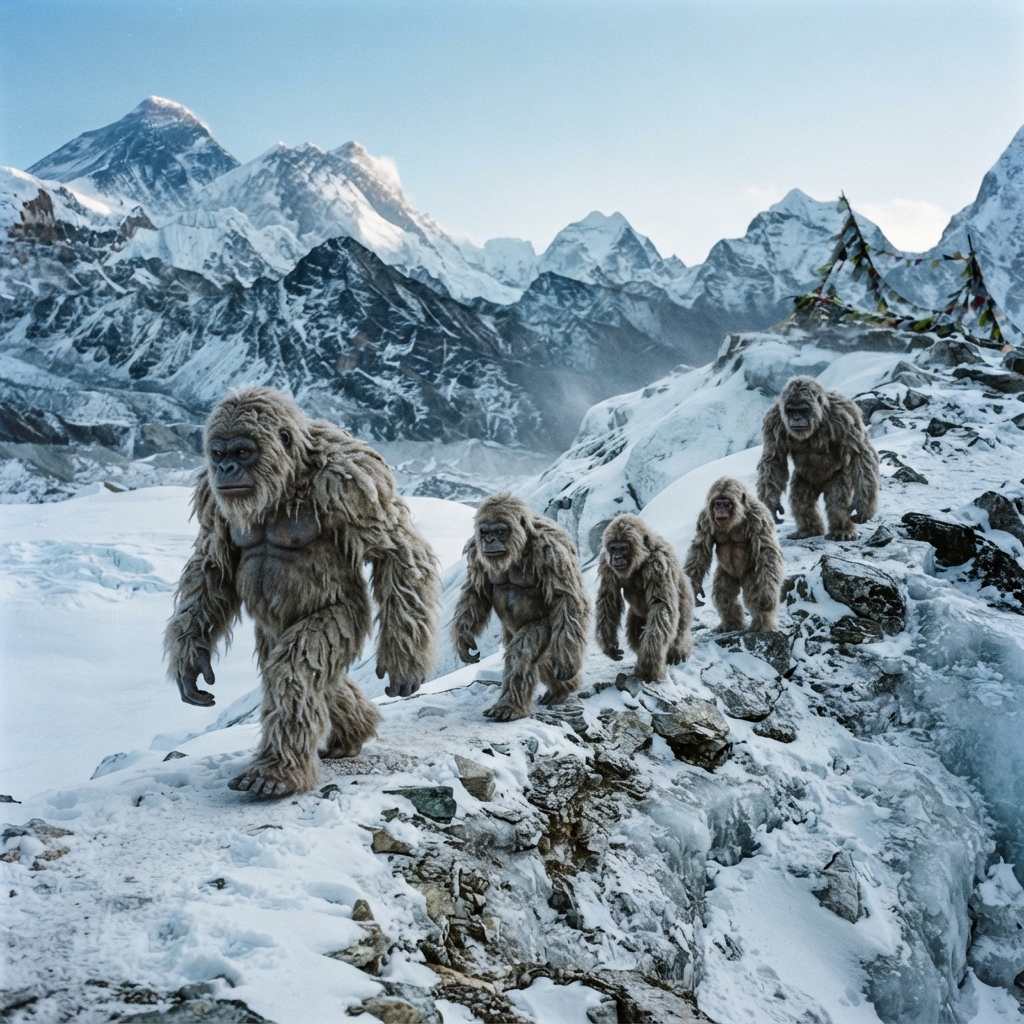
According to the account, the creatures appeared to move in a manner that suggested upright walking. The witnesses reportedly watched them from a distance and could not clearly identify them as a known animal.
Marshall later considered the possibility that they might have been an unknown creature associated with local stories of the Yeti. However, because the creatures were observed at a distance, skeptics argue that bears, langurs, or other animals could potentially have been misidentified.
The 1957 Encounter Reported By Mountaineer Peter Byrne. Explorer and cryptozoologist Peter Byrne spent years investigating reports of the Yeti in the Himalayas.
During his expeditions, Byrne collected numerous accounts from local people, hunters, and mountain residents. In one reported case, witnesses described seeing a large, hairy, manlike creature moving through remote mountainous terrain.
The creature was described as taller and broader than an ordinary human and as moving rapidly away after apparently becoming aware of the witnesses. Byrne became convinced that the Himalayan wilderness might contain an unidentified primate, although he never obtained definitive physical proof.
The 1974 Himalayan Sighting — British expedition reports. During a British expedition in the Himalayas in the 1970s, several climbers and local guides reported unusual activity around their camp.
According to the reports, strange sounds were heard during the night, followed by sightings of a dark, upright figure moving across the surrounding terrain. Some witnesses reportedly described the creature as: Large and heavily built. Covered in dark hair or fur. Moving upright for at least part of the observation. Quickly disappearing into the mountainous landscape.
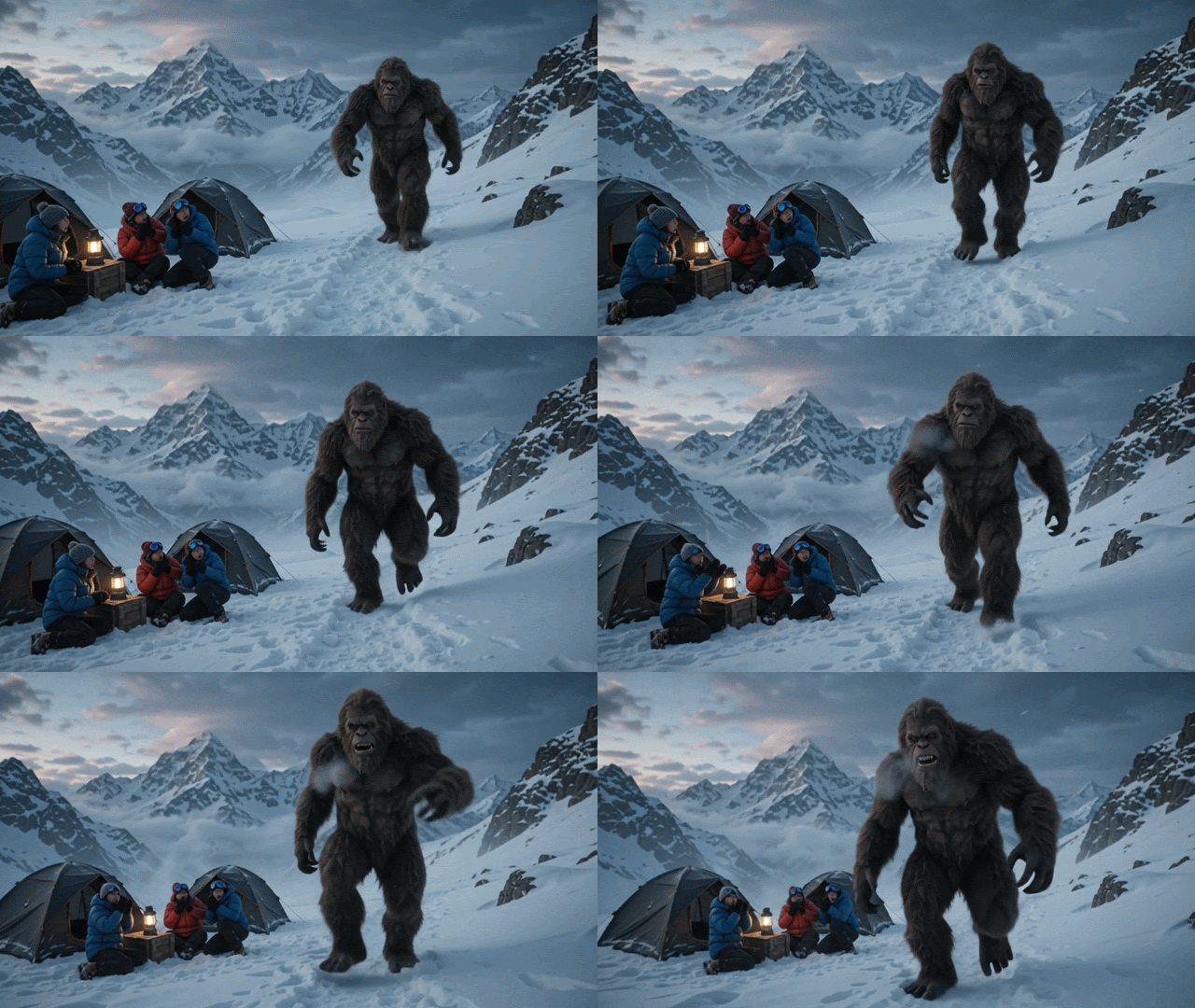
As with many Yeti reports, the sighting occurred under difficult viewing conditions. Darkness, distance, weather, and unfamiliar terrain make it impossible to determine exactly what was seen.
What makes Yeti eyewitness reports interesting? A recurring pattern in many reports is that witnesses describe something that appears: larger than a human → covered with hair → capable of walking upright → extremely elusive.
But there is still no scientifically confirmed body, living specimen, or DNA evidence demonstrating that an unknown giant ape-like species lives in the Himalayas. Modern genetic studies of alleged Yeti samples have generally identified them as coming from known animals, especially Himalayan bears. That does not necessarily mean every eyewitness was deliberately lying.
Some witnesses may have genuinely seen something they could not identify—while others may have mistaken bears, distorted tracks, unusual shadows, or distant people for a mysterious creature.
The most intriguing reports are the ones where multiple witnesses independently claimed to see an actual upright, hairy figure, rather than merely finding footprints which could have become sufficiently distorted in size and shape through natural and common means.
Besides reputably seeing the yeti, there are, at times, various reports of hearing the animals moan, shriek, scream, yelp, and make other such sounds.
But, there is no documented scientific evidence of these creatures actually making such sounds. Skeptics believe such sounds can be from known animals in the basic area and that, at times, will emit noises that will sound somewhat different from the noises they normally produce.