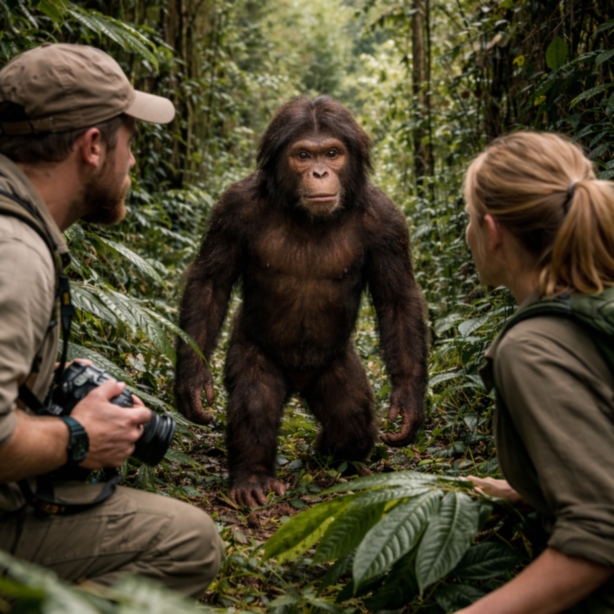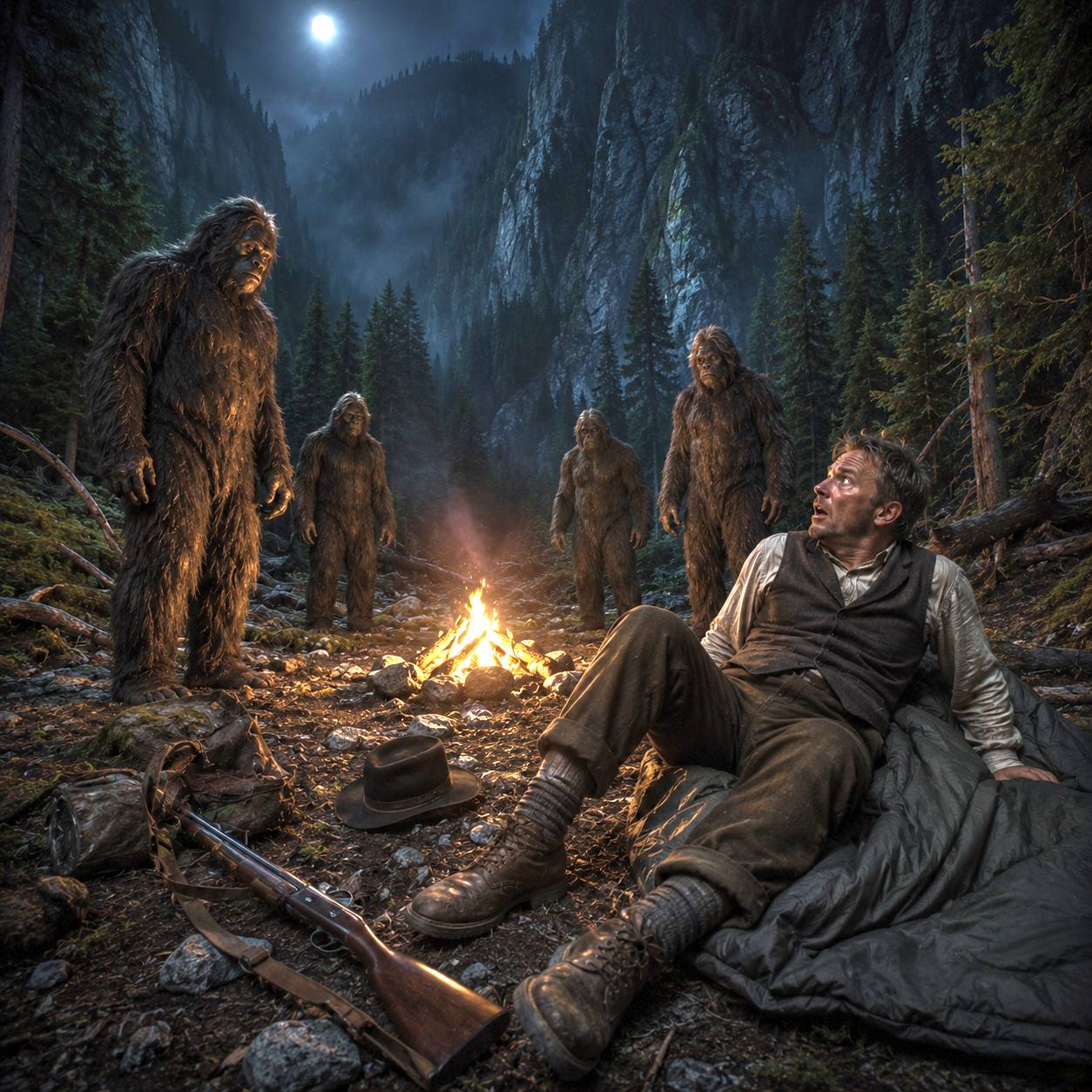
Among the most unusual accounts in the history of Bigfoot and Sasquatch reports is the story of Albert Ostman, (born April 21, 1893; died January 16.1975) was a Swedish-born Canadian woodsman and prospector who claimed that he was carried away and held captive by a family of Sasquatches in British Columbia in 1924. Unlike many famous Bigfoot stories, Ostman did not describe a fleeting glimpse of a creature disappearing into the forest. According to his account, he spent approximately six days with four hairy, humanlike beings—an adult male, an adult female, and two younger Sasquatches. His story became public decades later, in 1957, and remains one of the most controversial and fascinating cases in cryptozoology.
The Journey to Toba Inlet
In the summer of 1924, Ostman traveled to the remote wilderness around Toba Inlet, British Columbia, reportedly combining a vacation with prospecting. He was interested in stories of a lost gold mine in the area. According to Ostman’s later account, he had heard local stories about mysterious wild, humanlike creatures but did not take them seriously. He established a camp in the wilderness and began noticing that something appeared to be disturbing his campsite and taking some of his supplies. Eventually, Ostman decided to remain awake and discover what was visiting him. However, he fell asleep inside his sleeping bag.
Carried Away While Inside His Sleeping Bag
Ostman said he awoke to an extraordinary sensation. Something had picked him up—sleeping bag, equipment, and all—and was carrying him through the wilderness. He described the journey as lasting roughly three hours. From inside the sleeping bag, he could feel that his captor was walking upright. He reportedly felt the creature climbing steep terrain and breathing heavily. Eventually, the creature dropped him onto the ground. When Ostman managed to get out of the sleeping bag, he found himself in an unfamiliar location surrounded by what he believed were four Sasquatches.
A Sasquatch Family
Ostman described the group as a family: A large adult male. An adult female. A younger male. A younger female. The largest creature was reportedly approximately eight feet tall. One of the strangest aspects of Ostman’s account was that he did not describe the Sasquatches as immediately attacking him. Instead, he believed they watched him and prevented him from leaving the area. Ostman said the creatures appeared to have a social structure and behaved in ways he interpreted as family behavior. He also claimed to observe them carrying out ordinary activities, including handling vegetation and eating natural foods. The young Sasquatches reportedly showed particular curiosity toward him. Rather than being killed or seriously injured, Ostman believed he was being kept as a kind of captive curiosity.
Why Did They Take Him?
Ostman later speculated that the adult male Sasquatch may have intended to make him a mate for the young female. This is one of the more extraordinary and disturbing interpretations of his story, although it was Ostman’s own speculation rather than something he could prove. He believed the behavior of the creatures suggested that they were not simply trying to kill or eat him. The family apparently allowed him to live, but Ostman claimed that he could not simply walk away.
The Snuff Escape
Ostman carried a supply of snuff, a form of smokeless tobacco. According to his story, he eventually discovered that the adult male was attracted to it. Ostman gave the creature some snuff. He claimed that the Sasquatch consumed it and became sick, groggy, or disoriented. Seeing his opportunity, Ostman grabbed his rifle and escaped. He later stated that the Sasquatches had not actually harmed him during his captivity, which was one reason he had not used his firearm against them earlier. The escape brought his bizarre six-day ordeal to an end.
Why Did Ostman Wait So Long to Tell the Story?
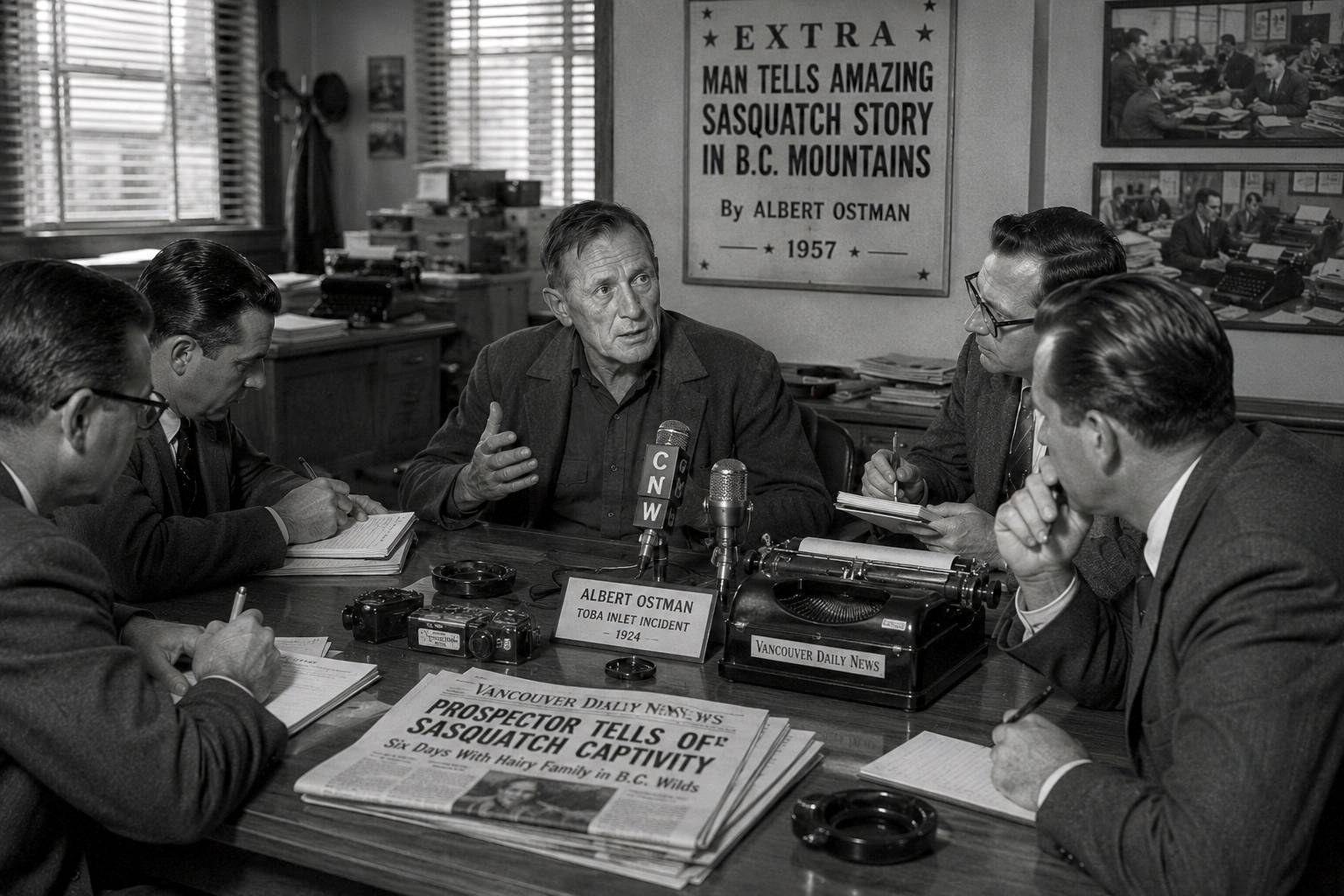
Perhaps the most important fact about the case is that Ostman did not immediately go to the newspapers with his story. He claimed that he kept the incident largely to himself for decades because he feared people would think he was insane. It was not until 1957, approximately 33 years after the alleged encounter, that his account became widely known. In 1957, Ostman told his story to a local newspaper called “The Province”. By then, public interest in Sasquatch had grown considerably. Ostman eventually gave his account to investigators and signed a solemn declaration stating that his story was true. A police magistrate who questioned him in 1957 reportedly stated that he found Ostman mentally competent and could not find an obvious flaw in his personality or story.
Why Bigfoot Researchers Consider the Story Important
For believers in Sasquatch, the Ostman account is significant for several reasons. First, it describes a group rather than a lone creature. The idea of a Sasquatch family, including adults and young, is central to the argument that the creatures might represent a breeding population rather than isolated unknown animals. Second, Ostman described behavior rather than simply appearance. He claimed to observe interactions among the creatures over several days. Third, his story predates the modern explosion of Bigfoot culture. The alleged encounter occurred in 1924, long before the Patterson-Gimlin film and before Bigfoot became a major subject of popular culture. Fourth, Ostman provided a remarkably detailed account many years later. Supporters argue that the unusual nature of the story makes it less likely to have been invented as a conventional hoax. His supporters also point to his later sworn declaration and the favorable assessment by the magistrate who questioned him.
The Skeptical View
Skeptics, however, point to several serious problems. The largest issue is the 33-year delay before the story became public. Human memory can change substantially over decades, especially when an unusual event is repeatedly remembered and retold. Yet, some people can remember the gist of an event, especially an extraordinary event, many years after it happened. Skeptics also question the practicality of the alleged abduction. Carrying a grown man, along with his sleeping bag and equipment, for hours through rugged terrain would have required extraordinary strength. However, it is a well known fact in stories of bigfoot creatures; sasquatches they are known to be very, very strong and muscular. Another concern is the lack of physical evidence. No bodies, bones, photographs, biological samples, or independently verified tracks were produced to confirm the encounter. Some critics also argue that the story may have been influenced by existing regional legends or later Sasquatch publicity. However, supporters counter that the story was unusual enough—and supposedly told before the modern Bigfoot craze—that it should not simply be dismissed as a conventional hoax.
A Remarkable Story, Whatever the Truth
Albert Ostman’s story remains one of the strangest Sasquatch accounts ever recorded. If true, it would represent something far more significant than a simple sighting. It would suggest that Sasquatches lived in family groups, had recognizable social relationships, could capture and transport a human being without immediately killing him, and displayed curiosity toward humans. If the story is not true, then it represents an equally interesting mystery: how did a man in the 1950s construct such an unusual and detailed account of an alleged event said to have occurred more than three decades earlier? There is no scientifically verified evidence proving that Albert Ostman was abducted by Sasquatches. Nevertheless, his account remains important in the history of Bigfoot research because it is unusually detailed, involves an alleged extended period of direct observation, and includes a later sworn declaration affirming its truth. For many Sasquatch researchers, Ostman’s story is one of the classic cases. For skeptics, it is a remarkable but unverified anecdote. More than a century after the alleged 1924 encounter, Albert Ostman’s story remains one of the most extraordinary—and controversial—accounts in the entire history of Sasquatch reports.