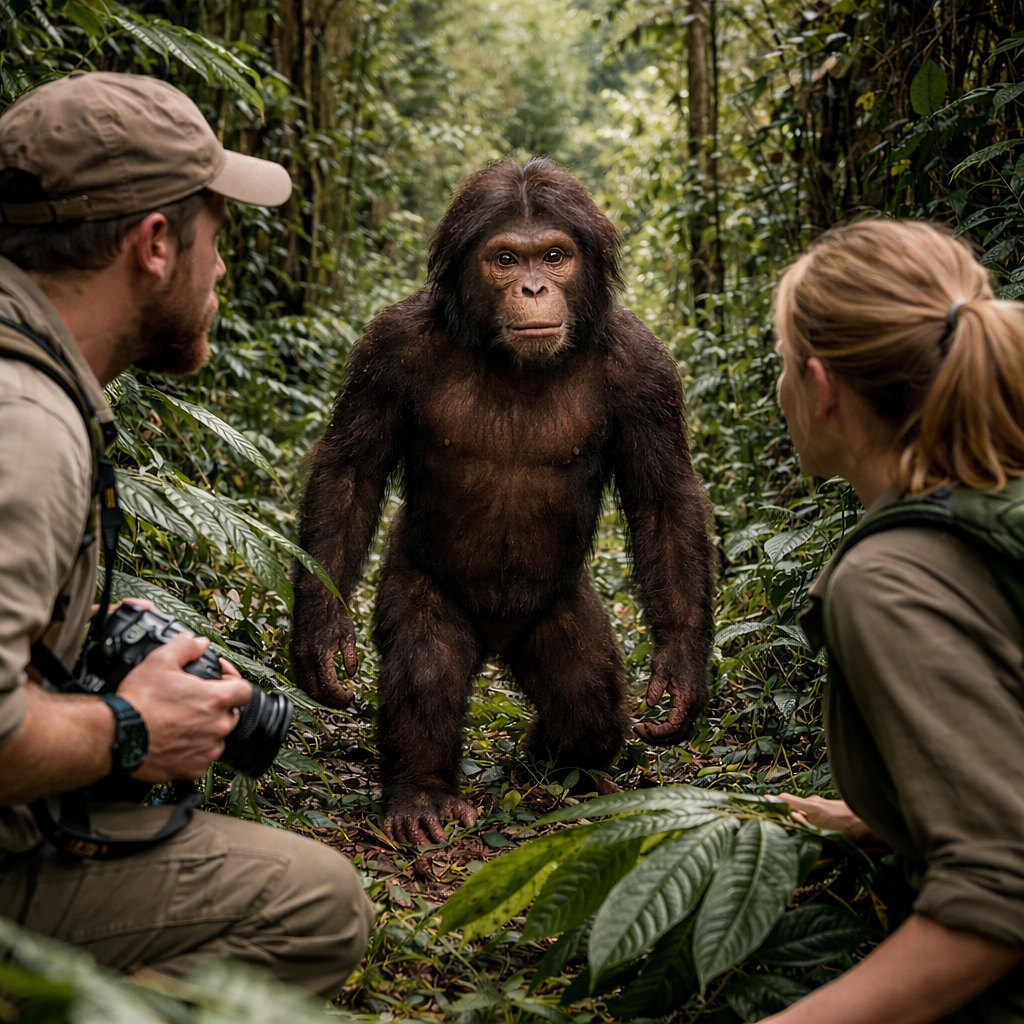
The Orang Pendek, often translated as “short person” in Indonesian, is a mysterious creature said to inhabit the dense rainforests of Sumatra, particularly within Kerinci Seblat National Park. Described as a hidden “ape-man” or relict hominin, Orang Pendek occupies a unique place in Indonesian folklore, cryptozoology, and modern mystery.
Physical Descriptions – Witnesses—ranging from local villagers to Western explorers—generally describe Orang Pendek as: Short in stature, typically between 3 and 5 feet tall. Covered in short, dark hair, though some reports describe a gray or reddish coat. Broad-shouldered and powerfully built, with long arms and a barrel chest. Bipedal, walking upright like a human but moving swiftly and silently. Possessing a flat face, prominent brow ridge, and deep-set eyes. Unlike the towering Bigfoot of North America, Orang Pendek is consistently portrayed as small, compact, and agile, well adapted to thick jungle terrain.
Indigenous Traditions and Oral History – Local peoples, including the Minangkabau and Kerinci, have spoken of Orang Pendek for centuries. In traditional stories, it is often portrayed not as a monster but as a forest-dwelling being, intelligent and wary of humans. Some accounts suggest it: Uses simple tools. Steals crops or food. Avoids direct conflict. Displays curiosity rather than aggression. These traditions predate Western involvement and are often presented matter-of-factly, as descriptions of a real but elusive neighbor rather than a mythological creature.
Western Encounters and Expeditions – Reports from Europeans date back to the early 20th century. Dutch colonists recorded encounters with a small, upright, hairy humanoid they could not classify as either ape or human. Later, British cryptozoologist Ivan T. Sanderson and modern researcher Debbie Martyr brought renewed attention to Orang Pendek in the late 20th and early 21st centuries. Martyr, who spent years in Sumatra, documented multiple sightings by credible witnesses, including scientists, park rangers, and conservationists. Her reports emphasized the creature’s non-aggressive behavior, upright gait, and intelligence.
Possible Scientific Explanations – Several hypotheses attempt to explain Orang Pendek: Undiscovered Primate Species. Some researchers suggest Orang Pendek may be a previously unknown species of great ape or a surviving population of a known but poorly studied primate.
Relict Hominin – A popular theory links Orang Pendek to extinct human relatives such as Homo floresiensis (“the Hobbit”), discovered on the nearby island of Flores in 2003. This discovery proved that small-bodied hominins survived in Indonesia until relatively recently, lending credibility to the idea that a similar species could persist in Sumatra’s remote jungles.
Why Orang Pendek Remains Hidden – Sumatra’s rainforests are among the most remote and biologically rich in the world. New species are still discovered regularly, and dense vegetation, rugged terrain, and limited access make long-term observation extremely difficult. If Orang Pendek exists, it would have strong evolutionary pressure to remain elusive.
Orang Pendek Legacy and Continuing Mystery
Orang Pendek stands at the crossroads of folklore, anthropology, and cryptozoology. Whether it represents a surviving hominin, an unknown primate, or a cultural interpretation of rare wildlife encounters, it remains one of the most compelling “hidden ape-man” legends on Earth.
Belief in the Orang Pendek —the “short person” of Sumatra—rests on a clash between firsthand experience, cultural tradition, and scientific standards of evidence. Here’s how both sides explain their positions. Why People Believe in the Orang Pendek- Consistent Eyewitness Accounts. Believers point to decades of reports from local villagers, hunters, rubber tappers, and forest guides in Sumatra. Many descriptions are strikingly similar: Short stature (about 3–5 feet tall). Upright, human-like walking. Long arms, broad shoulders, and dense hair. A powerful, confident presence rather than animal fear. Supporters argue that these accounts come from people deeply familiar with the jungle and unlikely to confuse common animals with something so unusual.
Indigenous Tradition – Among groups such as the Minangkabau and Kerinci, Orang Pendek is part of oral tradition. It is often described not as a monster, but as a reclusive forest-dweller, intelligent and cautious. Believers see this continuity as evidence of a real being remembered over generations, not a modern invention.
Credible Western Witnesses -Explorers, biologists, and researchers—some initially skeptical—have reported sightings. The most famous include: Debbie Martyr, a conservationist who described a close encounter in Kerinci Seblat National Park. Dr. Bernard Heuvelmans, a zoologist and founder of cryptozoology, who considered Orang Pendek a plausible unknown primate. Supporters argue these witnesses had reputations to lose and no incentive to fabricate stories.
Physical Clues (But No Proof) – Footprints, hair samples, and photographs have been collected. While none have been conclusively verified, believers argue that: Tropical conditions quickly destroy biological evidence. Orang Pendek’s intelligence may allow it to avoid traps and humans. Vast, underexplored rainforests still hide unknown species. They also note that animals like the giant squid and okapi were once dismissed as myths.
A Plausible Biological Candidate – Some believers propose Orang Pendek could be: A surviving hominin related to Homo floresiensis (“the Hobbit”). An unknown species of ape adapted to dense jungle environments. This gives the legend a theoretical footing within evolutionary science.
Why Skeptics Do Not Believe Orang Pendek
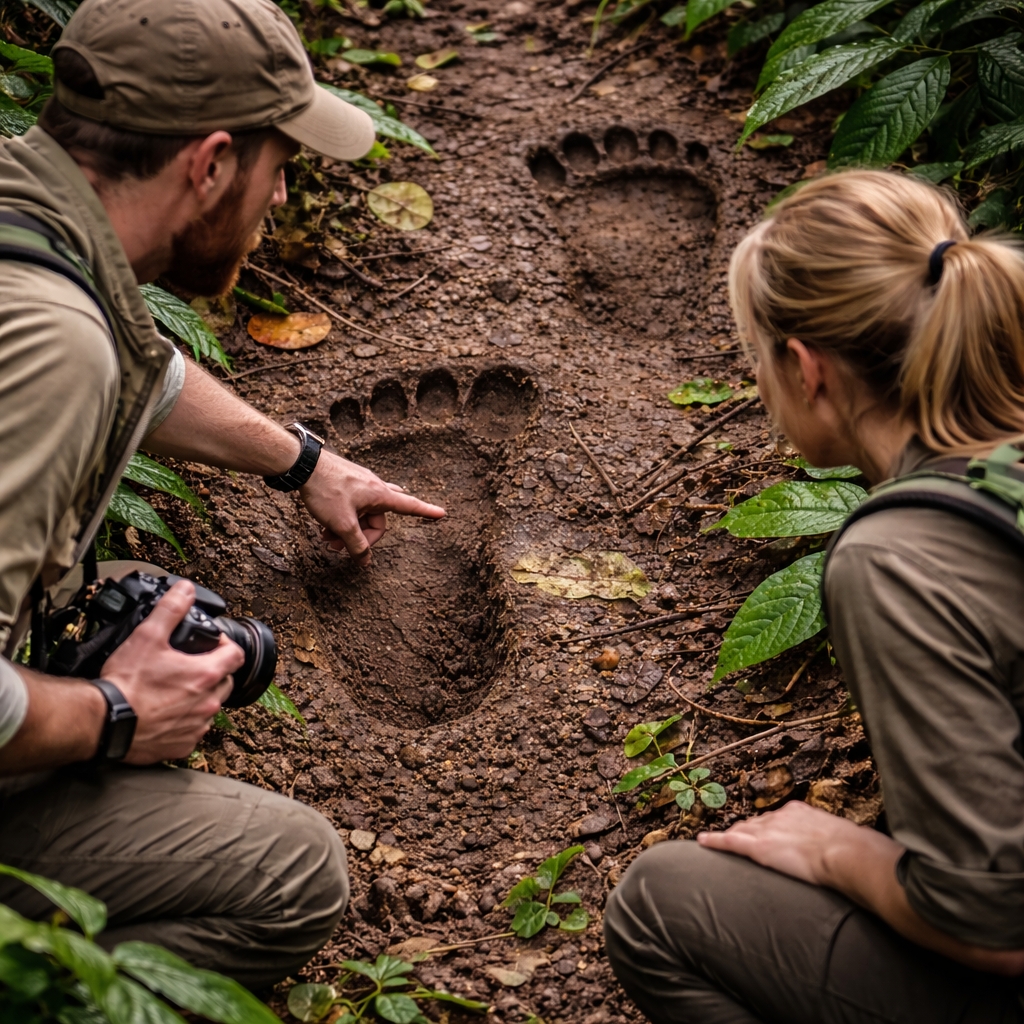
Footprints and Physical Evidence – Footprints attributed to Orang Pendek have been photographed and cast. These prints are notable for: Human-like structure. Short, wide feet. A distinct big toe aligned with the others (unlike apes). While intriguing, such evidence remains controversial, as no verified DNA samples have yet been recovered.
No Physical Specimen – Skeptics emphasize that no bones, bodies, DNA, or fossils have ever been confirmed. In modern biology, extraordinary claims require verifiable physical evidence—and Orang Pendek has none.
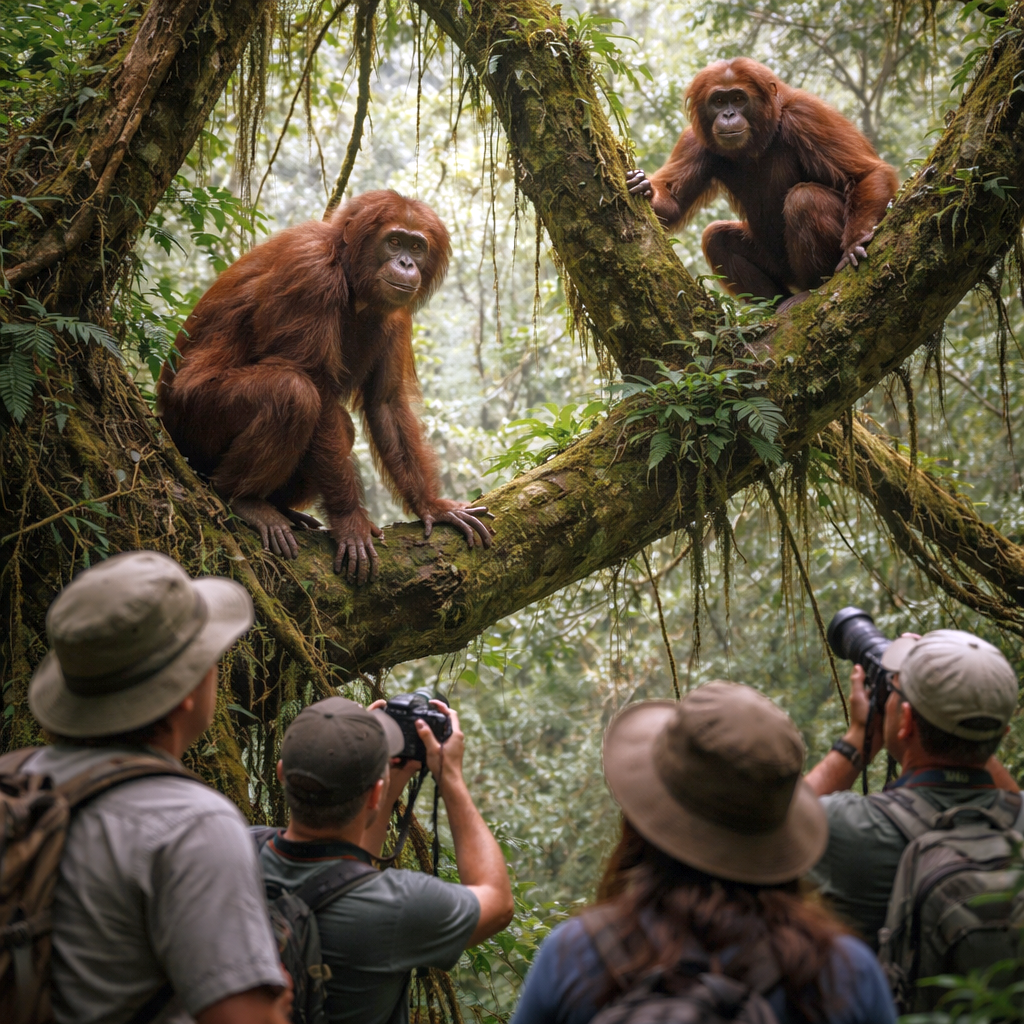
Mis-identification of Known Animals: Skeptics argue sightings can be explained by: Sun bears, which can briefly walk upright. Gibbons or macaques seen from unusual angles.or even orangutans seen briefly or under poor conditions . Humans misjudging size and shape in low light or dense foliage. Fear, surprise, and expectation can strongly distort perception. However, many witnesses insist the creature’s upright posture and proportions rule these out.
Footprints and Samples Are Inconclusive – Footprints lack clear anatomical detail and could be hoaxed or naturally distorted. Hair samples tested so far have belonged to known animals or humans. Skeptics see this as a repeated failure to move beyond anecdotes.
Cultural Reinforcement – Skeptics suggest oral traditions can reinforce belief: Stories are passed down and retold. New sightings may unconsciously match existing legends.Locals may interpret ambiguous experiences through a cultural lens. This doesn’t mean witnesses are lying—only that belief can shape interpretation. BUT, new stories from new witnesses may be accurate depictions of what really did happen.
Population Problem – For Orang Pendek to exist, skeptics argue: A breeding population must exist. That population should leave remains, tools, nests, or clear ecological impact. None have been found, despite modern cameras and research. BUT, the Orang Pendek are basically known to hide from people, and if humans begin to get close to an orang pendek encampment, the creatures would most probably abandon the encampment, taking their possessions with them that they can carry, and starting a new abode somewhere else deeper into the wilderness to avoid human detection.
Conclusion
The Orang Pendek occupies a gray area between legend and possibility. Believers see a pattern of credible encounters and biological plausibility. Skeptics see a complete absence of proof after more than a century of claims. Ultimately, Orang Pendek remains unproven—but not conclusively disproven, which keeps it alive in both scientific curiosity and jungle folklore. Whether it is a hidden hominin or a powerful cultural myth, the mystery endures because Sumatra’s forests still hold secrets few humans have seen.


