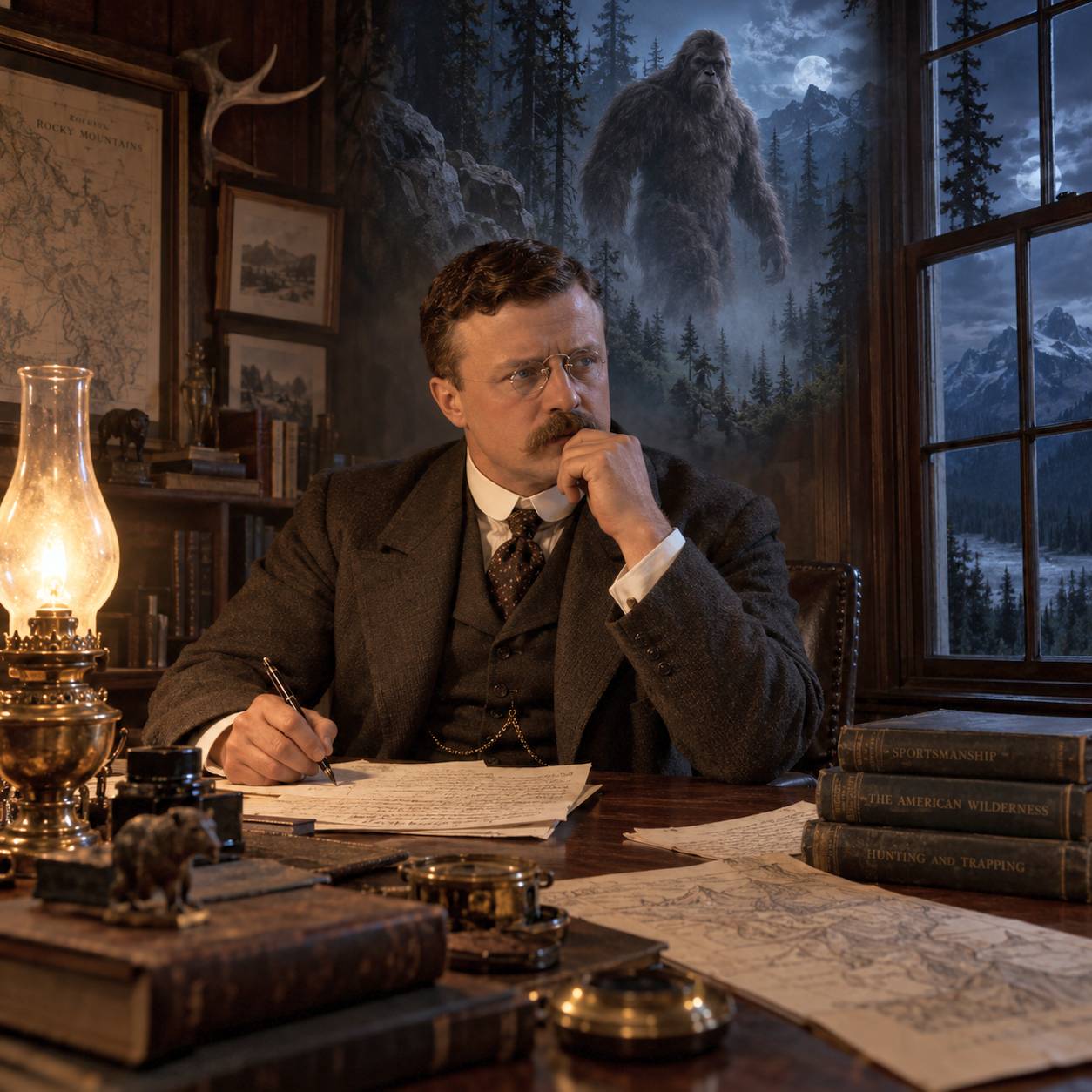
In the closing years of the nineteenth century, long before Americans commonly used the name Bigfoot, Theodore Roosevelt heard a remarkable story about a terrifying creature said to have inhabited the remote Rocky Mountain wilderness. Roosevelt did not witness the creature himself. The story was told to him by an experienced mountain hunter named Bauman, his first name is never mentioned, and Roosevelt later included the tale in his 1893 book, “The Wilderness Hunter”.
Today the account is commonly known as Bauman’s Goblin Story or the Bauman Incident. To skeptics, it may have been a frightening encounter with a bear or another known animal. But among Bigfoot enthusiasts, the Sasquatch explanation has become the favored interpretation because several important details of Bauman’s story seem to fit the pattern of later Bigfoot encounters unusually well.
Bauman and his companion were experienced hunters and trappers who ventured into a remote, heavily forested part of the Rocky Mountains. They were looking for beaver and other trapping opportunities. The country was rugged and isolated, with thick timber, mountains, streams, and deep valleys. There were no roads or nearby settlements. If something went wrong, the men could not simply leave by automobile or telephone for help. They were on their own.
The area also reportedly had a disturbing history. Another hunter had previously been found dead there. Whether that earlier death was connected to the events that Bauman later experienced is unknown, but it certainly contributed to the ominous character of the story.
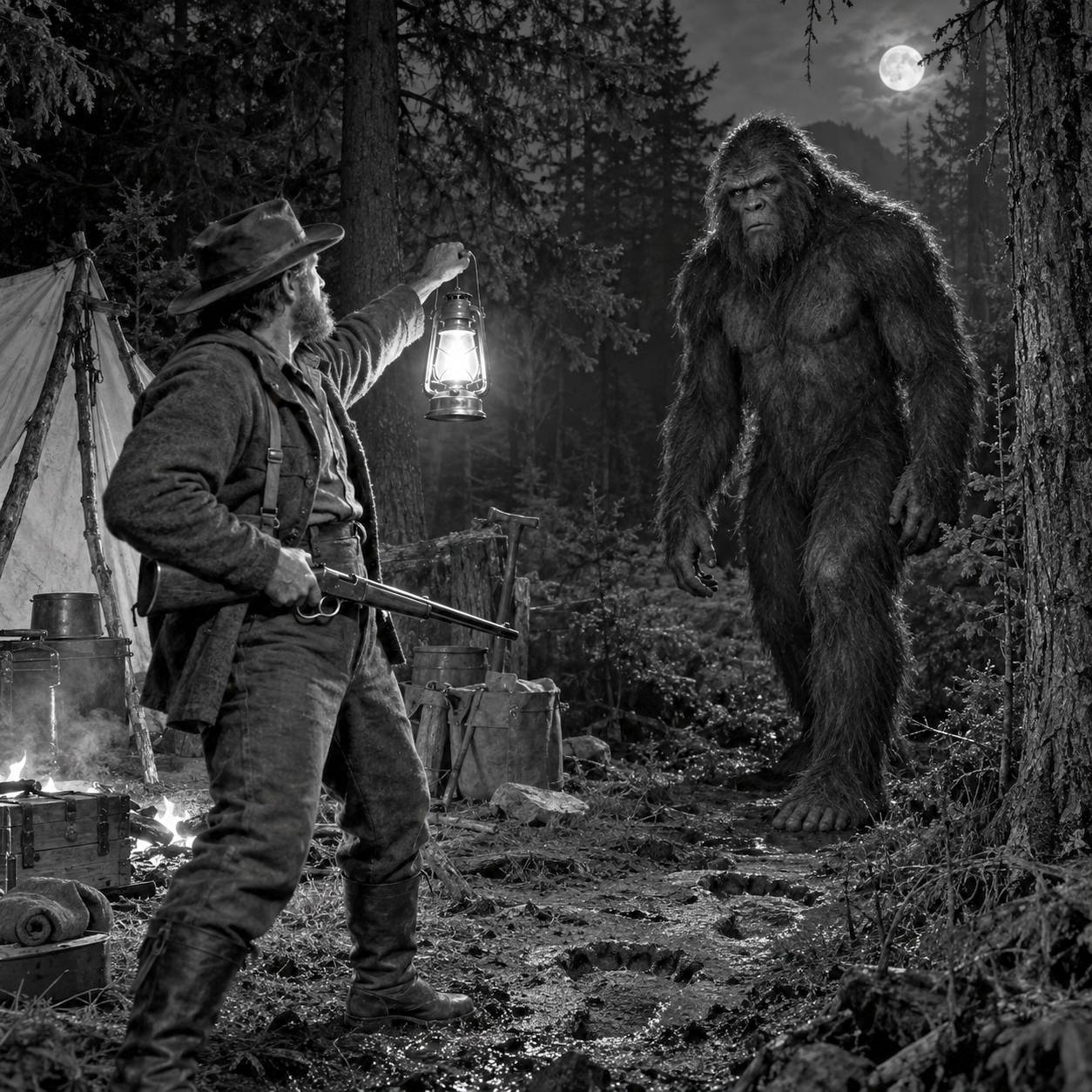
After establishing their camp, Bauman and his companion began noticing signs that something was moving around the area. The most intriguing evidence was a series of unusual tracks. According to the account, the tracks appeared to have been made by something walking on two legs. This is one of the strongest reasons Bigfoot researchers favor the Sasquatch interpretation. A Sasquatch, according to the traditional hypothesis, is a large, human=like primate that moves primarily on two legs. Thus, the combination of a remote wilderness setting and unexplained bipedal tracks fits the basic Bigfoot description.
A bear can certainly stand and walk on its hind legs, however, so the tracks do not prove Sasquatch. But Bigfoot proponents argue that Bauman was an experienced trapper who would have been familiar with ordinary bear tracks. They therefore regard his interpretation as significant.
The mysterious activity continued. Something apparently disturbed the hunters’ camp. At night, the men heard strange noises coming from the surrounding forest. The sounds were frightening and difficult to identify. The creature seemed to be moving around them rather than simply passing through the area. This is another feature that Bigfoot enthusiasts find significant. Modern Sasquatch reports frequently describe creatures that remain just beyond the observer’s vision, move through forests at night, and make unusual vocalizations.
Bauman’s account contains remarkably similar elements. The Creature Apparently Watches the Men. The behavior described in the story also seems unusual. The mysterious visitor apparently knew where the hunters were. It repeatedly approached their camp. It remained hidden among the trees.
The men became increasingly convinced that something was watching them. This is particularly important to the Bigfoot interpretation because modern Sasquatch reports often describe the creature as highly intelligent and extremely cautious. Unlike an ordinary predator that simply attacks its prey, the creature in Bauman’s story seemed to observe the men from concealment. It appeared interested in them. It came close. Then it withdrew. This behavior is often cited by Bigfoot researchers as evidence that the creature was not behaving like a normal predator.
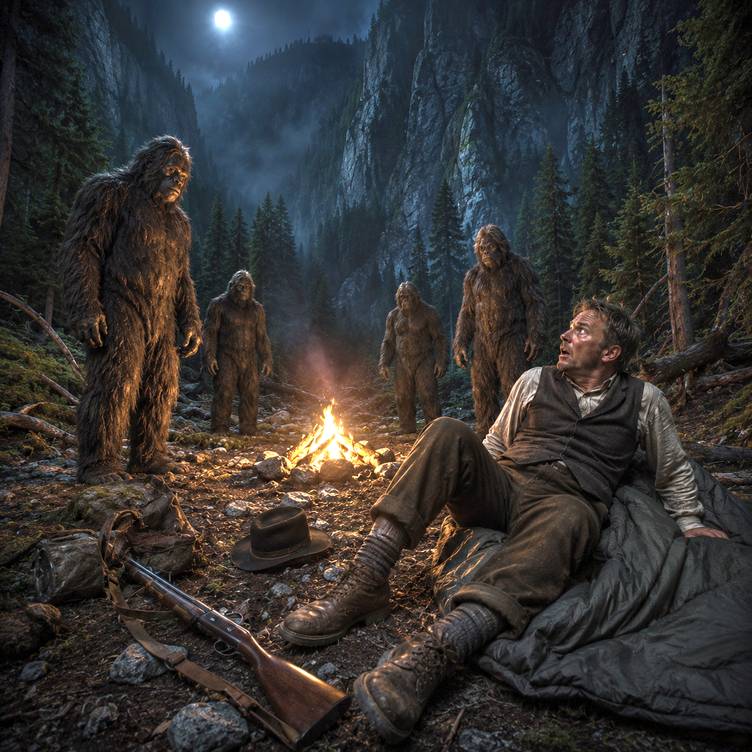
At night, the mysterious creature apparently came extremely close to the hunters’ shelter. The men heard movement and became aware that something was nearby. They fired their rifle. The creature fled into the darkness. But they apparently could not obtain a clear enough view to identify it. This pattern—a close encounter followed by a rapid disappearance into thick forest—is another reason the story has become associated with Sasquatch. Bigfoot reports frequently have the same frustrating characteristic. Witnesses claim that they see something large and humanlike for only seconds. By the time they reach for a firearm, camera, or flashlight, the creature has vanished.
Then One Hunter Dies The story eventually takes a tragic turn. Bauman left the immediate area for a period of time. When he returned, he discovered that his companion had been killed. According to Bauman’s account, the man’s body showed evidence of a violent attack. Bauman believed that the mysterious creature he and his companion had been encountering was responsible. This transformed the incident from a strange animal story into something much more serious. Bauman was now alone in the wilderness with an unknown creature that he believed had killed his companion. He fled the area.
The Bigfoot interpretation gained strength over the years because the story contains a remarkable collection of characteristics that later became standard elements of Sasquatch reports. 1. The creature apparently walked on two legs. This is perhaps the most important detail. A large bipedal creature is exactly what Bigfoot is supposed to be.
2. It was associated with enormous wilderness. Sasquatch reports overwhelmingly place the creature in forests and mountainous wilderness. Bauman’s story takes place in exactly that kind of environment.
3. It apparently remained hidden. The creature was difficult to see clearly despite being near the hunters. This matches the extraordinary elusiveness attributed to Sasquatch.
4. The beast seemed intelligent. Rather than immediately attacking the hunters, it apparently watched and approached their camp repeatedly. Bigfoot researchers often describe Sasquatch as an intelligent animal capable of observing humans while avoiding direct contact.
5. The animal made strange sounds. The hunters heard unusual vocalizations that they could not identify. Modern Bigfoot reports frequently mention screams, howls, whoops, knocks, or other unexplained sounds.
6. It appeared physically powerful. The death of Bauman’s companion was attributed to an exceptionally powerful creature. A hypothetical adult Sasquatch would presumably possess tremendous physical strength because of its size and muscular build.
7. It appeared comfortable in the wilderness. The creature seemed completely at home in the remote mountains. That is exactly where Bigfoot reports traditionally place Sasquatch.
8. The encounter predates modern Bigfoot publicity. This is particularly important to Bigfoot believers. Roosevelt’s book was published in 1893. The modern American Bigfoot craze did not emerge until many decades later. The famous Patterson-Gimlin film would not be made until 1967. Therefore, supporters of the Sasquatch interpretation argue that Bauman could not simply have been copying modern Bigfoot stories that did not yet exist.
Why the Bear Explanation Is Not Completely Satisfying to Bigfoot Believers. A bear is certainly a plausible explanation. It could disturb a camp, make frightening noises, stand upright, and potentially kill a human. But Bigfoot enthusiasts argue that the combination of characteristics is more important than any individual detail. They point to the apparent bipedal tracks, repeated camp visits, unusual sounds, apparent intelligence, stalking behavior, and violent attack. They argue that taken together, these features resemble a Sasquatch encounter more closely than a simple bear encounter. In their view, the bear theory explains individual pieces of the story but does not necessarily explain the entire pattern.
The Importance of Bauman Being an Experienced Woodsman. Another reason believers place considerable weight on the account is Bauman’s experience. He was not presented as someone unfamiliar with the wilderness. He was a hunter and trapper who understood animals, tracks, and the dangers of the mountains. That makes the story different, in their view, from a report by someone who had never been outdoors.
If an inexperienced traveler sees a large animal standing in the woods, a skeptical explanation might easily be that he simply mistook a bear for something else. But if an experienced trapper sees unusual tracks and cannot identify the animal that made them, Bigfoot proponents argue that the testimony deserves closer consideration. This still does not make the identification scientifically correct—but it makes the account historically intriguing.
The fact that Theodore Roosevelt recorded the story adds another layer of credibility to its historical importance. Roosevelt was himself an experienced hunter and outdoorsman. He knew the wilderness. He understood animal behavior. He also knew that frontier stories could become exaggerated. Yet he considered Bauman’s account sufficiently remarkable to include it in The Wilderness Hunter.
Roosevelt did not declare that Bauman had encountered a supernatural monster. Nevertheless, he apparently regarded Bauman as a sincere man relating an experience that had deeply affected him. Roosevelt Did Not Call It “Bigfoot” , nor “Sasquatch”. Those names belong to later traditions. He referred to the story in terms of a mysterious or “goblin” beast.
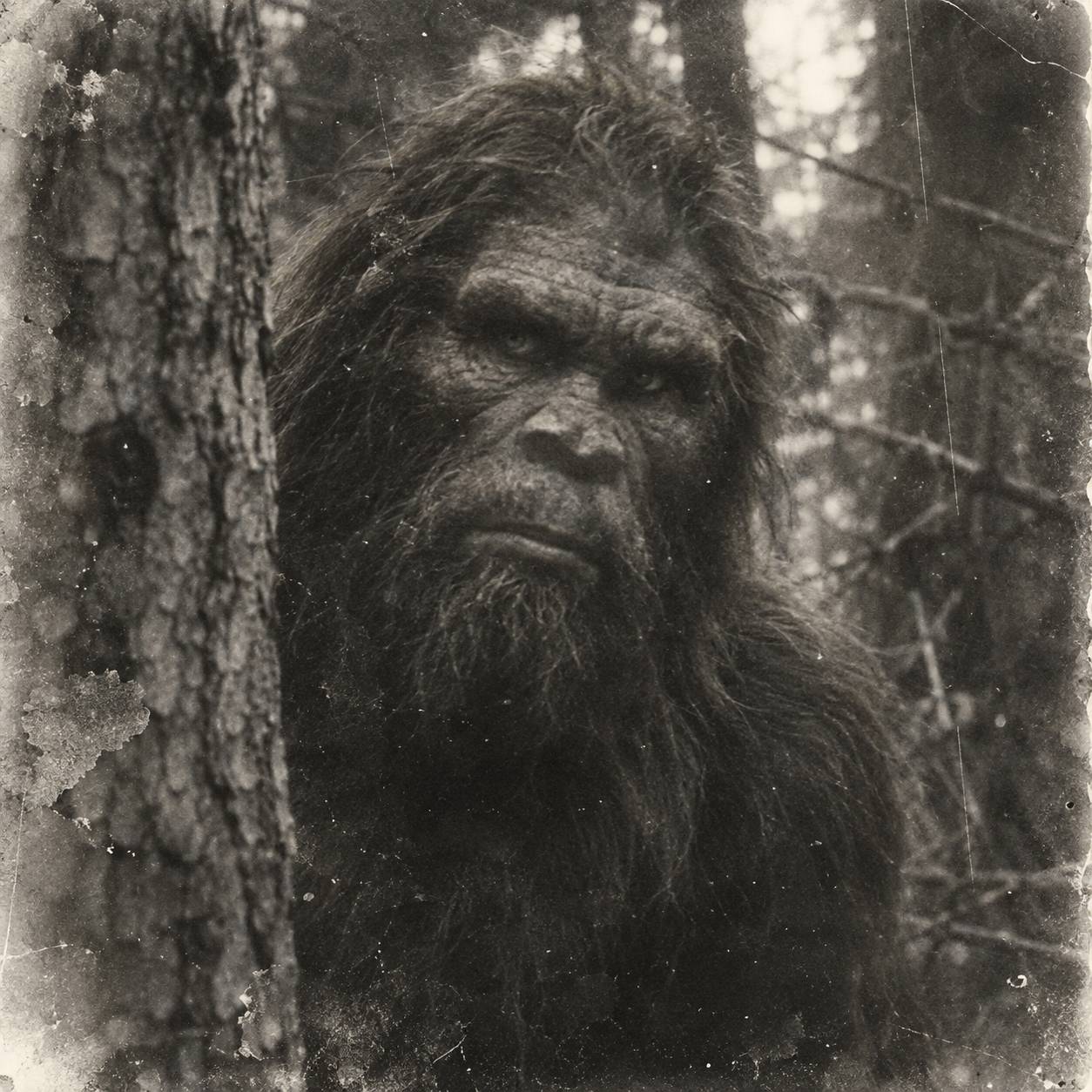
The connection with Bigfoot was made by later generations of researchers who recognized similarities between Bauman’s account and modern Sasquatch reports. Therefore, saying “Roosevelt saw Bigfoot” is incorrect. A more accurate statement is: Roosevelt recorded a story told to him by a hunter about a mysterious creature whose behavior has subsequently been interpreted as Bigfoot-like.
The Secondhand Problem. There is nevertheless a serious weakness. The story is secondhand. We do not have a modern eyewitness interview with Bauman. We do not have photographs. We do not have the original tracks. We do not have DNA. We do not have a body or skeleton. And Roosevelt himself did not witness the encounter. Everything depends upon what Bauman told Roosevelt and how Roosevelt recorded it. Consequently, the story cannot prove the existence of Sasquatch.
Even with those limitations, the Sasquatch interpretation remains popular because the story appeared before the modern Bigfoot phenomenon and contains several features that later became characteristic of Bigfoot reports. That is what makes it so intriguing. If the story had first appeared after the Patterson-Gimlin film or during the explosion of Bigfoot books and television programs, skeptics could argue that the witnesses were influenced by popular culture. But Bauman’s account was published in 1893.
There was no modern Bigfoot industry. There was no famous Patterson-Gimlin film. There were no Bigfoot television programs. There was no widespread American image of a giant hairy man walking through the forest.
Yet the basic outline of the story sounds surprisingly familiar. The strongest argument for the Sasquatch interpretation is therefore not one piece of evidence by itself. It is the combination: experienced wilderness hunters + remote mountains + unexplained tracks + apparent bipedal movement + strange nighttime vocalizations + a creature repeatedly approaching the camp + apparent intelligence and stealth + extreme physical power + a violent encounter.
To Bigfoot researchers, that combination is difficult to dismiss as merely a single mistaken identification. They argue that perhaps Bauman encountered something that science has never formally recognized.
The skeptical response is equally straightforward. A large bear could explain much of the story. Darkness could explain the difficulty identifying the animal. Fear could have influenced the hunters’ interpretation. Tracks can be deceptive. Animal sounds can be difficult to identify. And the story was recorded after the events rather than documented at the scene. Therefore, the evidence is insufficient to establish a new species.
The Bauman Incident ultimately occupies an unusual position in Bigfoot history. It is too old to be explained simply as a product of modern Bigfoot culture, yet it is also too poorly documented to serve as scientific proof of Sasquatch. For believers, it is one of the most intriguing early accounts because the creature seems to display the very characteristics later associated with Bigfoot. For skeptics, it remains an excellent example of how a frightening wilderness encounter can become mysterious through darkness, fear, uncertain tracks, and the retelling of an extraordinary event.
But among those who accept the possibility that Sasquatch exists, the Bigfoot interpretation remains the favored one because the overall pattern of Bauman’s experience seems remarkably consistent with the hundreds of later reports of large, elusive, upright creatures in North American forests.
Whether Bauman encountered a bear, another known animal, or something unknown, Theodore Roosevelt ensured that his strange experience would survive. And so, more than a century later, the question remains: Was the “goblin beast” of Bauman’s story simply a frightening animal—or was it an early encounter with the creature we now call Bigfoot? The evidence cannot provide a definitive answer. But the fact that such a strikingly Bigfoot-like account was recorded as early as 1893 is precisely why the Bauman story remains one of the most frequently discussed historical cases in the long search for Sasquatch.