The Accident That Changed Everything
The story begins with James Edwin Wide, a railway signalman employed by the railways near the city of Uitenhage. Mister Wade was a South African train inspector. He had been known for jumping, with skill, between moving railroad cars, and earned the nickname “Jumper”. In the 1870s, Wide suffered a terrible accident. Accounts differ slightly on the details, but he reportedly fell beneath a railway train and then lost both of his legs. Despite this devastating injury, he was determined to continue working. Wide fashioned makeshift wooden prosthetic legs. He used a small trolley to move around and remained employed precariously by the railway company. One day, in 1881, Wide was impressed after seeing a young chacma baboon leading a farmer’s ox wagon at a local market. Wide made an offer to buy Jack as a pet, and even though the owner warned that Jack would sulk all day unless given a “lot of good Cape brandy”, Wide bought Jack. Initially, Wide trained Jack to do all sorts of activities as performing with simple household tasks. The baboon would push Wide’s trolley, help around the house, and fulfill small errands. Over time, James realized that Jack possessed an exceptional intelligence and could learn surprisingly complex routines.
Training a Railway Signalman
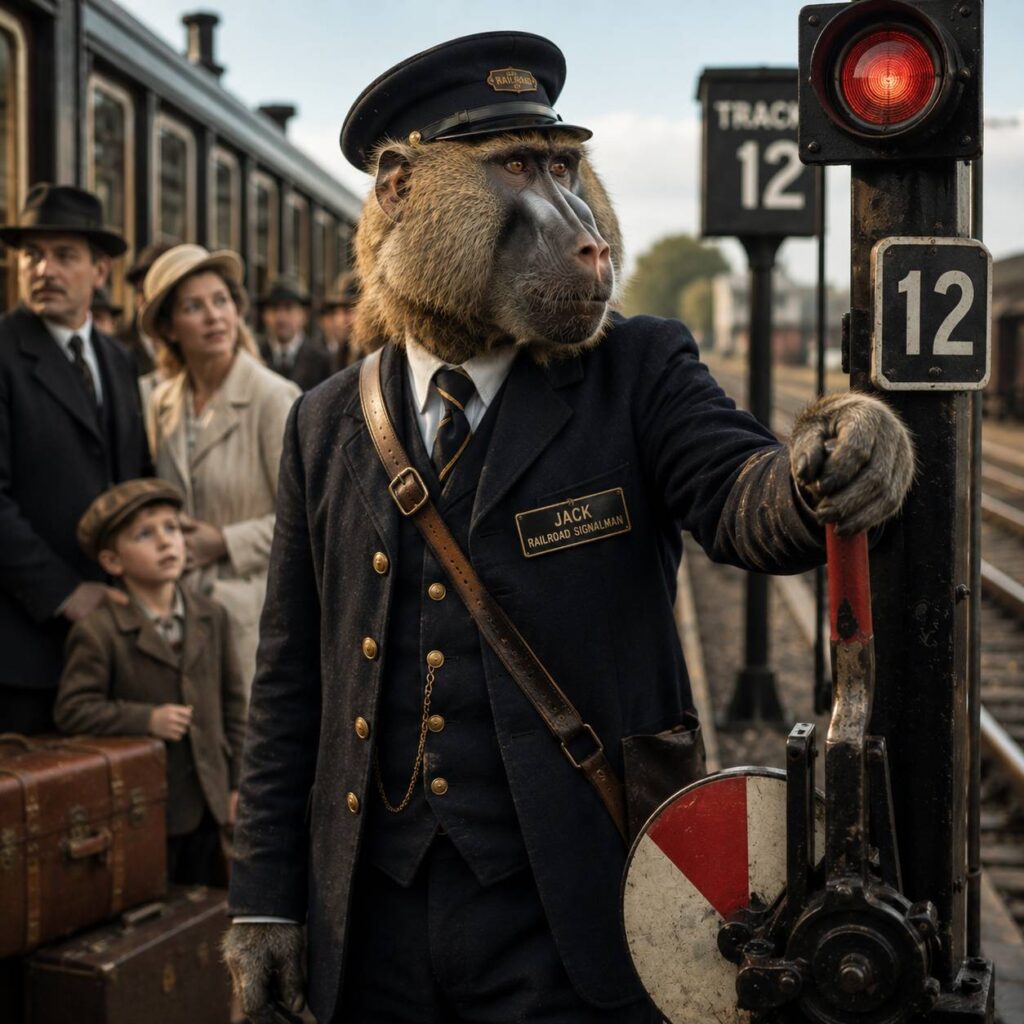
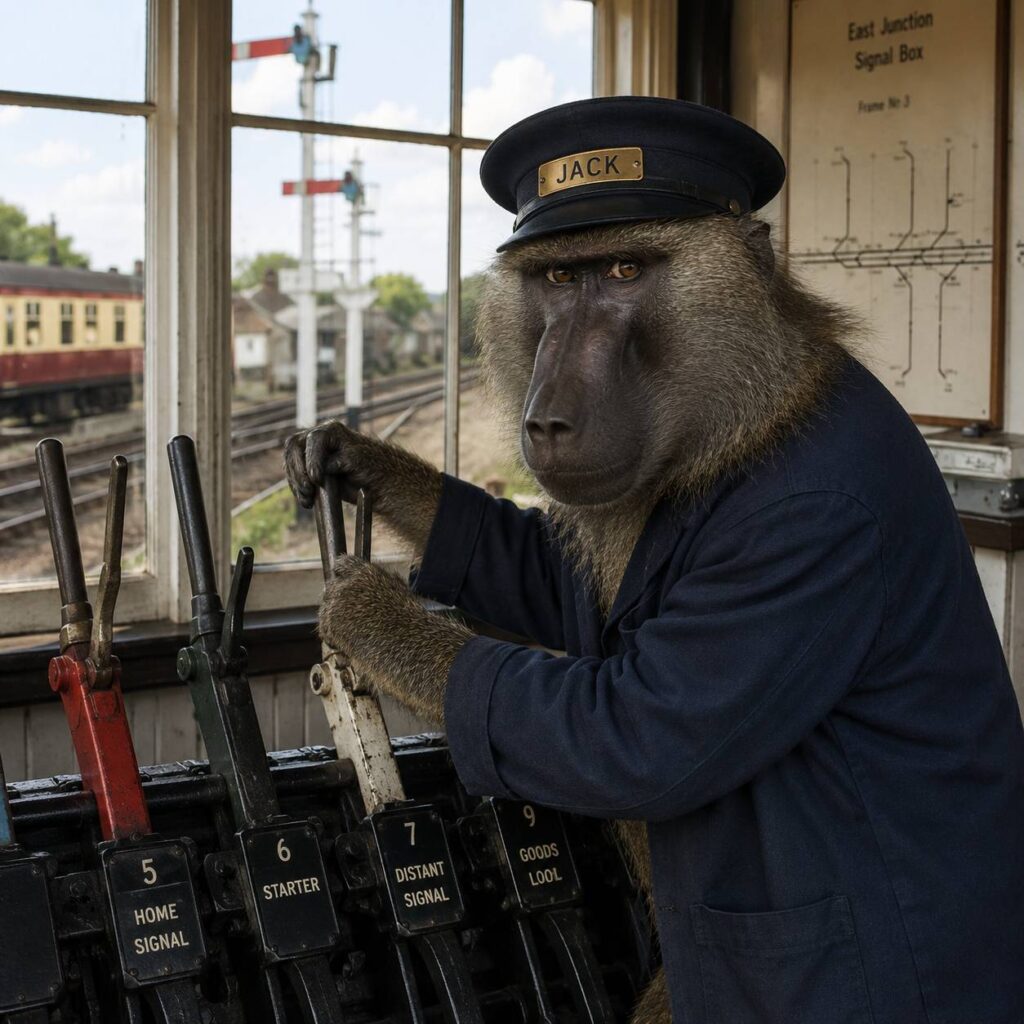
Railway signaling in the nineteenth century required precision. Signalmen operated levers that controlled points (track switches) and signals, ensuring trains moved safely through rail junctions. Wide gradually taught Jack to assist him with railway duties. The primate began to first learn about railroad signaling by watching the men do signaling, and then mimicking their their actions. The baboon soon learned to recognize different train whistles and understand what actions were required in response. According to historical reports: Jack could move the signal levers when instructed. He operated track switches, under supervision. From operating the railway’s switchboard, the primate was able to safely change the tracks for incoming trains. Both the train signal levers and the track switches were made primarily of cast iron or wrought iron, making them quite heavy. But, Jack did his job properly. He learned to distinguish specific whistle codes. When the train stopped, Jack handed over the keys to the driver. Jack rarely made mistakes despite the complexity of the work. The sight of a baboon working inside a signal cabin astonished railway workers and passengers alike.
Discovery by Railway Officials
Eventually, railway authorities learned, from a worried woman passenger, and soon other passengers that a baboon was helping to operate signals at Cape Government Railways. Unsurprisingly, they were alarmed and even became furious. A railway signaling error could lead to serious accidents, and officials initially worried that Wide had entrusted critical duties to an animal. An investigation was ordered.When inspectors arrived, they tested Jack’s abilities. The baboon reportedly demonstrated his knowledge of the signaling procedures and responded correctly to commands. The officials were so impressed that they allowed him to remain. In an extraordinary decision, Jack was effectively given an official position with the railway. And out of great respect the animal was called “Jack the Signalman”.
An Employee of the Railway
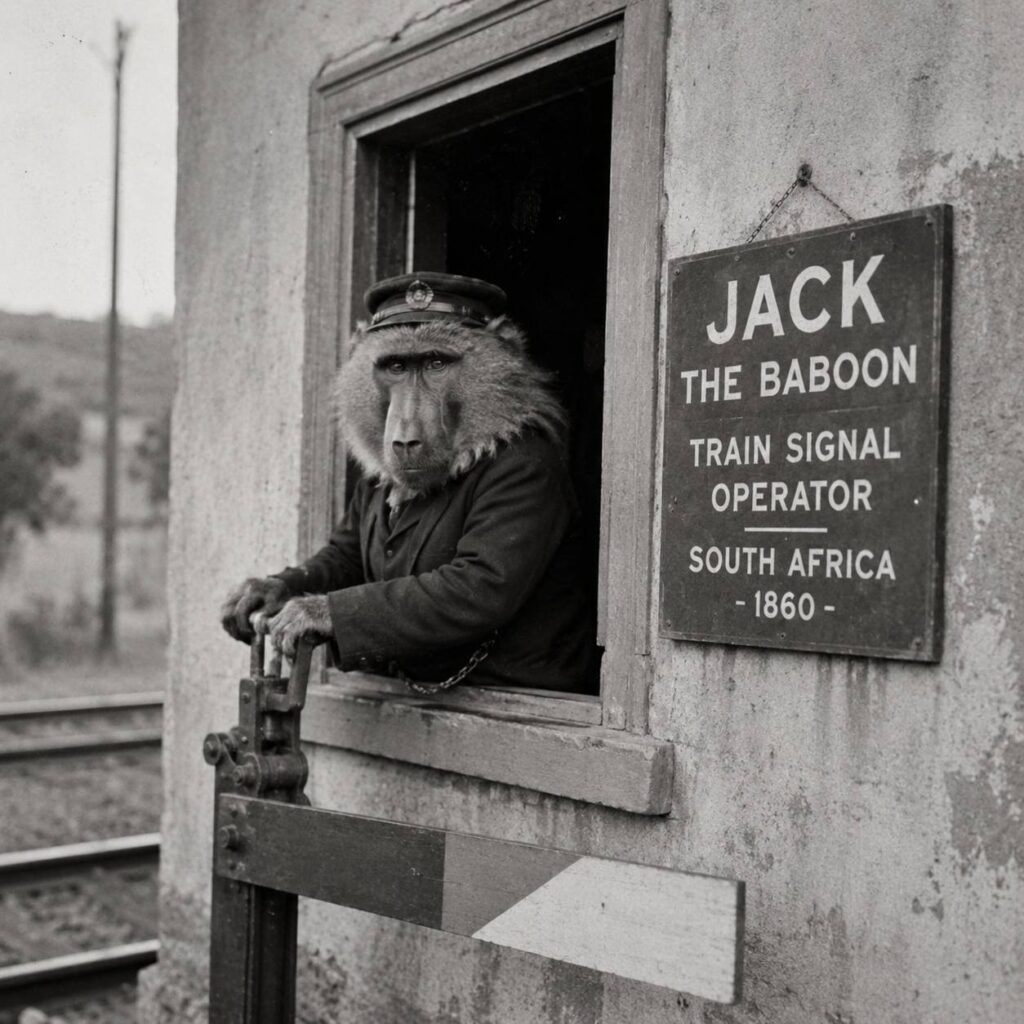
Jack became a recognized member of the railway workforce. He was an actual clocked-in employee. Historical accounts state that he received wages for his work. His compensation reportedly included: Money wages of about 20 cents per day. Weekly rations. A half of bottle of beer each week. Occasional treats, especially fruit. For nearly a decade, Jack assisted Wide in railway operations. Remarkably, there are no known records of him causing an accident or making a dangerous signaling mistake. There are photographs of Jack and of Jack at work. He was a very loyal and hard working employee of the railway.
Intelligence Beyond Expectations
Modern studies of baboons help explain Jack’s success. Chacma baboons are highly intelligent primates capable of: Learning complex sequences. Recognizing patterns. Solving problems. Following social rules. Using tools in some situations. Jack’s accomplishments demonstrated abilities that many people of his era never imagined animals could possess. He became an early example of advanced animal learning and training. Jack the baboon, through his much experience, became an expert railway signalman. He was an utterly an amazing, wonderful, astute; brilliant primate.
Jack’s Final Years
Jack worked alongside Wide for approximately nine years. During that time he became something of a local celebrity. Railway passengers often heard stories about the baboon signalman and hoped to catch a glimpse of him at work. In 1890, Jack died after contracting tuberculosis. His death marked the end of one of the most unusual chapters in railway history. His resting place is in the Albany Museum in Makhanda (Grahamstown), Eastern Cape, South Africa, which has his preserved skull. The location of Jack the Baboon’s body is unknown to historians and is not recorded. The body was probably buried locally or otherwise was disposed of, with the exception of the skull, and there is no available information regarding any burial site nor any disposal regarding the corpse of the primate railroad signalman.
Legacy
According a letter published in “Nature”, the British scientific journal, Jack performed as a railway man at Uttenhage in the Cape. There is documentation of the story by the Reverend George Howe, from 1890, and later by F.W. Fitzsimons, director of the Port Elizabeth Museum. The report of Fitzsimons was published in the “Cape Mercury” on May 29, 1923. The details center around an interview with Wide, the written statements of 25 witnesses, that were filed in the museum collection, and on Howe’s own evidence.
Today, Jack remains one of South Africa’s most famous animals. His story has appeared in books, newspapers, museums, and railway histories around the world. What makes the story so compelling is not merely that a baboon learned tricks. Jack performed duties associated with a highly responsible occupation and apparently did so with remarkable reliability. His partnership with James Wide also highlights a deeper story of perseverance: a disabled railway worker refusing to give up his career and finding an unlikely assistant who became both a coworker and a personal friend. Considerably more than a century later, Jack the baboon continues to capture imaginations because his story challenges assumptions about what animals can learn and accomplish. In the annals of railway history, Jack became very famous, and more and more people around the world today are learning the incredible true story of “Jack the Signalman”.