
The Mystery of Empty Clay Jars That Fill With Water
Across ancient landscapes, especially in regions like Mesopotamia, stories have circulated for centuries about a curious phenomenon: empty clay jars left outside overnight mysteriously filling with cool, drinkable water. Of course to the majority of the peoples back then, the feat seemed magical. But, whether interpreted as ingenuity, natural science, or quiet wonder, this phenomenon reflects a fascinating intersection of environment, craftsmanship, and human observation.
A Desert Problem—and an Elegant Solution
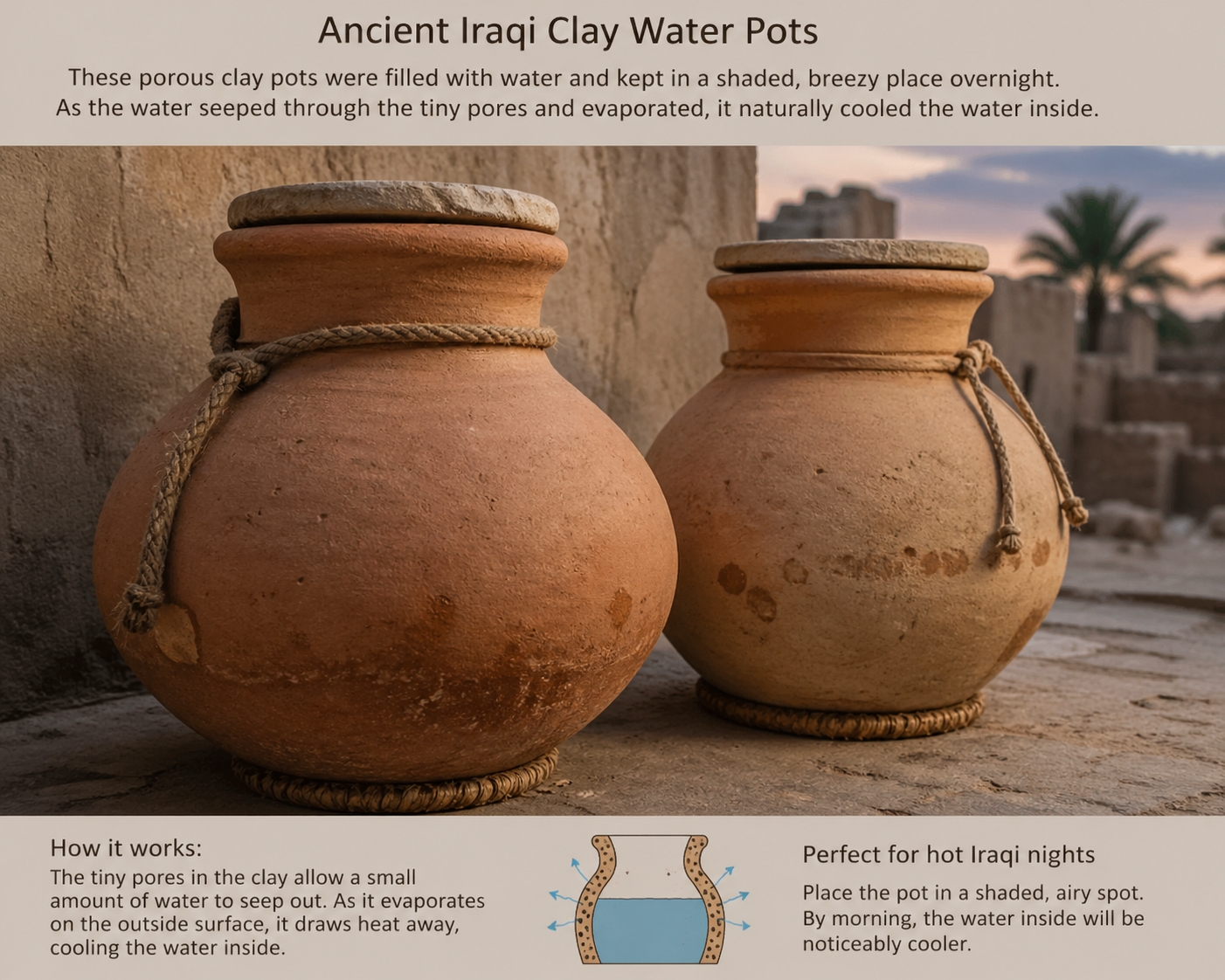
In arid regions such as Iraq, water has always been a precious resource. Ancient peoples, including the Sumerians and Babylonians, developed remarkably sophisticated ways to store and conserve it. Clay jars—porous, durable, and abundant—were among their most important tools. The jars in question were typically unglazed and made from natural clay. When placed outdoors during cooler nighttime temperatures, particularly in areas where humidity rose after sunset, these vessels sometimes appeared to “collect” water without any visible source.
The Science Behind the Phenomenon
Though it may sound mystical, the explanation lies in a natural process known as condensation. At night, temperatures drop, and the surface of the clay jar cools faster than the surrounding air. When warm, moisture-laden air comes into contact with the cooler surface of the jar, water vapor condenses into liquid droplets. Because clay is slightly porous, it can also absorb moisture from the air and gradually allow it to accumulate inside the vessel. In regions near rivers such as the Tigris River and Euphrates River, nighttime humidity levels could be high enough to make this effect noticeable—especially over multiple nights.

Cooling as a Clue
Interestingly, these same clay jars were widely used as natural coolers. Water stored inside them stayed refreshingly cool due to evaporation through the porous walls—a principle still used today in devices sometimes called “zeer pots.” This cooling effect reinforces the condensation process. A cooler surface increases the likelihood that airborne moisture will turn into liquid, enhancing the jar’s ability to “fill itself,” at least partially.
Myth, Memory, and Misinterpretation
Over time, practical observations can take on a life of their own. In ancient storytelling traditions, the idea of jars filling with water overnight may have been seen as a gift from nature—or even the divine. Without modern scientific understanding, such occurrences could easily be interpreted as miraculous. It’s also possible that the amount of water collected was modest, but repeated observations and retellings amplified the phenomenon into something more dramatic.
A Blend of Nature and Ingenuity
While these clay jars did not magically fill to the brim, they demonstrate how closely ancient people observed their environment. By using simple materials and placing them strategically, they were able to take advantage of natural processes like condensation and evaporation. In a world where survival often depended on subtle environmental cues, even a small amount of collected water could make a difference. What might seem like a curious legend today is, in reality, a testament to human adaptability and the quiet power of nature working through humble clay.
Ice in the Desert: How Ancient Mesopotamians and Persians Made Ice in Scorching Climates
The idea of producing ice in the middle of a desert sounds impossible—yet thousands of years ago, people in the region of ancient Mesopotamia and neighboring Persia developed ingenious methods to do exactly that. Again, to the vast majority of those peoples of antiquity, such a grand achievement seemed magical. So, long before electricity or refrigeration, the developers used a clever combination of architecture, climate awareness, and physics to create and store ice even in extreme heat.
The Principle: Using the Desert Against Itself
Deserts are known for blistering daytime temperatures, but they also experience dramatic cooling at night. Ancient engineers exploited this temperature swing. By carefully managing exposure to the night sky and minimizing heat during the day, they could freeze water—even when daytime temperatures soared. This relied on a natural process called radiative cooling, where heat escapes from a surface into the clear night sky faster than it is replaced.
Ice-Making Basins
In regions around ancient Iraq and Iran, shallow pools of water were constructed in open areas. These basins were: Wide and shallow, allowing water to cool quickly. Positioned to maximize exposure to the night sky. Sometimes surrounded by low walls to block warm winds. During cold desert nights—especially in winter—the temperature of the water could drop low enough to freeze. By dawn, thin sheets of ice would form on the surface. Workers would then collect the ice before sunrise and store it immediately.
The Role of Yakhchals
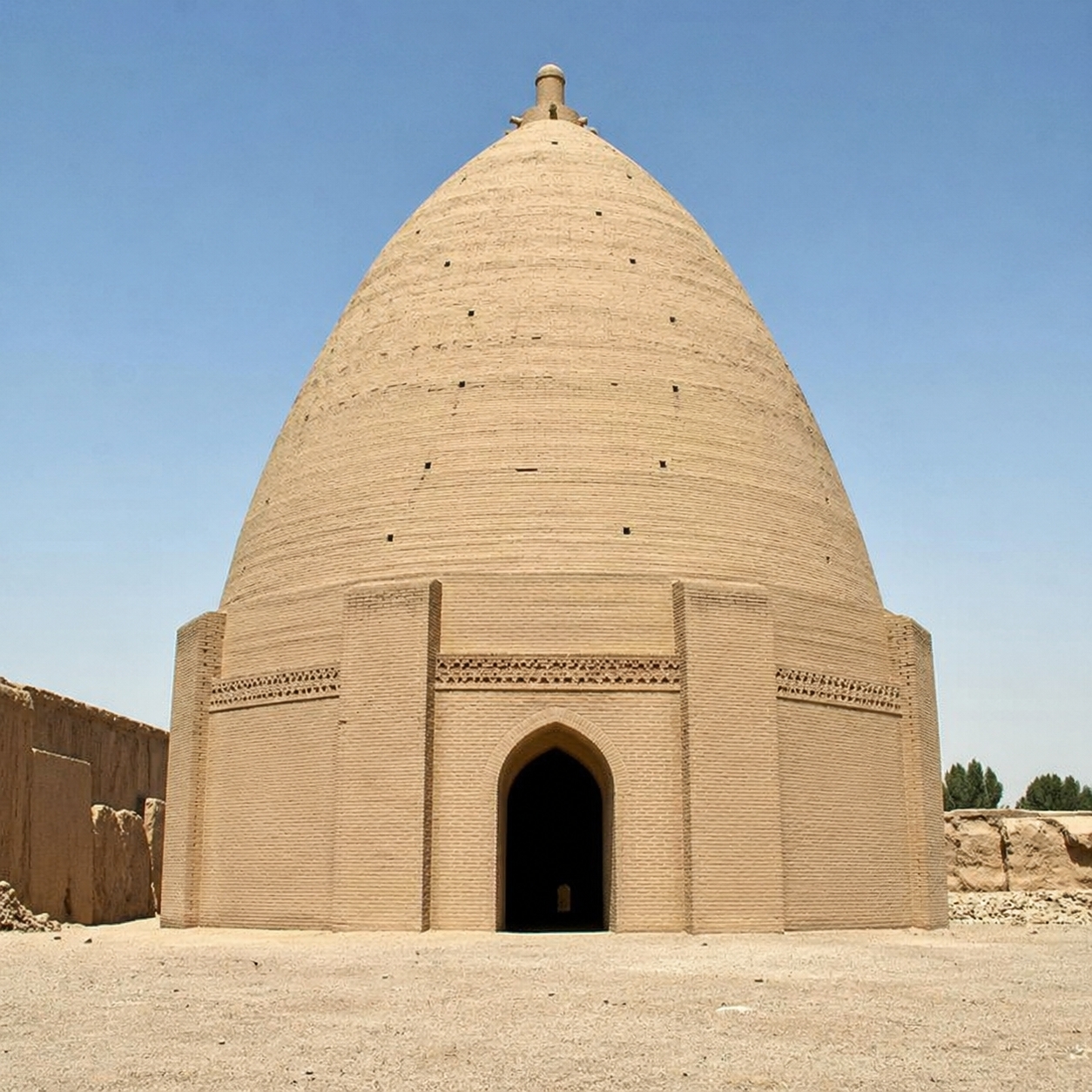
The real breakthrough came with the development of structures known as Yakhchal—large domed buildings specifically designed to store ice year-round. These structures had several remarkable features: 1. Thick Insulating Walls. Made from a special mixture of clay, sand, ash, and egg whites, the walls were extremely heat-resistant, sometimes over 6 feet thick. 2. Underground Storage. Much of the storage space was below ground, where temperatures remained naturally cooler. 3. Conical Dome Shape. The tall dome helped heat rise and escape, keeping the lower interior cool. 4. Ventilation and Wind Catchers. Some yakhchals were paired with wind towers that funneled cool air inside, further reducing temperatures.
Transporting Ice in Ancient Iraq
In parts of ancient Iraq (historically Mesopotamia), as well as in ancient Rome, and other prominent civilization territories of eons ago, ice was sometimes also transported from colder mountainous regions. However, local production using night freezing and insulated storage was more reliable for sustained supply. Ice was highly valued and used for: Cooling drinks. Preserving food. Medical treatments. Luxury consumption by elites.
A Remarkable Achievement of Ancient Engineering
The ability to produce and store ice in desert environments demonstrates the sophistication of ancient Middle Eastern civilizations. Without modern technology, they mastered environmental design and thermodynamics in ways that still impress engineers today. These early innovations laid the groundwork for later cooling technologies—and remind us that even in the harshest climates, human ingenuity can find a clever way, which also makes very fascinating history.