In the winter of 1673, the small community of Portsmouth, Rhode Island, became the scene of a bizarre murder investigation—one in which the testimony of a ghost was treated as evidence. The dead woman was Rebecca Cornell, a 73-year-old widow and substantial landowner. Her death was tragic enough by itself. But what followed became one of the strangest episodes in early American history: her son, Thomas Cornell, was accused of murdering her, convicted, and hanged. One of the most important pieces of evidence against him came from Rebecca herself—or, at least, from the apparition that her brother claimed was her ghost.
A Woman Found Burning
On the evening of February 8, 1673, Rebecca Cornell was at the family homestead in Portsmouth. She had reportedly been feeling unwell and remained in her room while the rest of the household ate supper. Later, a family member went to check on her. What he discovered was horrifying. Rebecca was dead on the floor near the fireplace, and her body was badly burned. The flames had consumed so much of her clothing and flesh that she was difficult to recognize.The initial investigation concluded that her death had been an unfortunate accident. The theory was that Rebecca had somehow fallen or collapsed near the fire, where her clothing caught flame. At first, there appeared to be no clear proof of murder.Then, according to the surviving testimony, Rebecca’s ghost appeared.
The Apparition of John Briggs
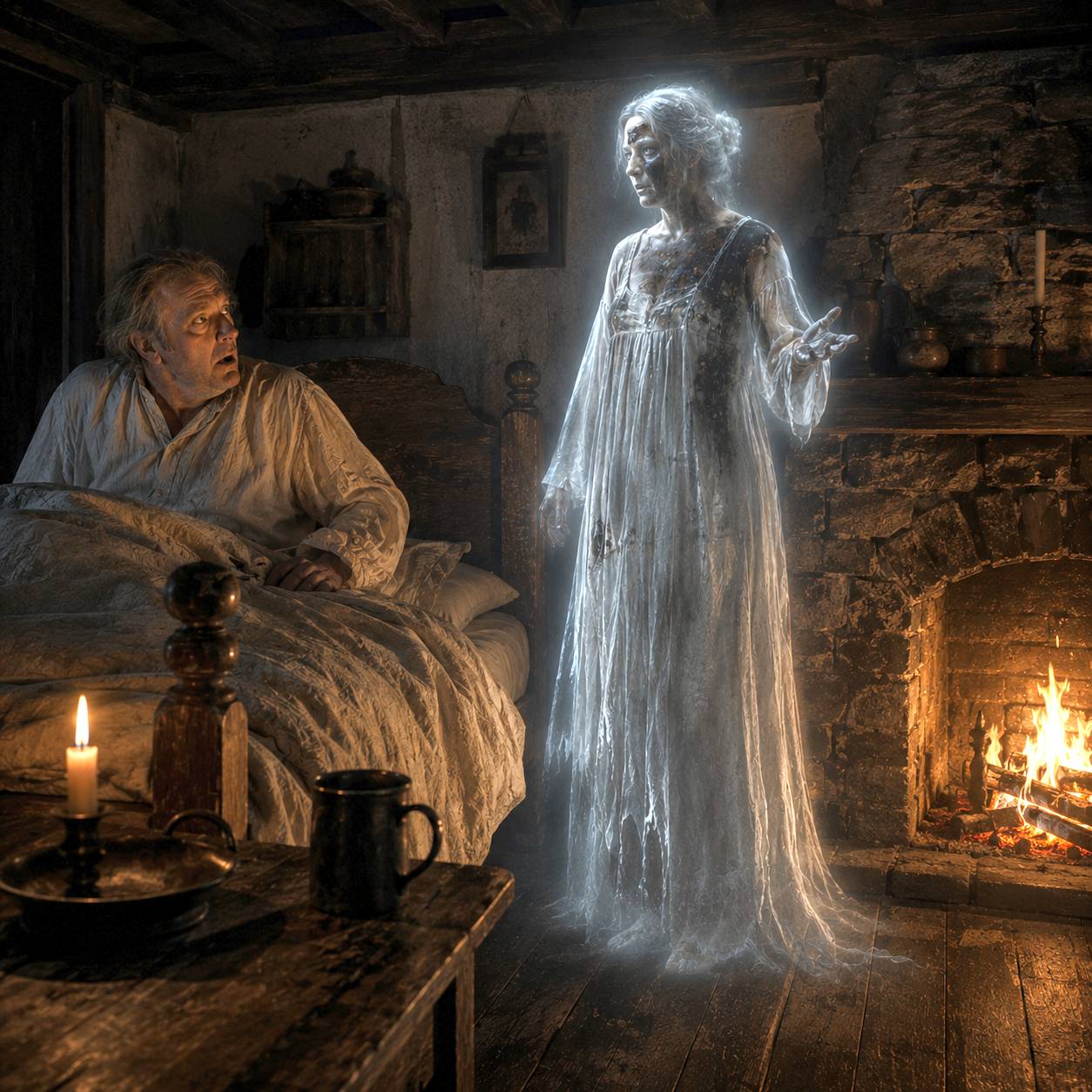
Rebecca’s brother, John Briggs, lived nearby. Two nights after Rebecca’s burial, Briggs went to bed. He later said that he was somewhere between sleep and wakefulness when he felt the bedclothes move twice. He thought someone might be getting into bed with him. When he awoke and turned, he saw a strange light in the room, resembling the light of dawn. Standing beside his bed was the form of a woman who was glowing. Briggs said that he was frightened and called out, asking in the name of God who the apparition was. The figure answered that she was his sister, Rebecca Cornell. The apparition then reportedly drew attention to the manner of her death, saying words that were recorded in the period’s legal testimony as:“See how I was burnt with fire.” Briggs claimed that the apparition appeared severely burned around the head, face, and shoulders. In modern times, such a report would normally be regarded as a dream, hallucination, sleep paralysis, or grief-related experience. In seventeenth-century Rhode Island, however, the supernatural world was taken far more seriously. Many people believed that the dead could return to reveal hidden crimes. Rebecca’s alleged appearance therefore changed the entire investigation.
The Investigation Was Reopened
Rebecca’s body was examined again. Investigators reported finding what they considered a suspicious wound in the upper part of her stomach. Suspicion increasingly focused on her son, Thomas Cornell. There had reportedly been tension between Thomas and his mother. Rebecca owned considerable property, and questions existed concerning money, debts, inheritance, and the obligations Thomas had toward her. Witnesses also described friction within the household. There were other troubling details as well. Some witnesses believed Thomas had made comments that could be interpreted as showing resentment toward his mother. One statement was later understood as suggesting that Rebecca had wanted a “good fire” and that she had now received one.
To the authorities, the circumstances began to look less like a tragic accident and more like a carefully concealed murder. But the case against Thomas was largely circumstantial. There was no modern forensic evidence, no reliable eyewitness who claimed to have seen him kill Rebecca, and no confession. The alleged ghostly visitation of John Briggs became one of the most remarkable elements of the prosecution’s case.
Thomas Cornell on Trial
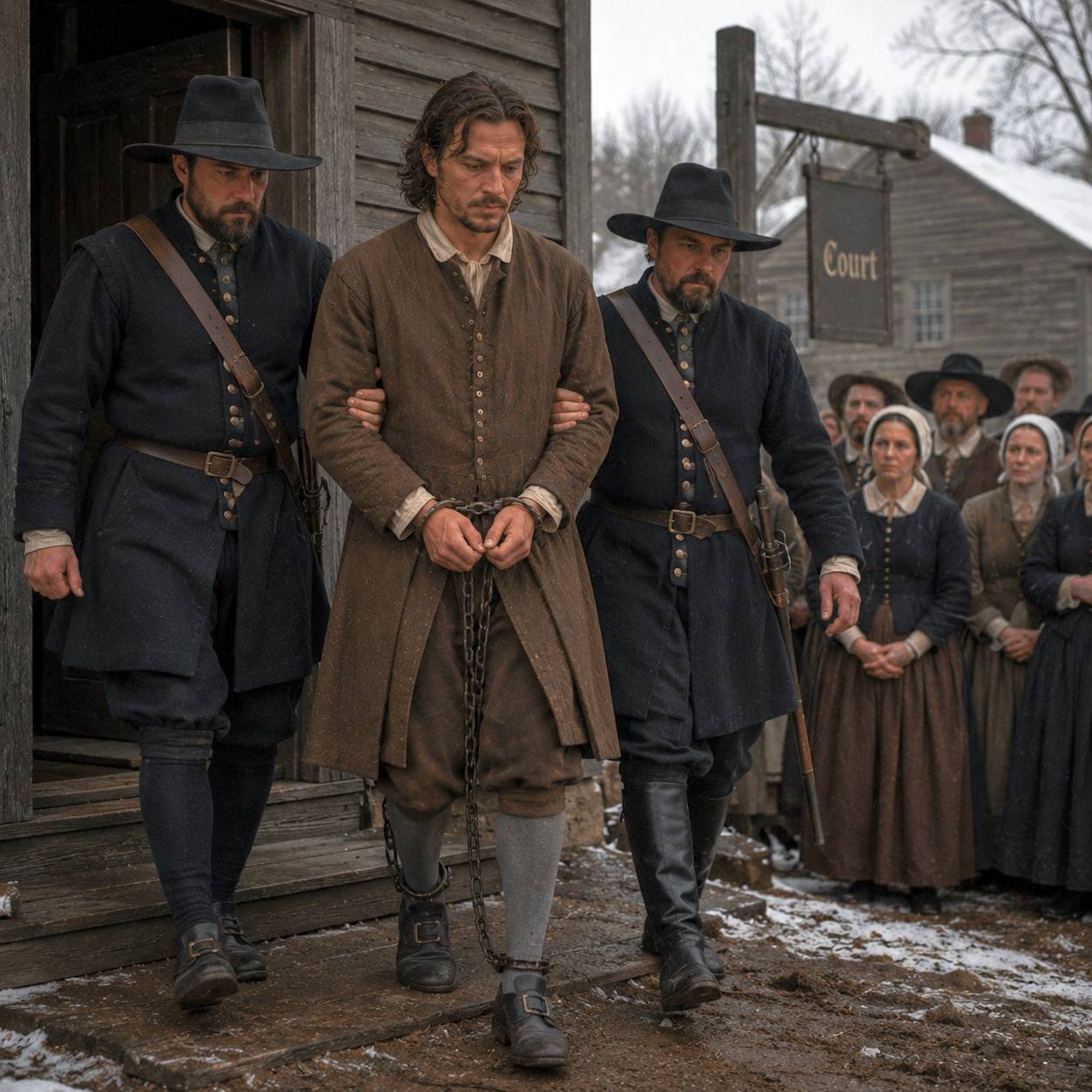
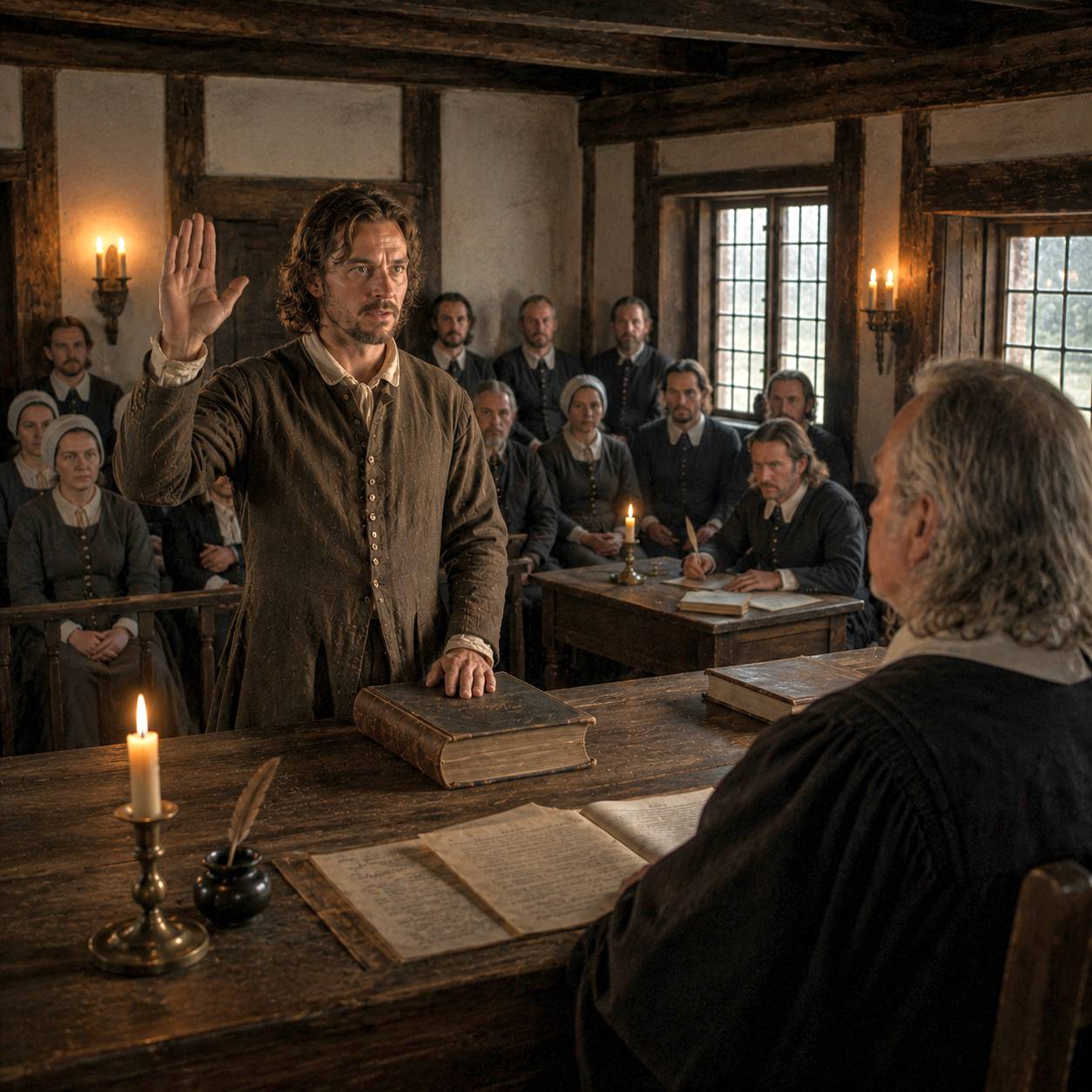
Thomas Cornell was tried in 1673. The prosecution presented evidence concerning the troubled relationship between mother and son, the suspicious circumstances of Rebecca’s death, and the alleged wound discovered during the second examination of her body. The ghost story was also part of the extraordinary chain of events surrounding the case. Thomas was found guilty of murdering his mother. He was sentenced to death and was executed, widely believed to have been hanged on May 23, 1673. The case is often regarded as one of the earliest and most bizarre murder trials in colonial New England. The Rhode Island Historical Society describes the case as particularly notable because spectral evidence—evidence connected to a ghostly apparition—was involved in the prosecution.
Was Rebecca Really Murdered?
The mystery has never been completely solved. One possibility is that Rebecca was murdered and that the ghost story reflected the beliefs of the period. Perhaps John Briggs had a vivid dream after hearing details of Rebecca’s terrible death. Perhaps he genuinely believed he had seen her spirit. Or perhaps the apparition was interpreted by the authorities as supernatural confirmation of suspicions that already existed. Another possibility is that Rebecca’s death really was accidental. She may have fallen near the fireplace, and her clothing could have caught fire. The original investigation reportedly reached an accidental-death conclusion before the later testimony and second examination changed the case. A third possibility is that someone did kill Rebecca, but that Thomas Cornell may not have been the murderer. Because the surviving evidence is incomplete and the original investigation took place more than 350 years ago, the truth may never be known.
The Strange Legacy of the Cornell Family
The story became even more remarkable because of what happened to Thomas Cornell’s descendants. Thomas’s widow, Sarah, later gave birth to a daughter whom she named Innocent. Many historians and storytellers have interpreted the name as a possible protest against her husband’s conviction. The Cornell family later became connected with the Borden family. In a remarkable twist of American history, one of Rebecca Cornell’s distant descendants was Lizzie Borden, who was accused in 1892 of murdering her father and stepmother. Thus, the family associated with one of colonial America’s most famous murder trials became connected generations later with one of America’s most famous unsolved—or at least disputed—murder cases.
The Ghost of Rebecca Cornell
The story of Rebecca Cornell is unusual even among America’s early ghost legends. It contains almost everything that makes a historical mystery enduring: a lonely winter death, a burned body, family conflict, questions of inheritance, a possible murder weapon, an alleged supernatural visitation, a trial, an execution, and generations of uncertainty. The most haunting element remains the alleged appearance of Rebecca’s ghost to her brother. Whether John Briggs saw a genuine spirit, experienced a dream, or unconsciously transformed grief and suspicion into a supernatural experience, his testimony had enormous consequences. A dead woman seemed to return from the grave and announce that she had been “burnt with fire.” In 1673, that testimony helped transform a tragic death into a murder investigation.
Today, the case is remembered as one of the earliest American stories in which a ghost was said to return from the grave to expose her own murder—a chilling tale from a time when the boundary between the courtroom and the supernatural world was far less sharply defined than it is today. Historically, the exact cause of Rebecca Cornell’s death remains disputed. The ghostly visitation is preserved in seventeenth-century testimony, but whether it represented a genuine supernatural event cannot be established from the surviving historical evidence.