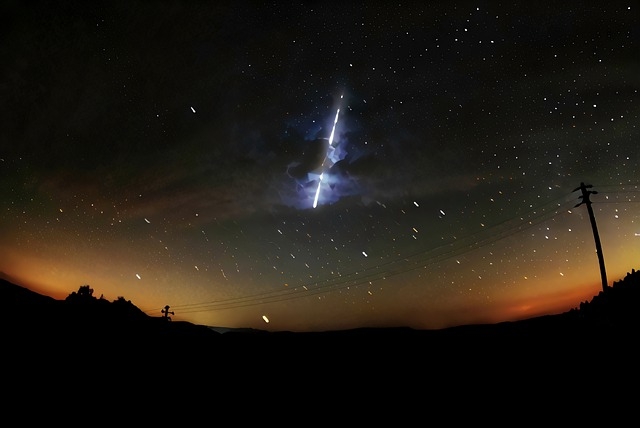
For decades, witnesses have reported unidentified objects that appear to hover silently, accelerate rapidly, turn abruptly and move without wings, propellers, exhaust or other visible means of propulsion. Today these reports are often grouped under the term Unidentified Anomalous Phenomena, or UAP.
The descriptions are intriguing, but an important distinction must be made at the beginning: an unidentified observation is not proof of an advanced aircraft, and it is certainly not proof of extraterrestrial technology. NASA states that it has found no credible evidence that UAP are extraterrestrial. Its scientific study has emphasized the need for better-calibrated instruments, consistent reporting and higher-quality data before extraordinary conclusions can be drawn.
Nevertheless, the reported flight characteristics raise an interesting scientific question. If a vehicle really could perform such maneuvers, what type of propulsion—or manipulation of physics—would be required?
The answer is unlikely to be a single mysterious engine. Silent hovering, extreme acceleration, absence of sonic booms and abrupt changes of direction would present several separate problems involving thrust, inertia, atmospheric drag, structural strength and energy production. Any convincing theory must address all of them.
Why ordinary propulsion is not enough
Conventional aircraft move by exchanging momentum with their surroundings. Propellers and jet engines accelerate air backward. Rockets expel hot gas. Wings produce lift by redirecting airflow. These methods are extremely effective, but they remain subject to familiar physical limitations.
A vehicle accelerating rapidly must withstand enormous mechanical forces. Its occupants experience those forces as g-loads. A sudden turn at very high speed would be far more destructive than simply flying fast in a straight line. Atmospheric flight also produces drag, heating, turbulence and shock waves. A large object moving through dense air at several times the speed of sound should normally generate a powerful sonic boom.
That means the most difficult feature attributed to flying saucers is not merely their speed. It is their reported ability to change velocity without displaying the consequences normally associated with acceleration.
A conventional engine, regardless of its power, would not eliminate inertia. A more radical system would have to alter the motion of the vehicle, its occupants and perhaps the surrounding medium together.
Electroaerodynamic propulsion
One genuine technology sometimes associated with saucers is electroaerodynamic propulsion, commonly called ionic-wind propulsion. A high voltage between thin emitter wires and larger collecting electrodes ionizes nearby air. The ions accelerate through the electric field and collide with neutral air molecules, producing airflow and thrust.
This is real physics. In 2018, researchers demonstrated sustained flight of a lightweight fixed-wing aircraft propelled by an electroaerodynamic system with no conventional moving propulsion parts. The aircraft had a five-metre wingspan and flew successfully across an indoor test area.
This technology helps explain why high-voltage devices once presented as “electrogravitic” machines can lift themselves in air. Their thrust is produced by moving ionized air, not by cancelling gravity. Such systems can operate quietly and may create a faint glow, but their present thrust-to-weight performance is far below what would be needed for a fast, heavily loaded craft.
Electroaerodynamics therefore deserves a place in a discussion of unusual aircraft, but it should not be described as demonstrated antigravity.
Plasma and magnetohydrodynamic control
Another possibility is the use of plasma—the electrically charged state of matter created when gas becomes ionized. Electric and magnetic fields can accelerate plasma without turbines or propellers. Plasma thrusters are already used in space, although they provide low thrust and work by expelling reaction mass.
In an atmosphere, a sufficiently powerful system might ionize air around a vehicle and then influence that charged gas with electromagnetic fields. This concept is related to magnetohydrodynamics, which studies the motion of electrically conducting fluids and plasmas.
A plasma layer might conceivably affect airflow, heating, radar reflection or the formation of shock waves. Researchers have investigated plasma actuators for aerodynamic flow control, but nothing presently demonstrated can surround a large craft with a field that eliminates drag or permits silent hypersonic flight.
Magnetic interaction with Earth’s field is even less promising as a primary lifting mechanism. Earth’s magnetic field is weak, and practical magnetic levitation generally requires either strong nearby magnets, specially arranged conductors or a prepared guideway. A craft cannot simply repel Earth’s magnetic field with a coil and obtain unlimited lift.
Plasma and electromagnetic systems could become useful components of future aircraft, but they would still obey conservation of momentum. They do not provide inertia cancellation.
The spacetime approach
The most important modern change in advanced-propulsion thinking came from Mexican theoretical physicist Miguel Alcubierre. In 1994, Alcubierre described a mathematical solution to Einstein’s field equations in which a region of comparatively undisturbed spacetime is carried within a larger distortion. Space contracts ahead of the region and expands behind it. The craft itself does not locally race through space faster than light; instead, the surrounding geometry changes.
This became known as the Alcubierre warp drive.
The concept matters because general relativity treats gravity not simply as a force, but as the curvature of spacetime. Matter and energy influence that curvature, and objects follow paths through the resulting geometry. In principle, changing the geometry could change how a vehicle moves.
A craft enclosed within a suitable spacetime region might follow a nearly inertial path even while distant observers saw it undergo extraordinary motion. The vehicle and its occupants could move together rather than being pushed violently through space. This offers a theoretical way of discussing apparent acceleration without crushing internal g-forces.
However, the Alcubierre metric is not an engineering design. It begins by specifying a desired spacetime and then calculates the extraordinary distribution of energy needed to create it. The original solution requires regions of negative energy density—often described as exotic matter—and enormous total energy. It also faces serious problems involving the creation and control of the bubble, causal horizons, radiation and stability.
No known machine can generate or control such a spacetime distortion.
Newer warp-drive research
Researchers have continued examining whether the original idea can be modified. Alexey Bobrick and Gianni Martire developed a broader mathematical description of warp-drive geometries. They showed that subluminal warp regions can, under certain assumptions, be constructed using positive energy, although the shell would still require ordinary propulsion to move. Their work also suggested that flattened configurations could reduce some energy requirements. This is noteworthy when discussing disc-like geometries, but it does not demonstrate that flying saucers use warp propulsion.
Physicist Erik Lentz later proposed superluminal spacetime solitons that he argued could be supported by positive energy associated with electromagnetic fields and plasma. His work attracted attention because it appeared to avoid one of the greatest obstacles in Alcubierre’s model.
Those results remain disputed. Other physicists have argued that physically reasonable warp drives still violate fundamental energy conditions. A 2022 analysis concluded that positive energy seen by one particular class of observers does not prove that all observers measure acceptable energy densities. More recent work has also challenged the claim that the Lentz geometry entirely avoids negative energy.
The correct conclusion is therefore not that a practical positive-energy warp drive has been discovered. The research shows that warp metrics remain an active mathematical subject, while their physical realizability is unresolved and highly doubtful.
Would a saucer shape help?
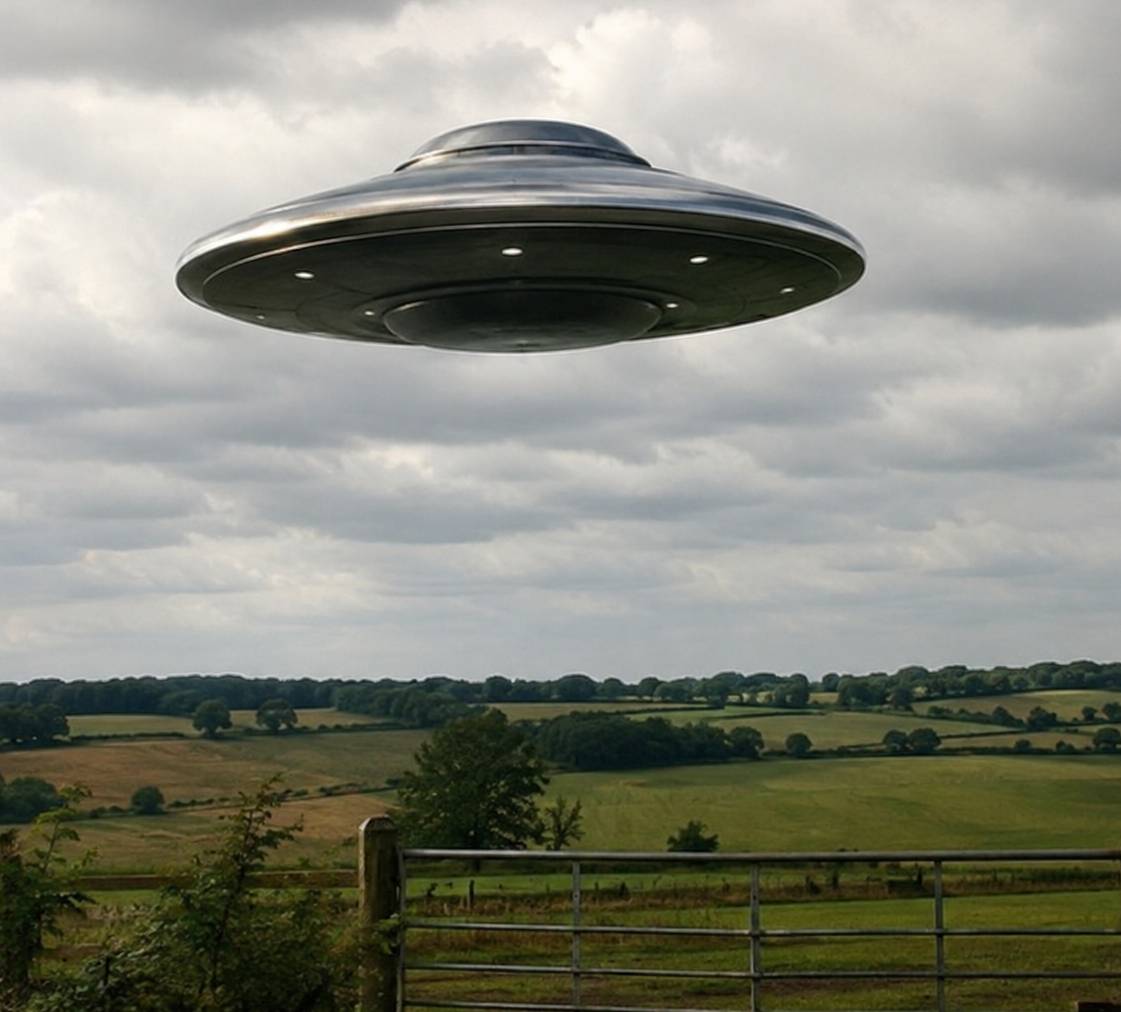
A circular craft could be useful for reasons that do not require antigravity. A disc provides rotational symmetry, offers ample internal volume and could distribute antennas, electrodes, coils or plasma emitters around its rim. If a hypothetical field had to surround a craft evenly, a circular or flattened geometry might simplify its production.
Some warp-drive studies have also found that flattened spacetime configurations may be more energy-efficient than spherical ones. But this does not establish a direct link between mathematical warp bubbles and reported flying saucers. The resemblance is suggestive, not evidential.
A true spacetime vehicle might not need aerodynamic wings, yet it would still require an immense energy source, precise control of gravitational fields and some mechanism for creating, accelerating and stopping the distorted region. None of these capabilities exists today.
The most plausible conclusion
Modern science offers several real technologies that resemble limited aspects of reported saucer behavior. Electroaerodynamic systems can produce quiet thrust without propellers. Plasma and electromagnetic fields can control ionized gases. Advanced materials, computers and sensors can make aircraft more agile and less visible.
None, however, accounts for the full collection of extraordinary abilities sometimes attributed to UAP.
Spacetime engineering provides the most intellectually serious framework for discussing motion without conventional acceleration. Alcubierre’s contribution was important because it showed that Einstein’s equations permit geometries resembling a moving warp region. Later studies have refined, generalized and criticized that idea.
But mathematical permission is not the same as physical possibility.
At present, no verified experiment has produced a warp bubble, reduced inertia, shielded gravity or demonstrated a propulsion system capable of the reported flying-saucer maneuvers. Patents and declassified documents may show that people have considered such ideas; they do not prove that the technologies work.
The honest scientific position lies between dismissal and belief. Unusual observations should be investigated with good instruments and reliable data. At the same time, advanced propulsion concepts should be judged by experimental evidence, not by how closely they resemble reports of mysterious objects.
Flying saucers may continue to inspire speculation, but the most interesting question is no longer simply what type of engine they might contain. It is whether a sufficiently advanced technology could someday control the geometry of spacetime itself.