Today the Sahara Desert is known as a vast ocean of sand — a harsh and nearly endless wilderness stretching across North Africa. The Sahara Desert is the largest hot desert in the world, covering an incredible 9.2 million km2, which is almost the same size as China, and has only from two million and one half million to three million people living there. The average annual temperature is 30 degrees Celsius while the hottest temperature ever recorded was 58 degrees Celsius. The area receives little rainfall; half of the Sahara Desert receives less than one inch of rain every year. Towering dunes, burning heat, and empty horizons dominate the modern imagination. Yet thousands of years ago, the Sahara was something entirely different. Beneath its sands lie the buried traces of lost rivers, vanished kingdoms, mysterious stone cities, and forgotten peoples whose stories have nearly disappeared from history. Archaeologists and explorers increasingly believe the ancient Sahara may once have been one of the great cradles of civilization.
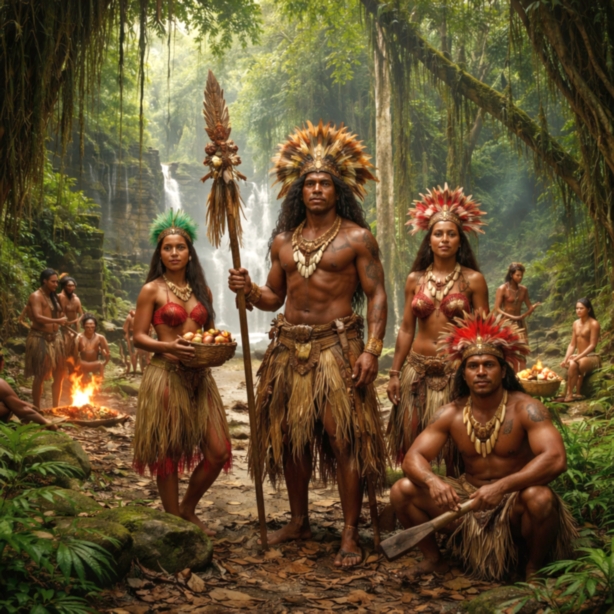
Between roughly 10,000 and 5,000 years ago, that territory was not a desert at all. Scientists call this period the “Green Sahara” or the “African Humid Period.” Rainfall transformed the region into a fertile landscape filled with lakes, grasslands, forests, and enormous wildlife populations. Hippos swam in giant lakes. Crocodiles inhabited rivers that no longer exist. Herds of elephants, giraffes, and antelope roamed across plains now buried beneath sand dunes hundreds of feet high. Humans flourished there. Rock paintings discovered in places like Tassili n’Ajjer reveal scenes of cattle herding, dancing ceremonies, hunting expeditions, and mysterious spiritual rituals. Some paintings are over 8,000 years old and provide astonishing evidence of sophisticated societies living in regions now considered uninhabitable.


Deep within the remote Ténéré region of the Sahara, archaeologists uncovered graveyards andsettlements belonging to ancient peoples who lived around long-vanished lakes. One of the most famous discoveries came from Gobero in modern-day Niger. There, scientists found human skeletons buried with jewelry, pottery, and ceremonial objects dating back nearly 10,000 years. Some graves showed adults carefully buried holding children, suggesting emotional and spiritual traditions far more advanced than many expected from such ancient cultures.


Who were these people? What language did they speak? What beliefs guided them? Much remains unknown. As the climate gradually dried, entire populations vanished or migrated toward the Nile River and sub-Saharan regions. Some historians believe these migrations may have helped shape later civilizations, including ancient Egypt.
One of the Sahara’s most astonishing forgotten civilizations was the Garamantes, who thrived in what is now Libya between roughly 500 BCE and 700 CE. Ancient Roman writers described them as mysterious desert people who commanded powerful chariots and controlled hidden oasis cities far beyond the edge of the Roman world. For centuries, many historians dismissed the Garamantes as little more than desert raiders. But modern archaeology revealed something extraordinary. The Garamantes built sophisticated underground irrigation systems called foggaras — miles of tunnels dug beneath the desert to tap hidden fossil water. They constructed cities, maintained trade routes across the Sahara, and connected the Mediterranean world with central Africa.

Their capital city, Garama, once supported thousands of people in the middle of one of the harshest environments on Earth. Then they faded into obscurity. Today their ruins sit isolated beneath the desert sun, silent reminders that advanced civilizations once flourished where few could survive now.
Satellite technology has revealed strange geometric formations hidden beneath Saharan sands — ancient riverbeds, buried walls, circles of stone, and unexplained ruins. In Mauritania lies the famous Richat Structure, often called the “Eye of the Sahara.” While scientists classify it as a natural geological formation, its enormous circular appearance has inspired theories connecting it to the legendary lost city of Atlantis. Elsewhere, researchers using radar imaging have discovered evidence of ancient waterways crossing regions now completely barren. Some experts believe entire networks of settlements remain buried and untouched beneath dunes that constantly shift with the wind. The Sahara may still conceal cities no modern person has ever seen.
Perhaps the greatest secret of the ancient Sahara is its lost water system. Modern satellite scans show that massive rivers once crossed the desert. One ancient river system may have rivaled the size of the modern Amazon River. These waterways supported fishing villages, farming communities, and trade routes over immense distances. As climate patterns changed, the rains slowly disappeared. Lakes shrank. Grasslands died. Entire populations were forced to abandon their homes.


What remains today are fragments — pottery buried under dunes, carvings etched into stone cliffs, abandoned tombs, and legends carried through oral tradition. For centuries, caravans crossing the Sahara told stories of forbidden places hidden deep within the sands: ruined temples swallowed by dunes, abandoned cities guarded by spirits, and treasure-filled caverns left behind by forgotten kings. Some explorers searched obsessively for these places. The legendary oasis city of Zerzura — sometimes called “the White City” — appeared in Arabic manuscripts for centuries. Descriptions spoke of a mysterious city hidden somewhere west of the Nile River filled with white stone buildings and guarded entrances carved with strange symbols. No one has conclusively found it. Whether Zerzura was real, exaggerated, or symbolic remains unknown.
The Sahara is so vast that even today large regions remain poorly explored. Sandstorms bury entire landscapes. Ancient sites disappear for centuries before being uncovered again. Every few years, new discoveries reshape what historians thought they knew about ancient Africa. The desert that now appears empty may once have supported thriving civilizations equal in complexity to many better-known ancient cultures. The sands of the Sahara are not merely barren — they are a gigantic archive of forgotten human history waiting to be uncovered. And somewhere beneath those dunes, countless secrets may still sleep undisturbed.
Dinosaurs of the Ancient Sahara Desert
Today the Sahara is famous for its endless dunes, scorching temperatures, and dry winds, but during the age of dinosaurs it was almost unrecognizable. Around 100 million years ago, during the Cretaceous Period, much of the Sahara was covered by enormous river systems, swamps, lakes, and dense vegetation. Giant ferns and conifer trees lined waterways where prehistoric animals gathered to drink and hunt. Paleontologists believe this ancient region was one of the richest dinosaur ecosystems on Earth. Fossils discovered in Egypt, Morocco, Algeria, and Niger reveal a world dominated by gigantic predators and strange creatures unlike anything alive today.
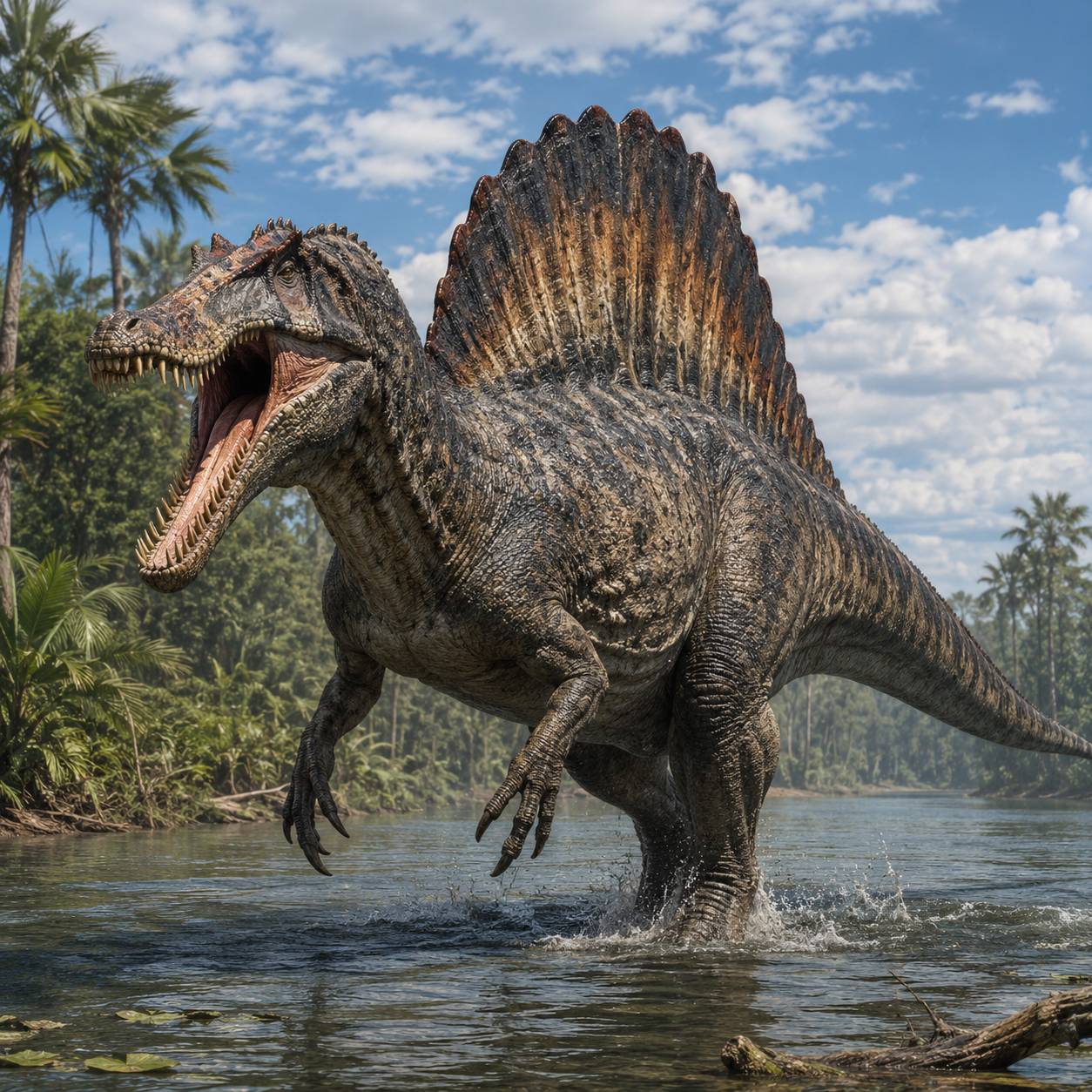
Among the most famous Sahara dinosaurs was Spinosaurus. This enormous predator may have reached lengths of over 50 feet, making it one of the largest meat-eating dinosaurs ever discovered. Unlike most giant carnivorous dinosaurs, Spinosaurus appears to have been semi-aquatic. Scientists found evidence suggesting it could swim through rivers using its powerful tail while hunting giant fish. Its long jaws resembled those of a crocodile and were filled with cone-shaped teeth designed for gripping slippery prey. Rising from its back was a huge sail made of elongated spines, possibly used for display, temperature control, or helping it move in water.
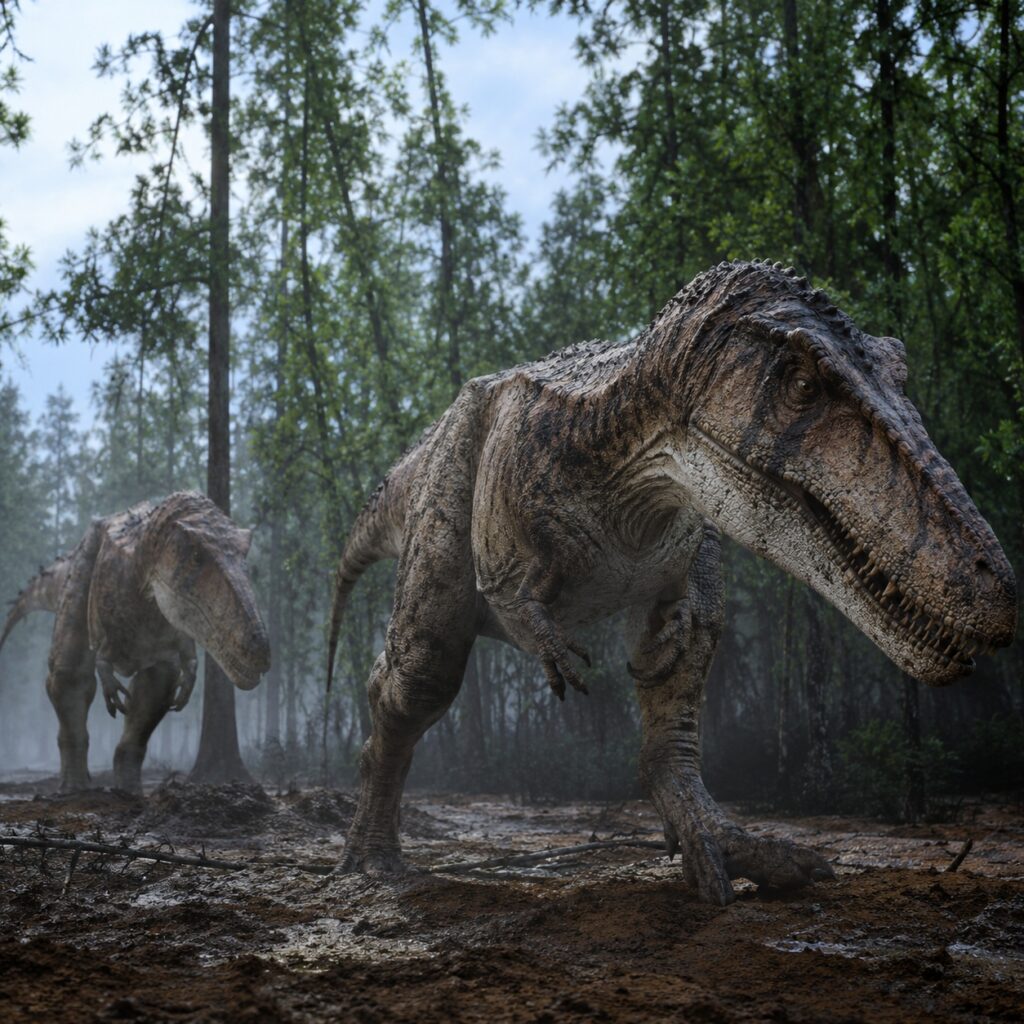
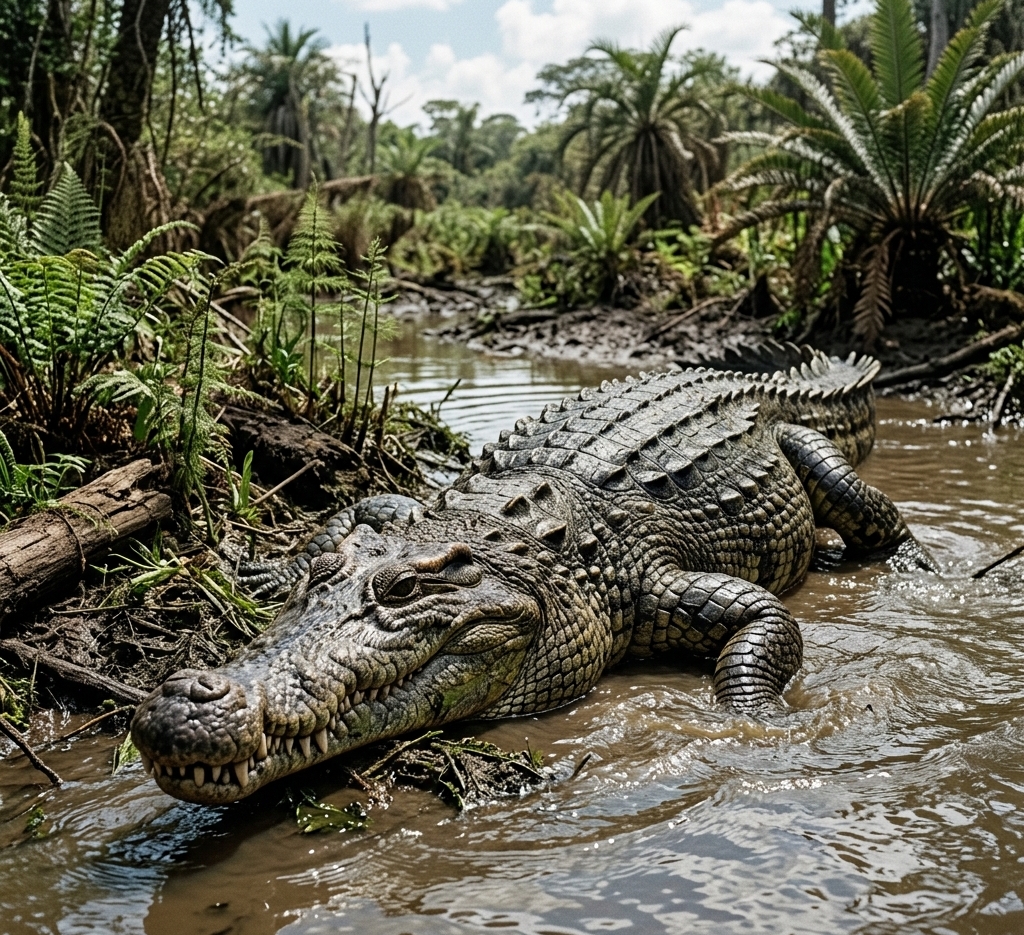
Another terrifying carnivore was Carcharodontosaurus, whose name means “shark-toothed lizard.” This massive hunter possessed serrated teeth nearly eight inches long. It likely preyed on giant plant-eating dinosaurs roaming the floodplains. Some scientists compare it to an African counterpart of Tyrannosaurus rex. The ancient Sahara was also home to bizarre reptiles and enormous flying animals. Giant crocodile relatives such as Sarcosuchus, often nicknamed “SuperCroc,” may have grown over 30 feet long and lurked in rivers waiting for prey. Huge flying reptiles called pterosaurs soared overhead searching for fish along shorelines. Plant-eating dinosaurs also thrived there. Fossils show that long-necked sauropods wandered through forests and marshes feeding on vegetation. These massive herbivores supported entire ecosystems of predators and scavengers.
Over millions of years, Earth’s climate slowly changed. Rivers dried up, forests vanished, and the region transformed into the vast desert seen today. Wind and shifting sand buried countless skeletons beneath layers of rock. Modern fossil hunters continue uncovering remarkable discoveries in the Sahara. In some places, entire prehistoric riverbeds filled with fish bones, dinosaur teeth, and ancient footprints have been found. Each discovery helps scientists reconstruct the lost world that existed long before humans appeared. The Sahara Desert may seem lifeless today, but beneath its sands lies the remains of one of the most extraordinary dinosaur worlds in Earth’s history.