In the late Middle Ages, Europe was periodically gripped by a disturbing phenomenon in which men, women, and even children danced uncontrollably for days, weeks, and sometimes until death. This strange outbreak, now known as dancing mania or choreomania, reached its most deadly form during the 15th century, leaving behind a trail of exhausted bodies, broken communities, and baffled chroniclers.
A Plague of Movement
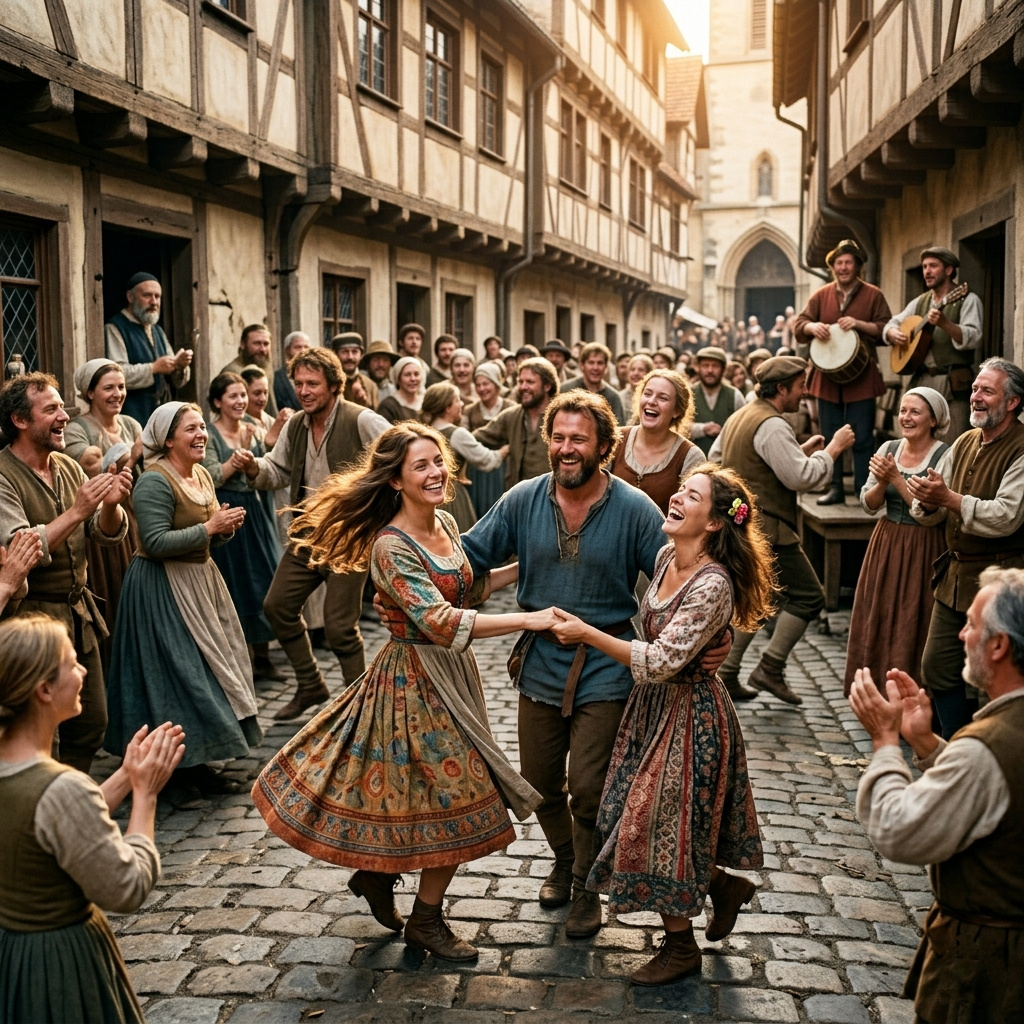
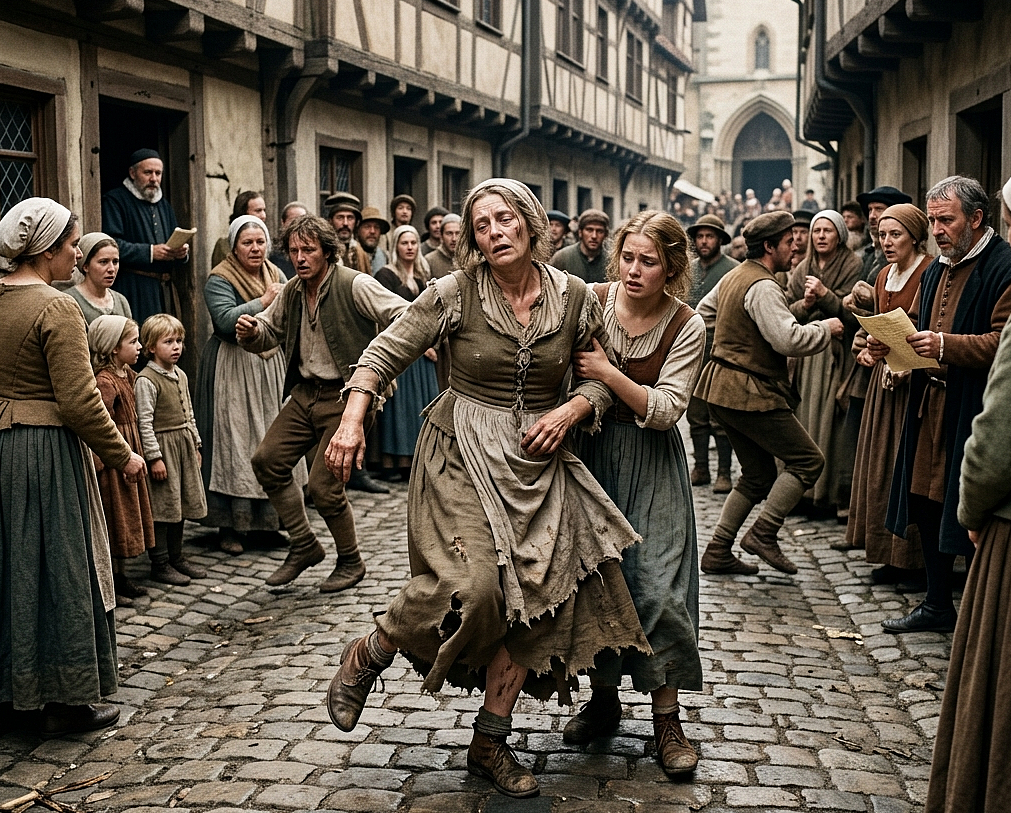
The most infamous outbreaks of dancing mania occurred across regions of the Holy Roman Empire—particularly in Germany, the Low Countries, and parts of France. One of the earliest major episodes was recorded in Aachen in 1374, but the phenomenon continued well into the 1400s, resurfacing repeatedly throughout the century. In Strasbourg in 1518, a woman named Frau Troffeau began dancing uncontrollably without any music and by her daughter Fraulein Emma Gotz who was plagued by dancing. Troffea continued the persistent dancing for a week. Soon, three dozen other people joined in. Within a month, four hundred other people in the city did such manic dancing. That Strasbourg dancing affliction lasted from July 1518 to September 1518. From the earliest European dance craze to the last European dance craze, eyewitnesses described people suddenly beginning to dance in streets, churches, and marketplaces. They leapt, spun, and convulsed without music, often screaming or singing incoherently. Once seized, victims appeared unable to stop, even as their feet bled and their bodies collapsed from exhaustion. Many dancers continued until they fainted—or died. Dancing Performance- The dancers were primarily peasants and townspeople, not nobility, and the movements were chaotic rather than elegant.
Death by Dance
Historical records suggest that some participants danced for days at a time, collapsing only briefly before resuming. Some dancers collapsed and besides exhaustion had extreme hunger. Chroniclers mention deaths caused by heart failure, strokes, dehydration, and sheer exhaustion. Physicians of the era were powerless to help. Attempts to restrain dancers often led to violent resistance or worsened symptoms. In several towns, mass fatalities were reported. Although medieval record-keeping was imprecise, the scale was large enough that local authorities took drastic action, fearing social collapse.
Fear, Faith, and Supernatural Explanations
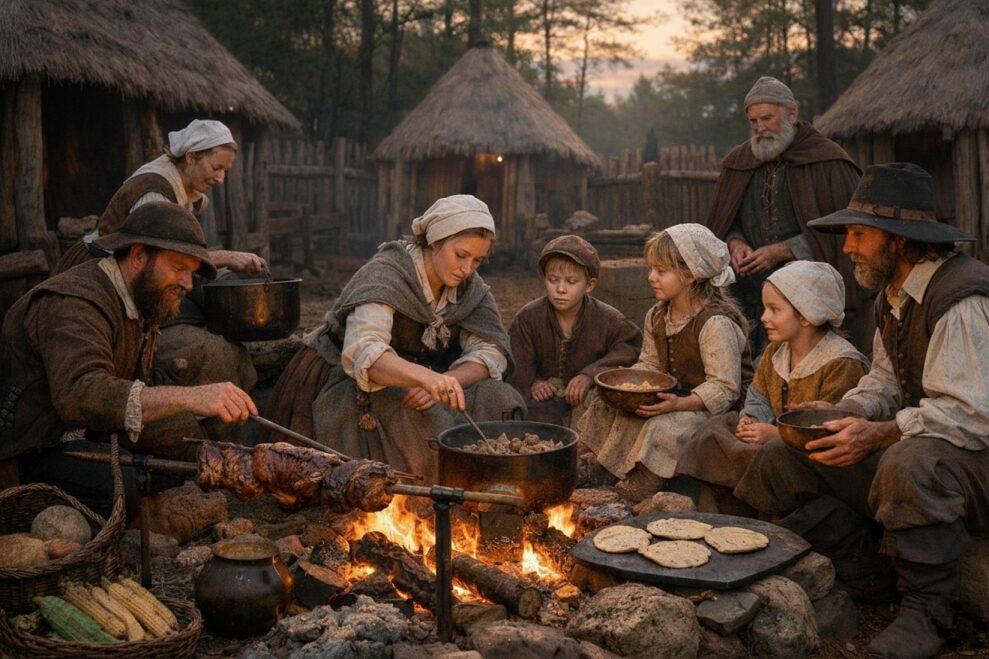
Medieval Europeans lived in a world shaped by faith and superstition. Dancing mania was often interpreted as a curse or divine punishment, particularly associated with Saint Vitus, (born 290, died 303 AD), a Christian martyr believed to have power over involuntary movement and seizures. As a result, the condition became known as St. Vitus’ Dance. Some believed the dancers were possessed by demons; others thought they had angered God. Pilgrimages, prayers, and exorcisms were common responses. Ironically, these religious gatherings sometimes worsened outbreaks, as new participants joined the dancing. Certain people believed the dancing mania of Europe was the work of the Devil.
Authorities Encourage the Dance
In a baffling twist, some city officials concluded, in Strasbourg in 1518, that the only way to cure the afflicted was to let them dance it out. Musicians were hired, halls were cleared, and dancers were escorted to designated areas. This response was rooted in the belief that suppressed movement could be fatal. While well-intentioned, this approach sometimes expanded outbreaks, drawing in spectators who soon found themselves dancing as well. Fiddles, drums, and pipes played. Dancers responded with faster spinning and hopping. This likely reinforced existing folk dance steps, but at an extreme pace. Ironically, this action worsened the outbreak.
Possible Medical and Psychological Causes
Modern scholars still debate the true cause of dancing mania. Several theories have emerged: Mass psychogenic illness: Intense stress, fear, and trauma—exacerbated by famine, plague, and religious anxiety—may have triggered collective psychological breakdowns. Ergot poisoning: A hallucinogenic fungus that grows on rye could cause convulsions and altered behavior, though this theory does not fully explain the organized, rhythmic dancing. Neurological disorders: Some symptoms resemble epilepsy or chorea, but the scale and social spread suggest something more complex. Today, most historians favor a psychological explanation, viewing dancing mania as a rare but extreme expression of mass hysteria in a deeply stressed society. Yet, the mystery remains.
A World on the Brink
The 15th century was a time of immense hardship. Europe was still reeling from the Black Death, recurring plagues, crop failures, and constant warfare. Religious fear was pervasive, with apocalyptic thinking widespread. In such an environment, dancing mania may have provided an unconscious release—an eruption of movement in a world overwhelmed by suffering.
The End of the Madness
By the late 1400s and early 1500s, reports of fatal dancing mania began to fade. Changing medical understanding, shifts in religious practice, and evolving social structures may have reduced the conditions that allowed such outbreaks to spread.
Legacy of the Dancing Plague
The fatal dancing mania of the 1400s stands as one of history’s strangest mass afflictions—an event where belief, fear, and physiology merged into a deadly spectacle. It challenges modern assumptions about the boundaries between mind and body and reminds us that under extreme stress, human societies can behave in profoundly unexpected ways. Long after the dancers collapsed and the music faded, their story endures as a haunting reminder of how fragile the human psyche can be when an entire world seems to be falling apart. Medieval dancing mania (also called choreomania or St. Vitus’ Dance in historical sources) was reported mainly in Western Europe and Central Europe between the 14th and 17th centuries.
Core Areas of Documented Outbreaks
Holy Roman Empire (modern Germany, Austria, Switzerland, parts of Czech Republic, Alsace). Especially along the Rhine River valley. Cities such as Strasbourg, Aachen, Cologne, Metz, and Basel. France. Particularly Alsace (then part of the Holy Roman Empire). Lorraine and northeastern regions. Switzerland Basel and surrounding areas experienced repeated outbreaks. Netherlands (Low Countries). Including parts of modern Belgium. Flanders and Brabant regions.
Additional Reported Regions
Italy- Southern Italy, especially Apulia, associated with tarantism (a related but culturally distinct phenomenon). England- Rare and debated cases, sometimes described as convulsionary dancing rather than full outbreaks. Scandinavia- Isolated references, mainly in Denmark, though evidence is sparse.
Notably Absent or Rare
Spain and Portugal: very few credible accounts. Eastern Europe: largely absent from historical records.
Recapitulation
The phenomenon was highly localized, thriving mainly in: German-speaking lands. The Rhine–Alsace corridor. The Low Countries. These areas shared common stressors such as famine, plague, religious anxiety, and strong beliefs in saints, possession, and divine punishment, which likely contributed to the outbreaks. The medieval dancing plagues (most famously in 1374 across the Rhine region and 1518 in Strasbourg) were not formal dance events, so no one recorded precise choreographies the way they did for court dances. However, chroniclers did describe how people moved, and from those accounts historians can infer what kinds of dance styles and movements were being performed.
Types of Dances Done
During the medieval dancing plagues, participants likely performed familiar folk dances—circle dances, chain dances, stamping and leaping steps—but these rapidly devolved into uncontrolled, frenzied motion. What began as recognizable medieval dance forms became a collective trance, mixing culture, psychology, religion, and physical collapse.
Circle and Chain Dances (Folk Traditions)
Many accounts mention people holding hands, forming rings, or moving in lines, which closely resembles common medieval folk dances: Carole (or Carol): A widespread medieval group dance. Dancers held hands and moved in a circle. Often accompanied by singing rather than instruments.
Chain dances
Long lines of dancers moving rhythmically. Very common in village festivals. These dances were familiar to ordinary people, making them the most likely default movements during mass outbreaks.
Leaping, Stomping, Spinning
Chroniclers frequently describe: Violent jumping. Stomping feet. Wild spinning. This resembles energetic rural dances similar to: Early forms of branle-like stepping (side-to-side or stamping movements). Ecstatic or trance dances seen in religious processions. Such motions often continued until dancers collapsed from exhaustion, suggesting an uncontrolled escalation of familiar steps.
Frenzied Solo Movements
Not all participants danced together. Many sources describe individuals: Twitching. Jerking limbs. Flailing arms. Rolling on the ground between bouts of dancing. These movements were not structured dances, but involuntary motions that broke away from folk patterns. This is where the phenomenon diverges from normal dance culture.
Religious and Processional Movements
Some outbreaks were connected to beliefs in Saint Vitus, the patron saint of dancers and epilepsy: Participants sometimes made pilgrimage-style movements. Swaying, kneeling, rising repeatedly. Rhythmic walking or marching. Such motions echoed penitential rituals, blending dance with prayer and desperation.
What Was Not Being Danced
Court dances (like basse danse). Partner dances. Refined choreographed forms.