Bigfoot Government Cover Up: For decades, stories of Bigfoot, which is also known as sasquatch, which is the elusive, ape-like creature said to roam the forests of North America—have sparked debate, fascination, and fear. Thousands and thousands of witnesses claim to have seen or heard the creature, and countless footprint casts, blurry photos, clear photos, and strange howls have fueled the legend. Yet, despite the mountain of anecdotal evidence, no official confirmation has ever been made. Some researchers and enthusiasts believe this is no coincidence, arguing that the government is actively covering up the truth about Bigfoot. Witnesses in national parks began claiming that federal agents, including members of the U.S. Forest Service and even the military, had arrived shortly after Bigfoot encounters to confiscate evidence or warn witnesses to stay silent.
One popular account describes park rangers allegedly removing large, unidentified carcasses after forest fires, claiming they were “bear remains.” However, witnesses insisted the bodies were something else—massive, humanoid, and unlike any known species. These claims gave rise to suspicions that Bigfoot was more than a myth—that it was a biological reality the government wanted to suppress.
Bigfoot Government Cover Up: Eyewitness Suppression and Missing Evidence
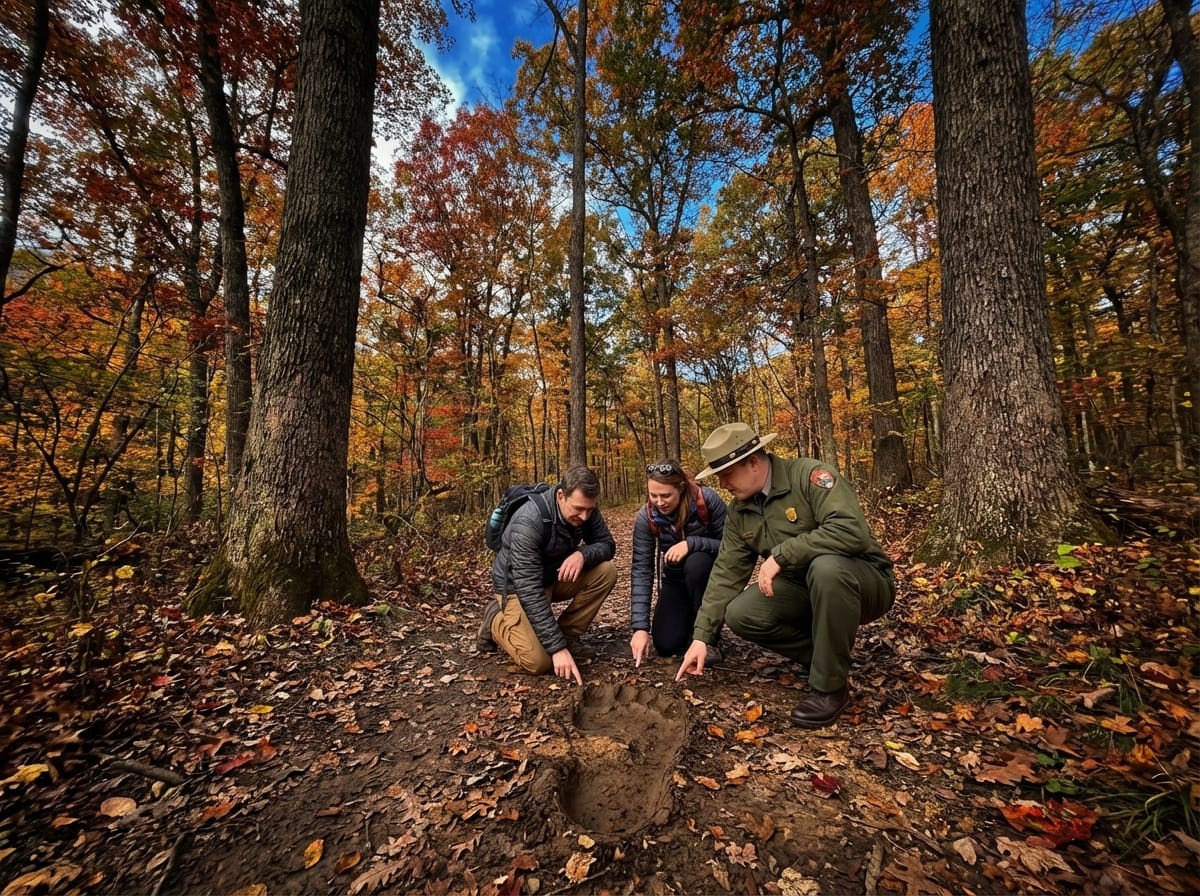
Dozens of researchers claim that physical evidence—hair samples, bones, and even bodies—have mysteriously vanished after being turned over to authorities. Hunters, hikers, and park employees have described being approached by “men in suits” or uniformed officials who confiscated casts or recordings. In some cases, witnesses claim they were told their experiences were classified or part of a “wildlife management” program.
A particularly controversial story involves alleged footage shot by a Department of the Interior contractor in the 1980s, showing a wounded Bigfoot found after a wildfire in California. According to whistleblowers, the tape was taken by federal authorities and never seen again.
Skeptics argue that such claims stem from folklore, exaggeration, or misinterpretation. They point out that most “cover up” claims lack hard documentation. However, to true believers, that denial only strengthens the theory-it there was nothing to hide, why deny the discussion so fiercely?
One of the most dramatic recurring stories is that Bigfoot bodies have supposedly been recovered—only to be confiscated by federal agencies. Typical Themes in These Stories A hunter allegedly shoots a large, ape-like creature. Local authorities arrive first, often intrigued or uncertain. Before the public can see the remains, federal officials—usually described as U.S. Forest Service, National Park Service, or occasionally “men in black”—take possession of the body. No public record or follow-up is ever released.
National Park Service “Quiet Zones” and Restricted Reports
Park rangers have allegedly told witnesses that they are not allowed to file Bigfoot sightings as official incident reports. Instead, they must classify them under neutral categories such as: “Bear encounter”,“Unknown animal activity”, “Human disturbance”. Supporters interpret these policies—not proven, but rumored—as an effort to prevent panic or protect tourism, while skeptics note that agencies cannot record cryptids in official species databases without physical proof. The lack of official files on Bigfoot is itself suspicious.
University Scientists Allegedly Discouraged From Publishing Findings
Bigfoot researchers often point to stories of academics who claim they were discouraged from pursuing or publishing unconventional primate evidence. A professor obtains unusual hair samples or casts. Initial lab results come back as “unknown primate” or “no match.” When preparing to publish, institutional pressure reportedly arises: Funding threats Tenure concerns Warnings about “damaging credibility”.
Many Bigfoot enthusiasts argue that anomalous DNA samples have repeatedly been labeled:“contaminated,” “mixed,” “no known species,” or“inconclusive.”Some hobby researchers allege that when a sample threatens to produce unusual results, labs sometimes: Decline further testing. Withhold full reports. Return only partial analyses.
Eyewitnesses Claim Pressure to Stay Quiet
Witness accounts sometimes include claims of being discouraged from speaking publicly. Forestry workers claiming they were told to “drop it” after reporting strange footprints or vocalizations. Loggers who say supervisors warned them not to mention sightings to the media. Park staff who claim unofficial policies exist against discussing Bigfoot with visitors.
Lost or Destroyed Evidence Stories
Another long-standing theme is the accidental—or sometimes suspicious—loss of potential evidence. Photos “lost” by newspapers and local sheriffs in the 1960s–80s. Footprint casts that vanish from private collections. Audio recordings erased or overwritten. Hair or tissue samples discarded as “unidentified nuisance species” or “non-priority specimens.”
A Partial Timeline of Bigfoot Researchers Claiming Evidence Was Disregarded or Suppressed:
1958–1967 — Bob Titmus claims important footprint evidence was ignored
Person: Bob Titmus (Canadian Bigfoot researcher)
Event: Investigated the Jerry Crew “Bigfoot tracks” case (1958) and later the 1967 Patterson–Gimlin film site.
Claim: Titmus repeatedly stated that the scientific community “ignored” his casting data, footprint morphology notes, and trackway measurements.
Nature of complaint: His casts were not taken seriously, and he believed mainstream zoologists intentionally dismissed field evidence without review.
1980–1982 — Grover Krantz argues museums and journals rejected his Bigfoot evidence
Person: Dr. Grover Krantz (Washington State University anthropologist)
Event: Attempts to publish analyses of dermal ridges and footprint morphology.
Claim: Krantz publicly stated that: Major journals refused to review his submissions. Museums declined to examine footprint casts. His Bigfoot research harmed his career. He characterized this as active rejection of legitimate evidence.
1992 — Paul Freeman claims government wildlife officials destroyed or ignored his evidence
Person: Paul Freeman (Washington state hunter & Bigfoot eyewitness)
Event: Following discovery of his famous Blue Mountains trackway.
Claim: Freeman stated that officials from state wildlife agencies ignored or invalidated casts, scat, and hair samples he submitted. He believed agencies deliberately refused to test or archive his materials.
2008 — “Sierra Kills” case: Justin Smeja says DNA samples were ignored
Person: Justin Smeja (California hunter)
Event: The alleged “Sierra Kills” incident (October 2010) and subsequent DNA submission (2010–2012).
Claim: Smeja stated multiple labs refused to examine his samples; he believed the scientific establishment avoided the subject. His samples were later taken into Melba Ketchum’s DNA Project.
2012–2013 — Dr. Melba Ketchum claims Bigfoot DNA evidence was suppressed
Person: Dr. Melba S. Ketchum
Date: November 24, 2012 — Announces results of 5-year DNA study.February 2013 — Paper released
Claim: Ketchum said: Multiple journals rejected her study specifically because it involved Bigfoot. Peer reviewers wouldn’t consider the evidence. Scientific gatekeeping was blocking publication. She argued the genetic samples she received (hair, tissue) were dismissed before testing by several professionals.
2017 — Todd Standing legally claims government is suppressing Sasquatch evidence
Person: Todd Standing (Sasquatch researcher and filmmaker)
Date: October 27, 2017
Event: Standing filed a civil lawsuit against British Columbia’s Ministry of Environment.
Claim: The BC government: Ignored the evidence he submitted. Refused to recognize Sasquatch as a species. Was “suppressing” physical proof by not documenting or investigating
This is one of the few legal, on-record accusations of evidence being disregarded.
2018 — William (“Dr. Johnson”) claims Forest Service destroyed trail-camera evidence
Person: Dr. Matthew “Dr. J” Johnson (Oregon Bigfoot habituation claimant)
Date: Claims made publicly throughout 2018
Event: Johnson alleged the U.S. Forest Service removed or destroyed game-camera images from his research area.
Claim: He argued the government was actively deleting photographic evidence to prevent recognition of the species.
2020–2023 — David Paulides claims National Parks suppress reports
Person: David Paulides (Missing 411 author)
Dates: 2020–2023 public statements
Claim: Paulides asserts U.S. National Parks and law enforcement: Delete or fail to archive Sasquatch-related incident reports. Discourage employees from documenting sightings.
Though controversial, he attaches names and dates to numerous witness accounts.
Government Seizures of Bigfoot Bodies: Legends, Claims, and the Anatomy of a Mystery
For decades, stories of shadowy government agents allegedly confiscating Bigfoot bodies have circulated among cryptozoologists, hunters, and wilderness communities. While these accounts remain unverified and fall firmly into the realm of folklore and conspiracy theory. These stories often follow similar patterns: a body is found, witnesses see officials arrive, and the remains vanish into secrecy.
The earliest whispers of government involvement appear in stories from the 1940s–1960s, a period when the U.S. Forest Service, National Park Service, and military frequently operated in remote wilderness areas. Hunters in the Pacific Northwest claimed that whenever someone reported discovering an “unidentified primate carcass,” U.S. agents appeared on-scene swiftly.
These early tales often reference: Unmarked military-style trucks arriving on logging roads. Forest Service employees accompanied by armed personnel. Warnings about public panic, used as justification for confiscation. Witnesses pressured into silence, sometimes allegedly through threats of fines for “possessing wildlife remains”
Across dozens of stories, several recurring features appear: Rapid Government Response. Witnesses describe officials arriving surprisingly quickly, suggesting monitoring of wilderness communications. In folklore terms, this creates an aura of omnipresence. Multiple Agencies Working Together. Stories nearly always mention a mix of Forest Service personnel, military units, and sometimes unidentified agents in plain clothes. This combination enhances the feeling of secrecy and coordination. Removal of Bodies in Sealed or Covered Containers. Very large containers cause a lot of curiosity to observers. There might even be a tarp that was then tied over the containers, adding to the speculation.
Witness Intimidation or “Advice to Stay Silent”
Witnesses claim they were told: They saw a bear It was classified wildlife research. Discussing it could lead to legal penalties. Public knowledge would cause panic. These elements emphasize the idea of deliberate suppression.
No Physical Evidence is Shown Immediately to Onlookers After Collection which causes suspicion for a cover-up.
Silenced in the Stacks: University Students and the Quiet Pressure Against Bigfoot Research
For decades, Bigfoot has roamed the margins of academic inquiry—appearing in folklore classes, anthropology debates, and the occasional cryptozoology elective—but rarely entering the mainstream of scholarly publishing. While universities often claim to champion free expression and bold research, many students who attempt to publish work on Bigfoot report subtle, and sometimes overt, pressure to keep their findings quiet.
The silencing often doesn’t come in the form of outright censorship, but rather through the soft power of academic culture. Students describe: Advisers warning them that Bigfoot topics are “career-damaging.” Some students recount meetings where professors suggested they shift their research toward “respectable” subjects—anything from traditional indigenous studies to wildlife biology—yet firmly away from Bigfoot. Peer reviewers rejecting papers on topic alone. In certain student journals, submissions that even mention Sasquatch are dismissed after a cursory review, sometimes with one-sentence feedback such as “This is outside the acceptable scope of the publication.” Lab access and research support quietly withdrawn. A few students have said that once they disclosed their intent to study alleged footprints, hair samples, or witness interviews, departmental support evaporated. Equipment reservations were suddenly “no longer available,” and proposed fieldwork was deemed “unnecessary.”