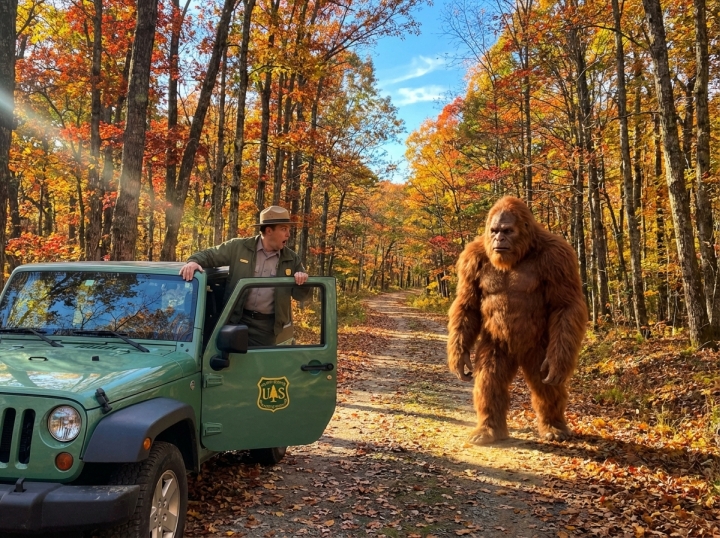
There is no solid scientific evidence that the Native American Thunderbird was a real pterodactyl, but the idea persists because the legend does share some striking similarities with large prehistoric flying reptiles. The Thunderbird appears in the oral traditions of many tribes, especially in the Pacific Northwest, Great Plains, and Great Lakes regions, including the Lakota, Ojibwe, Menominee, Kwakiutl, and others. Common descriptions include: Enormous wings capable of creating thunder. Lightning flashing from its eyes or beak.Ability to lift whales or large animals.Dwelling in mountains or the sky. Acting as a supernatural being, not an animal. Importantly, the Thunderbird is usually portrayed as: A spirit being or deity.A protector or enforcer of cosmic order. Sometimes a shape-shifter rather than a flesh-and-blood creature.
The pterodactyl idea comes from physical similarities rather than cultural context. Shared traits often cited: Massive wingspans (some pterosaurs reached 30–36 feet). Reptilian or bird-like appearance. Sharp beaks. Ability to soar silently or suddenly appear.
In the late 1800s and early 1900s, newspaper stories occasionally claimed: Giant birds with leathery wings were shot. “Pterodactyls” were seen in the American West.Native legends “confirmed” living prehistoric creatures.These stories were never supported by physical evidence and are widely considered hoaxes or misidentifications.
From a scientific standpoint:Pterosaurs went extinct about 66 million years ago. No fossils show survival into human times.No reliable remains (bones, tissue, nests) have ever been found in historical layers. Biologists point out that: A breeding population of giant flying reptiles would be impossible to hide. Their metabolic needs would leave clear ecological traces.
Most scholars believe Thunderbird stories arose from: Symbolic storytelling explaining storms and lightning. Observations of large birds (condors, eagles, thunderous wingbeats). Fossil discoveries by Native peoples (large bones eroding from rock). Crucially, Native traditions do not present the Thunderbird as a dinosaur, but as a powerful spirit tied to the sky and thunder. A Middle Ground Some Researchers Suggest A few fringe researchers speculate that: Thunderbird legends may preserve very ancient cultural memories. Early humans could have encountered now-extinct megafauna birds. Fossil finds may have inspired descriptions of monstrous flyers.However, this remains speculative, not evidence-based.
Speculatively: The legend may have been inspired by fossils, large birds, or dramatic natural events.There is no direct evidence that Native Americans identified pterodactyl (pterosaur) fossils as such, but it is very plausible that they encountered partially exposed large fossils, including those of pterosaurs, long before modern paleontology.
Here is the fuller, careful explanation: Fossils were commonly exposed in North America.Large fossils—including dinosaurs, marine reptiles, and pterosaurs—often erode out of: badlands,
desert mesas, riverbanks, cliff faces. These environments were regularly traveled and inhabited by Native Americans for thousands of years. Many pterosaur fossils are extremely fragile, but some are found: flattened in rock slabs, partially exposed on canyon walls, scattered as isolated bones. So encountering exposed fossil bone was not rare.
Pterosaur fossils specifically, Pterosaur (often called “pterodactyl”) fossils do exist in North America, especially in: the Great Plains, the Southwest,coastal marine deposits.However, their bones are hollow and thin. Complete skeletons are rare. Most finds are fragmentary. This means Native Americans were more likely to encounter partial bones or impressions, not intact winged skeletons.
Native American cultures did not leave written fossil catalogs, but there is strong evidence they: recognized fossils as the remains of ancient beings, incorporated them into oral traditions, collected or curated unusual bones and stones. Examples include: “Thunderbird” traditions, giant serpents and horned monsters, water spirits and sky beings,stories of creatures that lived “before people”.
Some tribes used fossil bones in: medicine bundles, ceremonial contexts, teaching stories. Thunderbird and flying-creature legends:Many researchers have noted parallels between:large fossil wings or elongated bones and Thunderbird imagery.
Thunderbirds are spiritual beings, not literal animals. No Native American story clearly describes a pterosaur as a biological creature. Still, seeing enormous wing-related bones weathering from stone could easily inspire or reinforce such imagery.
Archaeological evidence- There is no confirmed archaeological site showing: Native Americans excavated pterosaur fossils deliberately, fossils labeled or depicted as flying reptiles.
But there are sites showing:fossil bones transported far from their source, fossils placed in ritual contexts, fossil materials traded between groups. This strongly supports awareness and significance, even if interpretation differed from modern science.
Yes, Native Americans almost certainly encountered partially exposed fossils, including pterosaur remains. No, there is no evidence they identified them as “pterodactyls” or flying reptiles in a scientific sense. Yes, those fossils may have influenced myths of giant birds, sky beings, or ancient monsters.
Here is a detailed, neutral-toned article examining alleged pterodactyl (pterosaur) sightings in the western United States during the 1800s, separating legend, newspaper lore, and historical context from established science. Alleged Pterodactyl Sightings in the Western United States During the 1800s;
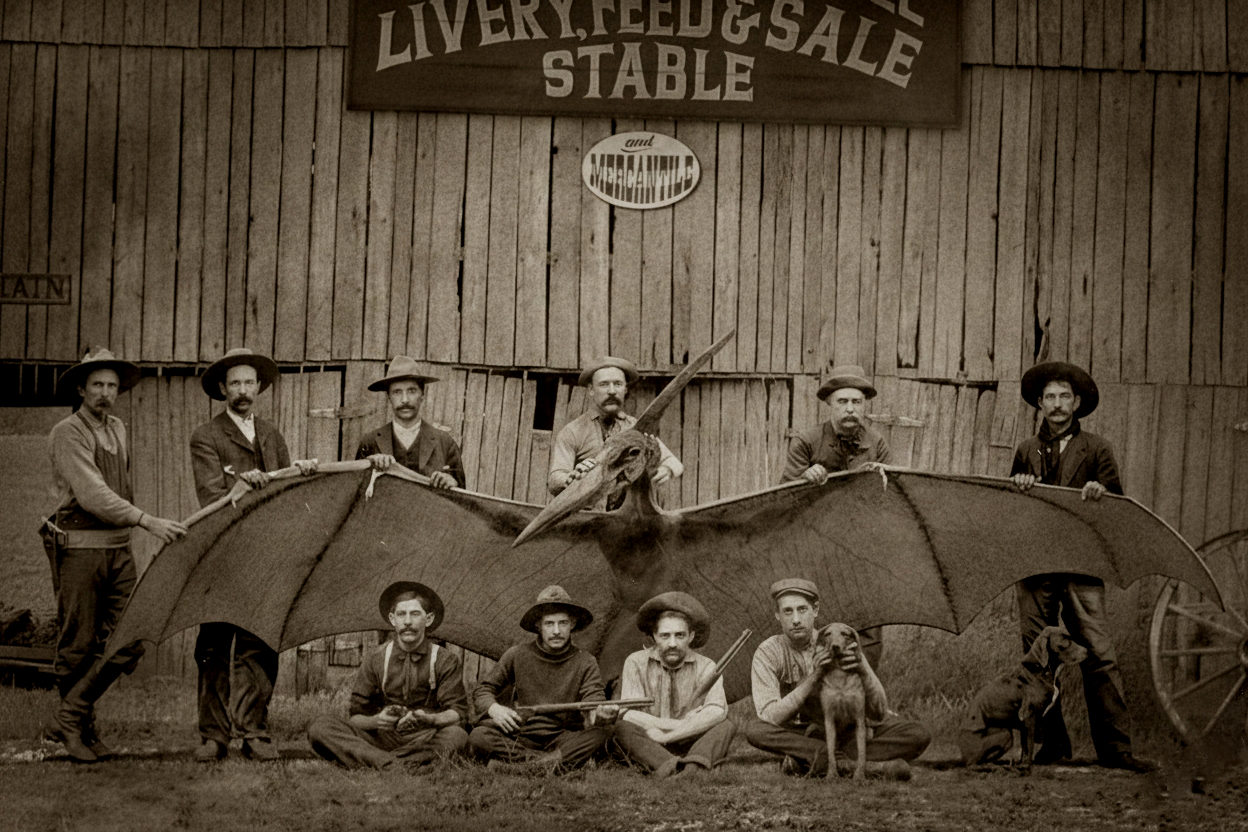
Throughout the 19th century, as settlers, soldiers, miners, and explorers pushed westward across North America, newspapers recorded numerous reports of strange flying creatures seen in the skies of the American frontier. Some modern writers and cryptozoologists later interpreted several of these accounts as possible sightings of living pterodactyls—or more accurately, pterosaurs, flying reptiles believed by mainstream science to have gone extinct around 66 million years ago.
While no physical evidence has ever confirmed the survival of pterosaurs into modern times, the historical reports themselves are real artifacts of frontier-era journalism and folklore. Frontier Newspapers and “Thunderbird-like” Creatures- During the 1800s, newspapers often published sensational stories with little fact-checking by modern standards. Editors freely mixed eyewitness accounts, rumors, and exaggeration to attract readers.
Common descriptions included: Enormous wingspans (often 15–30 feet), Leathery or bat-like wings, Hairless or scaly bodies, Long, pointed beaks, Occasionally a long tail. These characteristics resemble popular illustrations of pterosaurs circulating in the late 19th century, after paleontology became widely known.
The Tombstone, Arizona Account (1890): One of the most famous alleged pterodactyl stories appeared in the Tombstone Epitaph in April 1890. According to the article: Two men claimed to have shot a massive flying creature near the Huachuca Mountains. The animal reportedly had wings “like a bat,” a long tail, and no visible hair.The wingspan was described as roughly 160 feet (almost certainly an exaggeration).
No photograph or specimen was produced, and the original article was written in a humorous or sensational tone common to the paper. Still, the story has been repeatedly cited by cryptozoologists as evidence of a possible pterosaur encounter.
Skeptics argue it was either: A hoax, A misidentified large bird, Satire mistaken for literal reporting.
California and the Sierra Nevada Reports: During the mid-to-late 1800s, miners and travelers in California occasionally reported strange flying creatures over remote mountain regions. Descriptions included: “Winged monsters” gliding silently. Creatures too large to be eagles or condors. Dark silhouettes seen at dusk.
Some modern interpretations suggest these accounts may have been inspired by: California condors (which can reach nearly 10-foot wingspans). Golden eagles viewed at unusual angles. Optical illusions caused by distance, lighting, or altitude. At the time, many settlers had never seen such large birds before, making exaggeration likely.
Texas and the Southwest: Winged Reptile Tales: In Texas and New Mexico territories, newspapers occasionally mentioned “flying serpents” or “winged lizards.” These reports often blended European dragon imagery with Indigenous folklore. Some reports described leathery wings without feathers.Others emphasized reptilian features rather than avian ones.
Cryptozoological writers later linked these descriptions to pterosaurs, though historians point out that frontier storytelling frequently used dramatic language for unfamiliar animals. Native American Legends and Their Interpretation: Several tribes in the western United States, including Plains and Southwestern peoples, had legends of giant birds or thunder beings—often referred to collectively as Thunderbirds.
Thunderbirds were spiritual beings, not biological animals. Their size and powers were symbolic. Stories were often metaphorical rather than literal eyewitness accounts Later settlers sometimes interpreted these legends through a literal, Western lens, contributing to the idea of surviving prehistoric creatures.
Modern interest in these 1800s reports increased during the 20th century with the rise of cryptozoology. Advocates suggest: Remote wilderness areas could hide unknown species. Some sightings resemble pterosaurs more than birds. Similar reports occur worldwide.
Mainstream science counters that: Pterosaurs required enormous food sources. No fossil evidence exists beyond known extinction layers. No confirmed bones, nests, or carcasses have ever been found. Paleontologists overwhelmingly agree that: Pterosaurs went extinct at the end of the Cretaceous Period.Large flying reptiles would be extremely difficult to conceal Known animals, hoaxes, and exaggeration sufficiently explain the reports. Still, historians acknowledge that the sightings reflect genuine confusion, fear, and wonder experienced by people encountering unfamiliar wildlife in vast, undeveloped landscapes.
The alleged pterodactyl sightings of the western United States in the 1800s remain a fascinating intersection of folklore, frontier journalism, and the early public awareness of prehistoric life. While no credible evidence supports the survival of pterosaurs into modern times, these stories continue to intrigue readers and fuel debates about the limits of human observation and the power of myth on the American frontier.
Stories of a nineteenth-century photograph showing men standing beside a dead pterodactyl occupy a curious place in American folklore, hovering between frontier myth, cryptozoology, and the history of photographic hoaxes. Although no verified copy of such an image has ever surfaced in a museum or archive, the idea of the photograph has circulated for decades, passed along in books, magazines, lectures, and now online discussions.
The Alleged Photograph
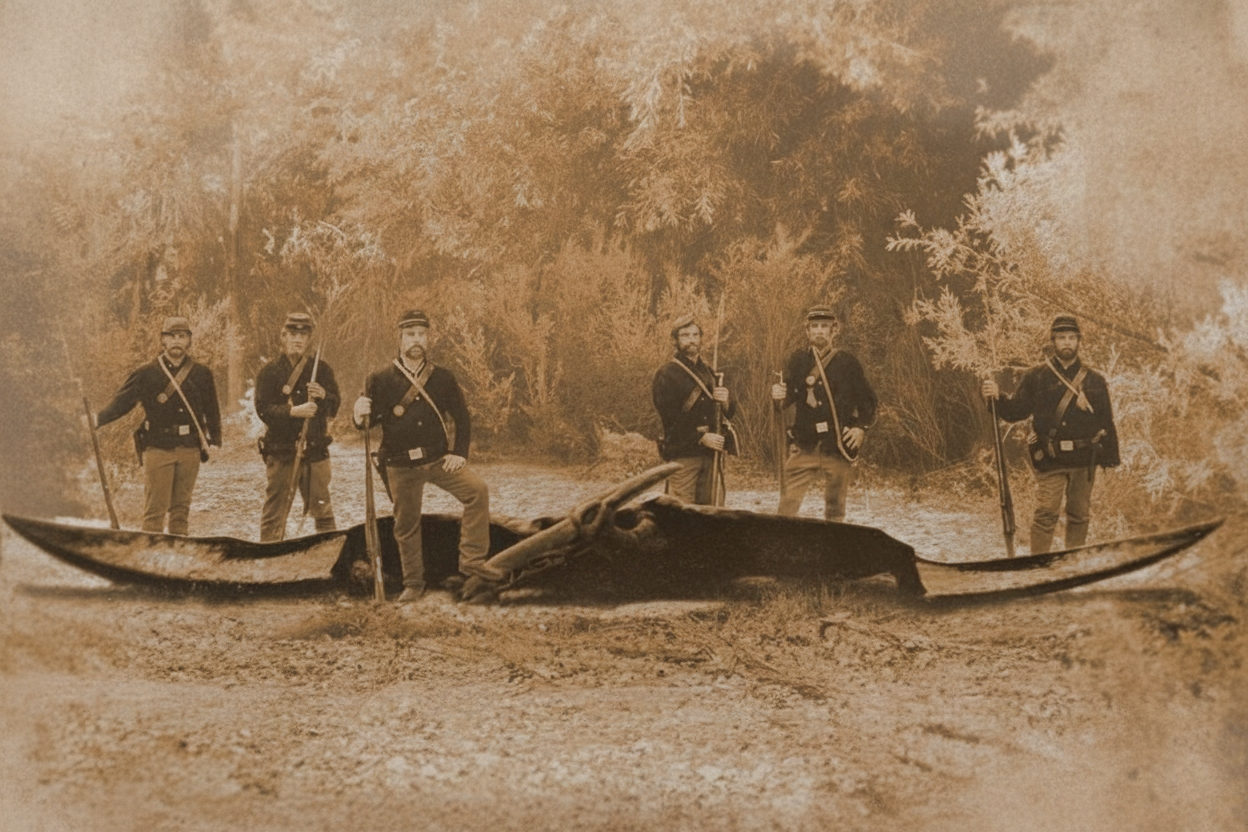
According to the most common versions of the story, the photograph was said to show several men—often described as cowboys, soldiers, or frontiersmen—posing proudly beside the enormous carcass of a winged creature lying on the ground. The animal allegedly resembled a pterodactyl or pterosaur, with leathery wings stretched outward, an elongated beak filled with teeth, and a long tail. Some accounts describe the men holding rifles or resting their hands on the creature, a familiar pose in nineteenth-century hunting photography meant to emphasize scale and accomplishment.
The setting is usually placed in the American West during the late 1800s, with locations ranging from Texas and Arizona to the badlands of Colorado or Wyoming. The image is often described as sepia-toned, consistent with early photography, and supposedly taken shortly after the creature was killed.
Origins of the Story
The story of the photograph gained wider attention in the twentieth century, especially among writers interested in living dinosaur legends, Thunderbird lore, and unexplained creatures. Some researchers traced the rumor to claims that the image once appeared in an old newspaper, military archive, or family photo album that later vanished or was destroyed. Others suggested it may have been confiscated by authorities or quietly removed from circulation because it contradicted established scientific timelines.
Despite these claims, no original negative, print, or contemporaneous reference to such a photograph has ever been authenticated. Searches through newspaper archives, military records, and photographic collections from the 1800s have not produced credible evidence that the photo ever existed.
Possible Explanations
Skeptics propose several explanations for the legend: Misidentification: Early photographs of large birds, gliders, or even staged taxidermy could have been misremembered or exaggerated over time. Fabricated memory: Some researchers believe the story emerged from fictional articles or tall tales published in the late nineteenth or early twentieth century, later mistaken for real reports. Lost-photo mythology: The idea of a powerful image that once existed but is now “missing” is a common motif in folklore and conspiracy narratives.Later hoaxes: In modern times, several fake “pterodactyl photographs” have been created using models, sculptures, or digital manipulation, which may have reinforced belief in an older original.
Regardless of its authenticity, the legend of the dead pterodactyl photograph has had a lasting influence. It often appears alongside stories of Thunderbirds in Native American tradition, reports of winged monsters in the Old West, and alleged sightings of flying reptiles during the 1800s. For believers, the photograph represents suppressed evidence that prehistoric creatures may have survived into historic times. For skeptics, it serves as an example of how myths can grow around nonexistent artifacts.
Conclusion
The photograph of men standing near a dead pterodactyl in the 1800s remains an unverified legend, compelling but unsupported by physical evidence. No credible copy has ever been produced, and no reliable documentation confirms it was taken. Yet the story endures, reflecting a broader fascination with lost history, mysterious creatures, and the possibility that the world of the past was stranger than we are taught. In that sense, the photograph—real or imagined—has become a symbol of the boundary between history and myth, where unanswered questions continue to fuel speculation more than a century later.