On the evening of October 30, 1938, millions of Americans were listening to radio programs when a dramatic broadcast announced that Earth was being invaded by creatures from Mars. The program, produced by Orson Welles and the Mercury Theatre on the Air, became one of the most famous broadcasts in radio history. The broadcast was an adaptation of H. G. Wells’s 1898 science-fiction novel The War of the Worlds. Although the program was presented as a fictional dramatization, its realistic news-bulletin format led some listeners to believe that an actual extraterrestrial invasion was taking place. The Mercury Theatre was an independent repertory theatre company that was founded in New York City in 1937 by Orson Welles and producer John Houseman.
The program aired on the CBS radio stations at approximately 8:00 p.m. Eastern Time. Orson Welles was broadcasting from his radio station at 485 Madison Avenue in New York City. Instead of beginning like a conventional radio drama, it was structured to sound like a series of breaking-news reports interrupting a fictional musical program. The opening included an announcement identifying the program as a dramatization. The story then moved to reports of strange explosions on Mars, followed by reports from Grover’s Mill, New Jersey, where an enormous metallic object supposedly had fallen.
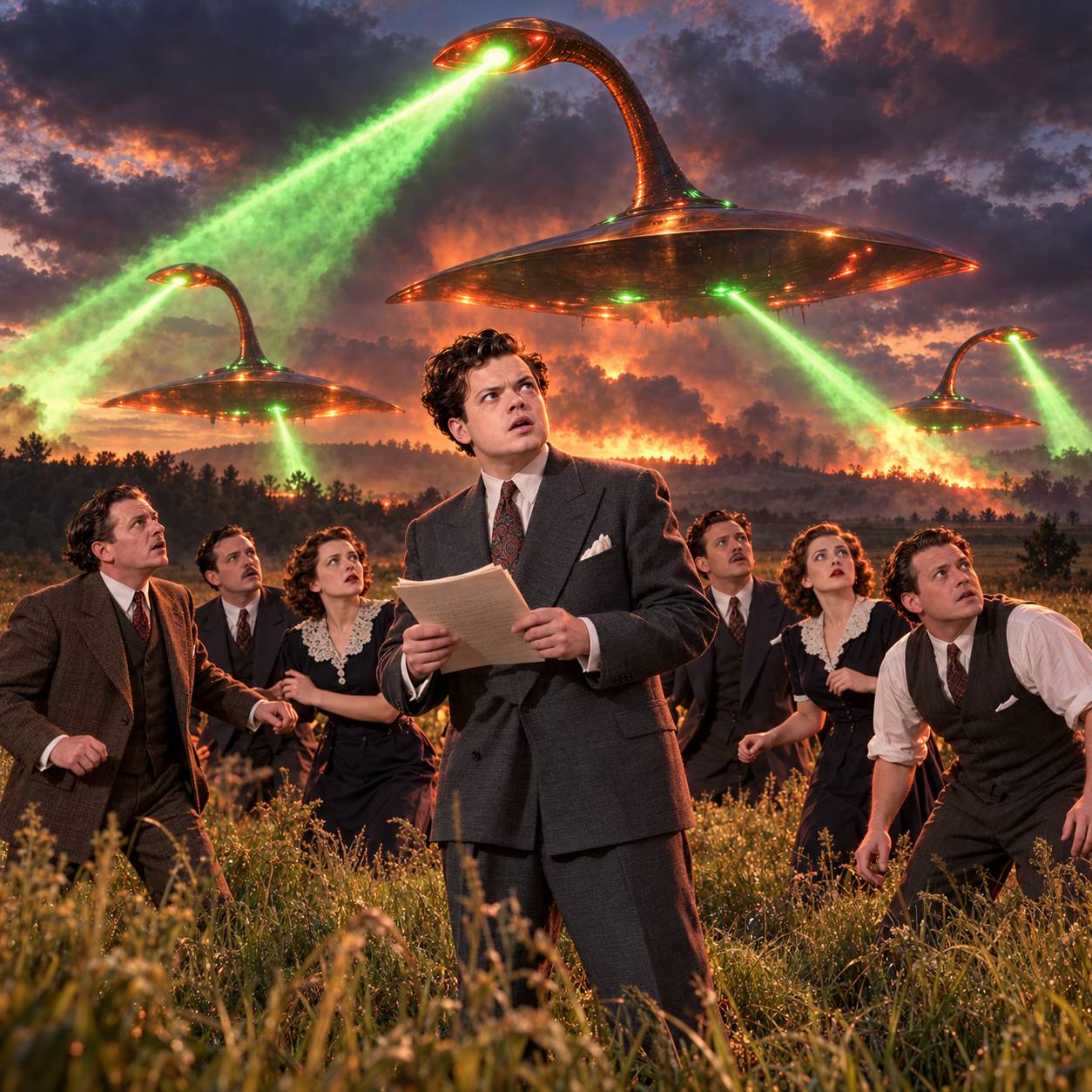
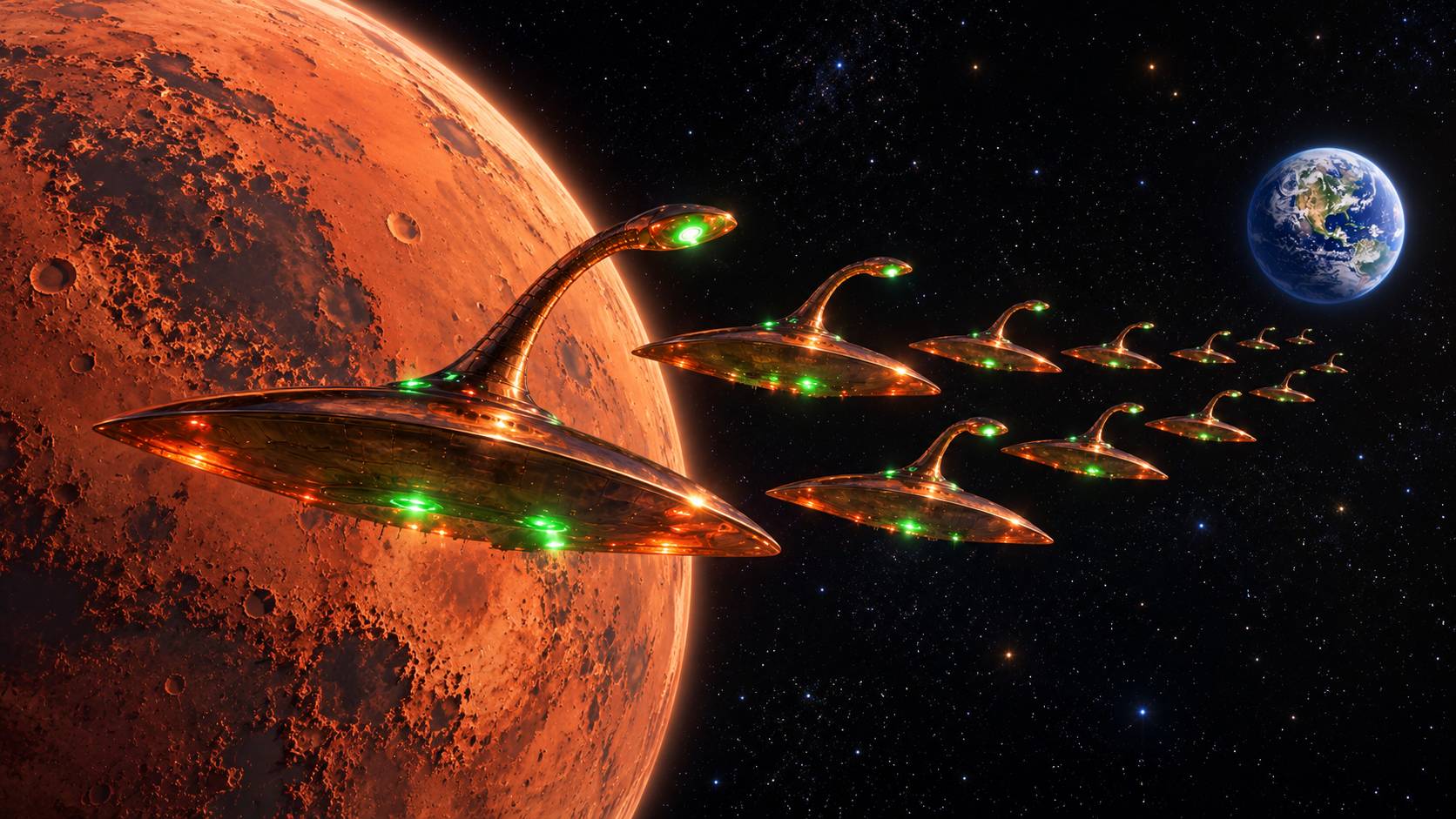
Actors portraying reporters described investigators approaching the object. The cylinder then opened, and terrifying creatures emerged. The fictional reports became increasingly dramatic. Listeners heard descriptions of enormous machines—later identified as Martian tripods—moving through the countryside and attacking people with deadly weapons. The fictional reporters described panic, military resistance, fires, evacuations, and widespread destruction. The realistic style was one of the broadcast’s most important features. Rather than having characters simply tell a story, the program used simulated reporters, eyewitnesses, government announcements, military reports, and interruptions of regular programming.
The broadcast appeared at a time when radio was one of America’s most important sources of news. Americans were accustomed to hearing real news through the medium, and the United States was also living through a period of considerable international tension. The program’s realistic presentation therefore had an unusual psychological effect on some listeners. A listener who turned on the radio after the program had already begun might have heard what sounded like an emergency report rather than the introduction identifying the program as fiction. However, the extent of the panic has sometimes been exaggerated.
Newspaper reports published afterward described widespread fear and confusion, including people telephoning police stations, newspapers, and radio stations. Some listeners reportedly left their homes, gathered in churches, or attempted to contact relatives. But later research has shown that the entire country did not believe that Martians were invading Earth. Most listeners understood that the program was fictional, and the audience for the broadcast was also smaller than some sensational accounts suggested.
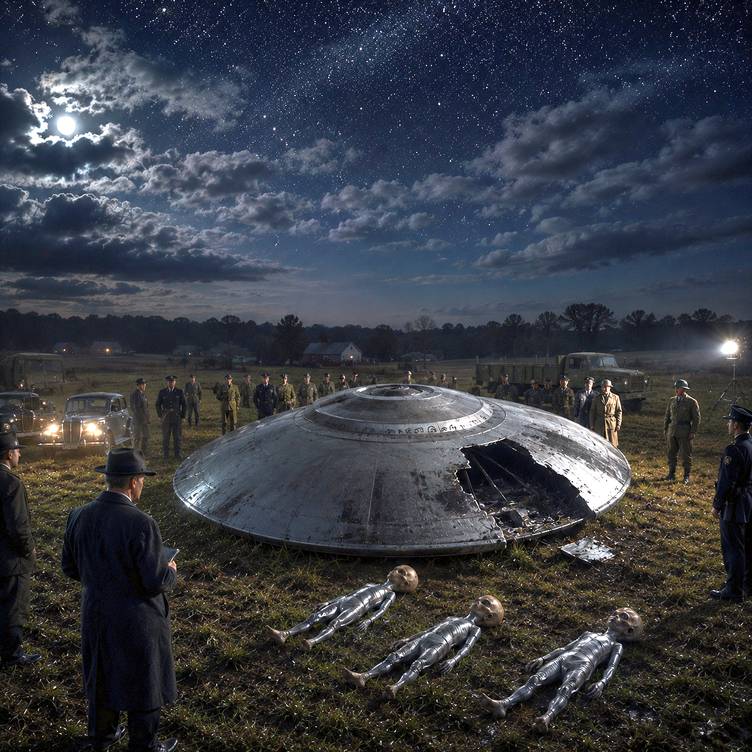
One of the most memorable portions of the broadcast concerned Grover’s Mill, New Jersey. In the fictional story, a Martian spacecraft lands in a rural area. A crowd gathers around it, believing it may contain something unusual. A reporter describes the cylinder opening and the appearance of a strange creature. The reporter then becomes increasingly frightened as the Martians begin attacking. The scene was deliberately written and performed in the style of a live news report. This made the fictional events sound much more realistic than a conventional science-fiction radio play.
The original story was written by H. G. Wells and published in 1898. In Wells’s novel, Martians travel to Earth because their own planet is becoming increasingly difficult to inhabit. They arrive in cylinders and use technologically advanced machines to attack humanity. The novel was partly a science-fiction adventure and partly a commentary on human civilization, warfare, and imperialism. Wells described humanity’s vulnerability when confronted by a technologically superior civilization. Orson Welles’s radio version moved the story from England to the United States and changed the presentation into a series of apparently live news reports. Orson Welles and H.G. Wells were not related to each other. Both men actually met and discussed about the broadcast in 1940.
Orson Welles was only 23 years old when he directed and participated in the broadcast. He was already becoming known for innovative theatrical productions through the Mercury Theatre. His approach to radio emphasized dramatic realism and unusual sound techniques. The War of the Worlds broadcast demonstrated how convincingly radio could imitate reality. Welles and his performers used sound effects, pauses, background noises, simulated telephone conversations, and changing voices to create the impression that listeners were hearing events unfold in real time.
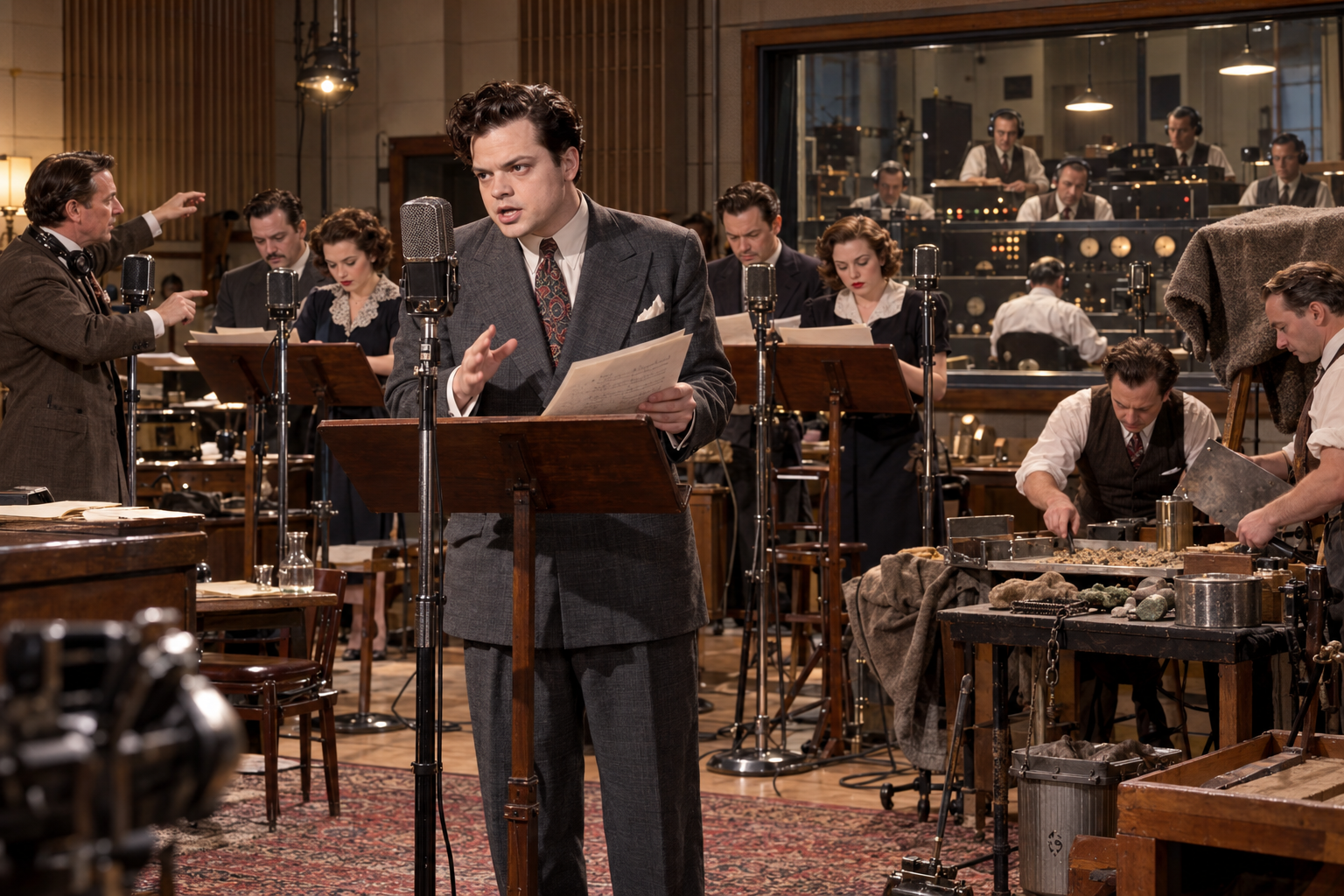
Newspapers quickly reported stories of frightened listeners. Some accounts described people running into the streets, praying, hiding, or preparing to flee. Newspapers also emphasized the apparent power of radio to mislead the public. There was an additional factor behind the publicity: newspapers at the time were competing with radio for advertising and public attention. Some historians have argued that newspapers had an incentive to emphasize the incident as evidence that radio was irresponsible. Consequently, later popular accounts sometimes portrayed the event as a nationwide mass panic when the actual reaction was more limited and uneven.
There is no reliable evidence that millions of Americans simultaneously believed that Martians had invaded. Research conducted afterward indicated that the audience was probably much smaller than the enormous numbers sometimes cited in popular retellings. Many Americans were listening to other programs, and many listeners recognized that they were hearing a fictional drama. Nevertheless, some people genuinely were frightened or confused, and contemporary reports document real reactions. The important historical point is therefore not that the entire United States was fooled, but that a fictional radio program succeeded in convincing at least some listeners that an extraordinary emergency might actually be occurring.
The program did contain indications that it was fictional. At the beginning, listeners were told that the program was a dramatization based on H. G. Wells’s novel. The program also contained additional indications of its fictional nature. The problem was that listeners who tuned in after the opening could miss those warnings. The broadcast was interrupted periodically by fictional announcements, but the realistic style made the distinction between drama and news less obvious to an unsuspecting listener.
On October 31, the day for Halloween, newspapers across the country reported the reaction to the broadcast. CBS and the Mercury Theatre explained that the program had been intended as entertainment rather than an attempt to deceive the public. Welles subsequently participated in a press conference in which he expressed surprise at the reaction. The incident nevertheless became a defining moment in the history of broadcasting.
The broadcast is often described as a “radio hoax,” but that description can be misleading. It was not presented by Welles as a genuine news report. It was a fictional radio drama deliberately constructed to sound like a series of breaking reports. The deception was therefore part of the dramatic technique rather than an attempt to convince the public outside the program that an alien invasion was actually occurring. The confusion arose because some listeners encountered the program without hearing its introductory identification or did not immediately recognize the fictional format.
The War of the Worlds broadcast became important because it demonstrated the extraordinary persuasive power of mass media. Radio could create an experience in which listeners did not merely hear a story—they could feel as though they were listening to events happening at that very moment. The broadcast also became an early example of how quickly information, rumors, and fear could spread through a mass communication system. Its legacy continued long after 1938. The incident has been discussed in studies of journalism, psychology, broadcasting, mass communication, propaganda, and public reactions to emergencies.
The most famous version of the story says that Orson Welles caused mass hysteria across America by convincing millions of people that Martians had landed. The historical reality is more complicated. There were genuine frightened listeners and real confusion, but later accounts greatly magnified the scale of the panic. The broadcast did not convince the entire country that an extraterrestrial invasion was occurring. Its real importance lies elsewhere: a fictional program demonstrated how convincingly radio could imitate an emergency and how easily a listener who missed important context could mistake entertainment for reality. The October 30, 1938, broadcast therefore remains one of the most famous experiments—intentional or otherwise—in the power of realistic mass communication. It helped establish Orson Welles as a major figure in American entertainment and became a permanent part of the history of radio, science fiction, and popular culture.
One of the especially clever—and potentially confusing—parts of Orson Welles’s 1938 War of the Worlds broadcast involved a fictional government official who sounded remarkably like President Franklin D. Roosevelt. The original script apparently had the speaker identified as President Roosevelt, but CBS objected to using the real president’s name in a fictional emergency broadcast. The role was therefore changed to the fictional Secretary of the Interior. Welles then had actor Kenneth Delmar deliberately imitate Roosevelt’s distinctive voice and speaking style. Delmar was particularly good at the impression, and Welles reportedly told him, in effect, that the Secretary of the Interior should sound like Roosevelt. The character then delivered a grave-sounding government announcement reassuring Americans that the government was dealing with the Martian invasion. To listeners who were already frightened—or who had tuned in without hearing the opening identification—the voice could sound very much like an actual Roosevelt fireside address.
PBS describes the effect particularly well: although the character was announced as the Secretary of the Interior, listeners recognized the familiar presidential voice and thought, “We heard the President.”So, Welles did not actually have President Roosevelt participate in the broadcast. It was actor Kenneth Delmar doing a Roosevelt imitation while portraying a fictional cabinet official. That small trick added another layer of realism to an already unusually convincing fake news broadcast.
Conclusion
Orson Welles’s War of the Worlds was ultimately a fictional radio drama presented in the style of breaking news, not an actual attempt to announce an extraterrestrial invasion. Its unusual realism caused genuine fear among some listeners, while later newspaper coverage and popular re-tellings turned the event into a much larger legend of nationwide panic. The broadcast’s enduring lesson is that the way information is presented can dramatically affect how people interpret it. In 1938, radio was capable of making a fictional Martian invasion sound remarkably real—and the resulting confusion made the broadcast one of the most famous moments in the history of American radio.