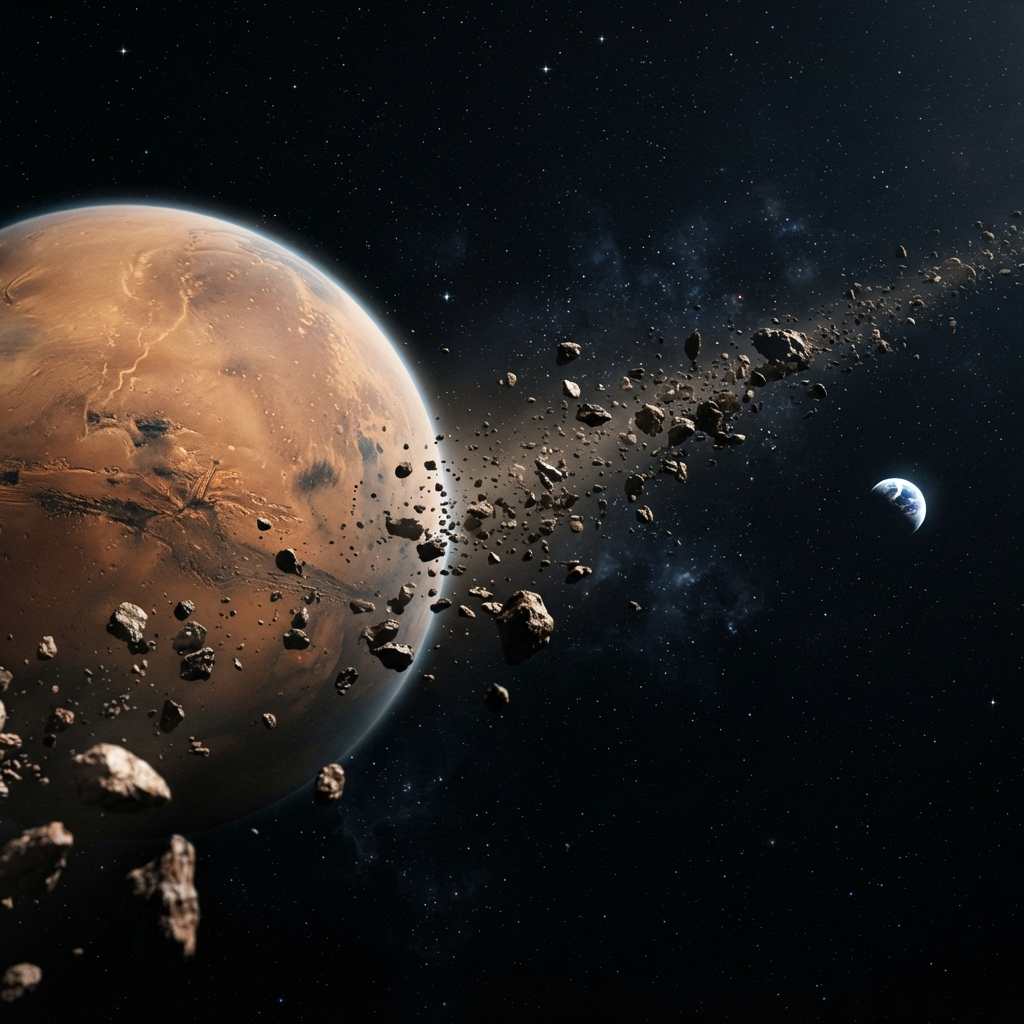
For most of human history, the rocks beneath our feet were assumed to have originated on Earth. The discovery that pieces of the Moon and even Mars can naturally arrive here has transformed our understanding of the Solar System. Scientists have identified meteorites that were blasted from the lunar and Martian surfaces by enormous impacts, traveled through space, and eventually fell to Earth. These rocks are among the most scientifically valuable objects ever found because they provide physical samples of worlds that humans have never, or in the case of the Moon, only partially, explored.
How Can a Rock Get from Mars or the Moon to Earth?
At first, the idea seems almost impossible. Mars is tens of millions of miles away, while the Moon is about 239,000 miles from Earth. The answer is enormous impacts. Asteroids and other objects have struck the surfaces of the Moon and Mars throughout their histories, and a sufficiently powerful impact can excavate material and accelerate fragments fast enough to escape the world’s gravitational pull. On the Moon this is comparatively easy because lunar gravity is only about one-sixth that of Earth. Mars has stronger gravity, but exceptionally powerful impacts have thrown Martian rocks into space too. Once a fragment escapes, it can orbit the Sun for millions of years on a path that eventually intersects Earth’s orbit. If it enters the atmosphere and survives the passage to the ground, it becomes a meteorite.
Lunar Meteorites
Before scientists knew lunar meteorites existed, virtually all direct samples of the Moon came from the Apollo missions and later robotic missions, deliberately collected from known locations. Lunar meteorites are different because nature delivered them. The first was recognized in the early 1980s among rocks recovered in Antarctica, where dark stones stand out against the ice. Others have been found in deserts, where weathering is slow and meteorites accumulate over long periods. Scientists identify them through their mineral composition, chemistry, textures, and isotopic signatures, then compare them with Apollo samples.
Their great value is geographic. All six Apollo landings were on the near side of the Moon, and China’s Chang’e 6 mission returned the first far-side samples only in 2024. A lunar meteorite, by contrast, can come from almost anywhere on the surface, because impact ejecta can travel a long way across the Moon before being launched into space. The trade-off is that a meteorite has no precise address, so Apollo samples remain the best tool for studying known locations while meteorites fill in the places astronauts never visited. Between them, these rocks have taught us about the Moon’s volcanic history, its ancient crust, impact cratering, the ages of lunar rocks, and the history of water and other volatile substances. Some contain material formed billions of years ago.
Martian Meteorites
Even more remarkable are the meteorites that came from Mars. Scientists have identified hundreds of them, and their origin was not obvious at first. The key evidence came from microscopic pockets of gas trapped inside some of these rocks. In the early 1980s, researchers found that the chemical and isotopic makeup of gas in a few meteorites closely matched what NASA’s Viking landers had measured in the Martian atmosphere in 1976. In effect, they had found rocks carrying a chemical record of the Martian atmosphere, and it remains one of the strongest pieces of evidence that these meteorites really came from Mars.
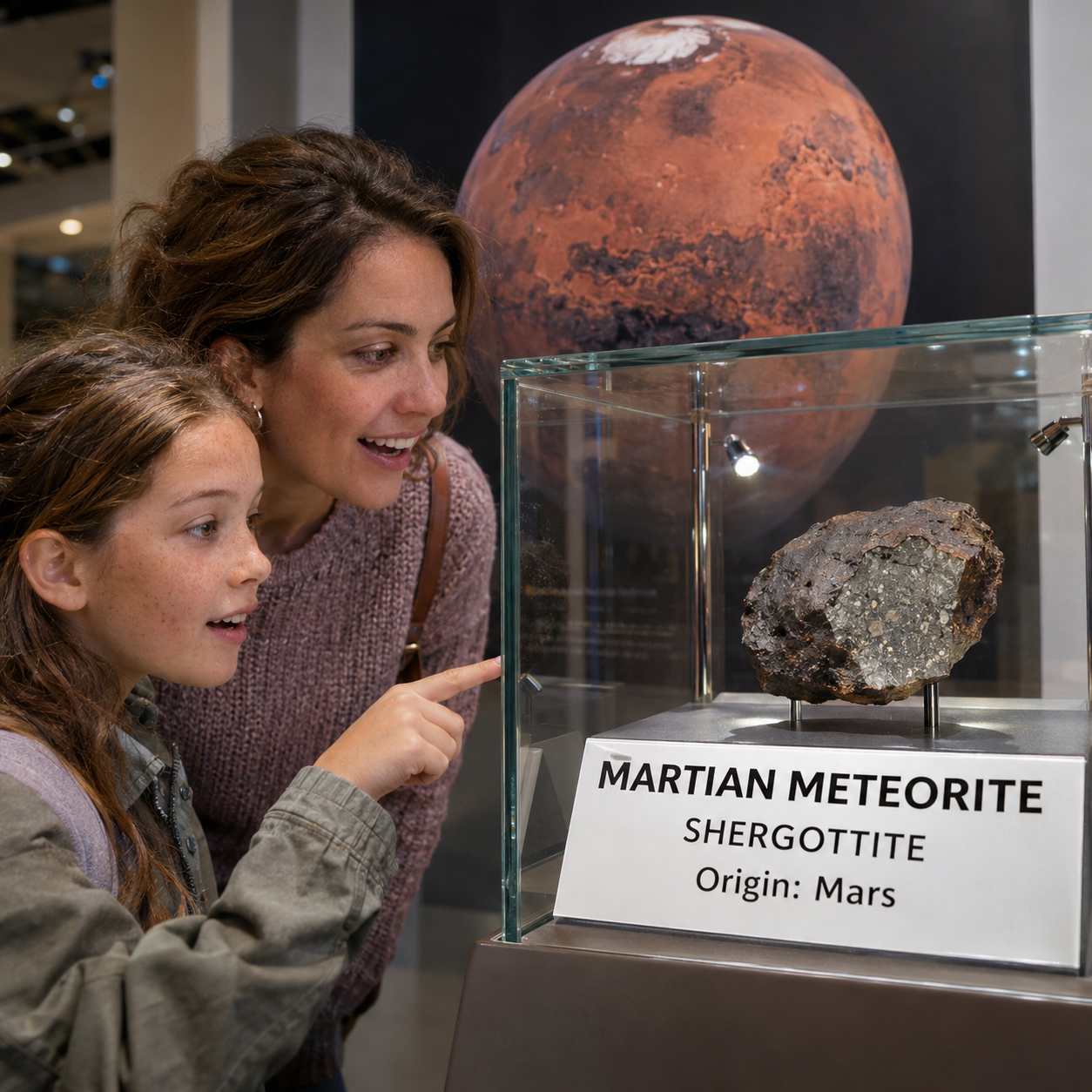
Many Martian meteorites belong to three historically important groups called shergottites, nakhlites, and chassignites, collectively known as SNC meteorites. They formed on a differentiated planetary body, one with geological processes capable of producing distinct crustal and volcanic rocks. Radiometric dating shows that many are relatively young in geological terms, with some originating from volcanic activity only hundreds of millions of years ago. That matters because it shows Mars was not simply an inactive world after its formation.
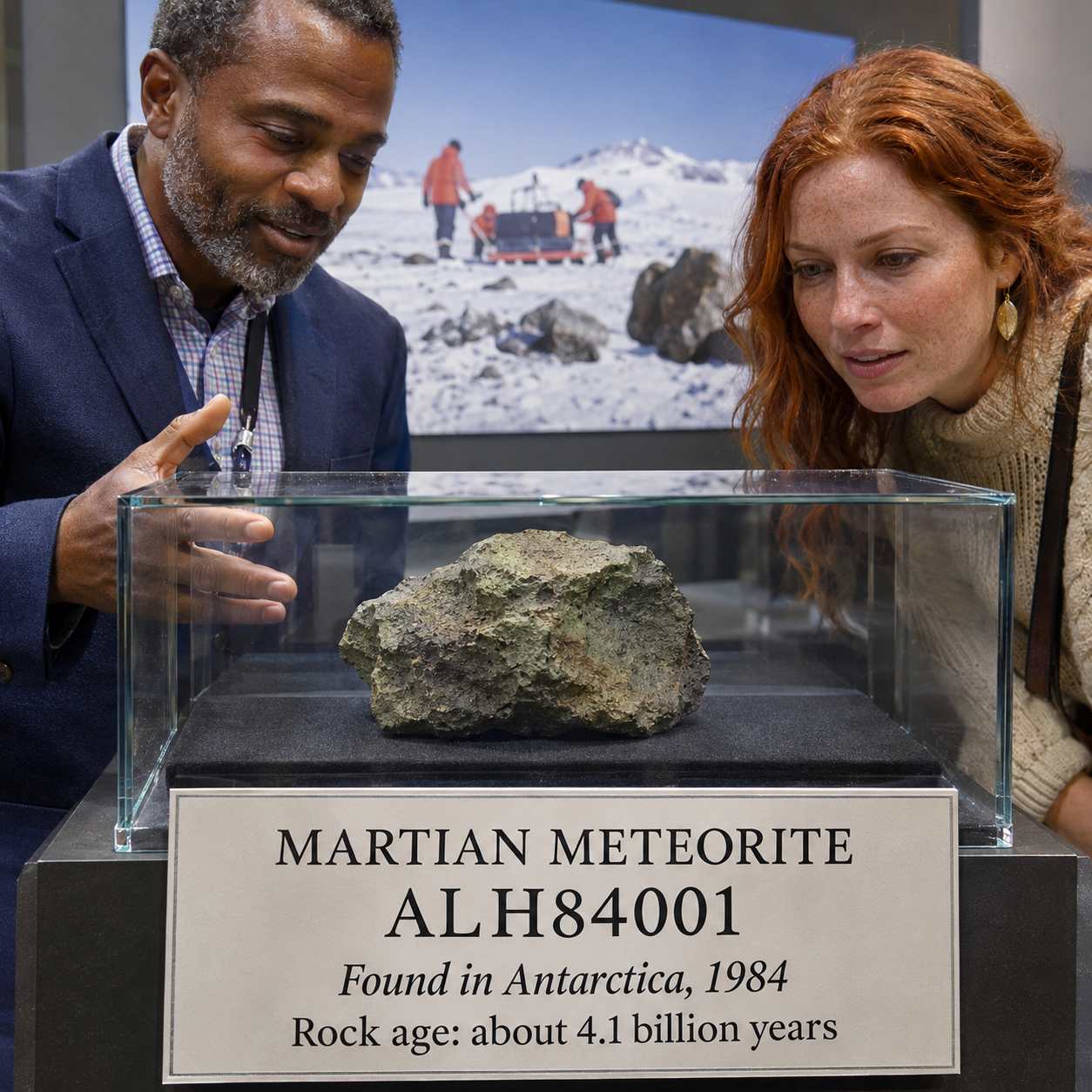
One of the most famous Martian meteorites is ALH84001, discovered in Antarctica in 1984. It is not one of the SNC types. It is a far older rock, about 4.1 billion years old. The meteorite became internationally famous in 1996, when a NASA-led team announced microscopic structures, organic compounds, and mineral features that they interpreted as possible signs of ancient biological activity. If correct, it would have been evidence of ancient Martian life. The interpretation has remained controversial, however. Many scientists have argued that the same features can be produced by non-biological geological and chemical processes, so ALH84001 is not accepted as definitive evidence of life. It remains extremely important as an unusually old sample of Martian material.
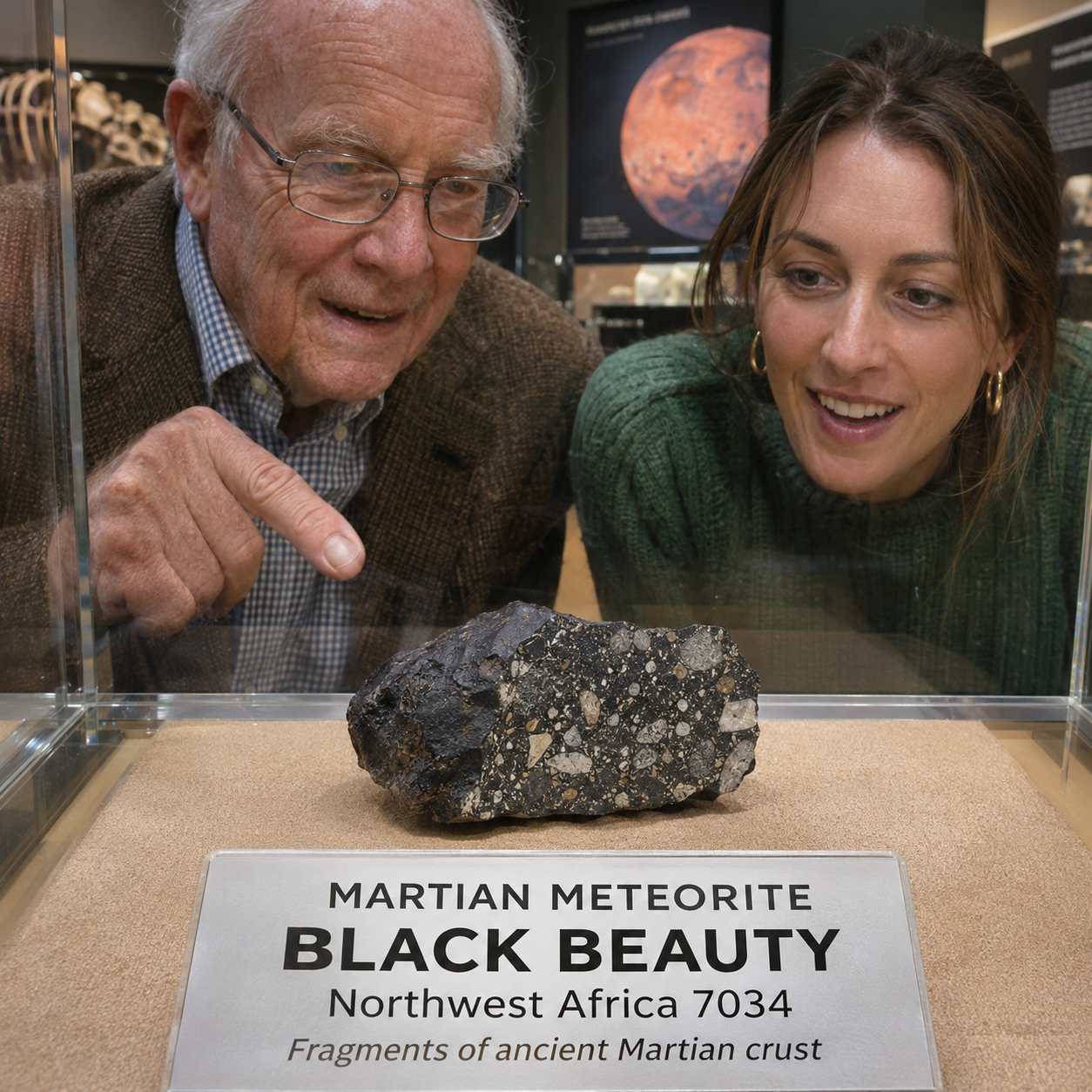
Another remarkable Martian meteorite is Northwest Africa 7034, commonly called Black Beauty. It turned up in 2011 and was bought in Morocco, so its exact find location is unknown. It is a breccia, a rock made from fragments of other rocks fused together, and it contains pieces of ancient Martian crust. Some of the material within it is approximately 4.4 billion years old, among the oldest Martian material available for laboratory study, and it gives scientists a glimpse of Mars when the planet was still young.
Why Mars Rocks Are So Valuable
Sending a spacecraft to Mars, drilling, collecting samples, launching them from the surface, and returning them to Earth is extraordinarily difficult. Meteorites offer a natural alternative. A powerful impact does the launching, some fragments eventually reach Earth, and scientists can examine them with laboratory instruments far more sophisticated than anything that can be flown millions of miles away.
Are Martian Meteorites Dangerous?
There is no evidence that ordinary Martian meteorites pose a special biological danger to people. They have traveled through space for very long periods and have been extensively studied, and no Martian meteorite has been conclusively shown to contain extraterrestrial life. The possibility of ancient Martian microorganisms has nevertheless been an important scientific question, which is one reason samples deliberately returned from Mars will be handled under carefully controlled conditions.
How Scientists Know Where a Meteorite Came From
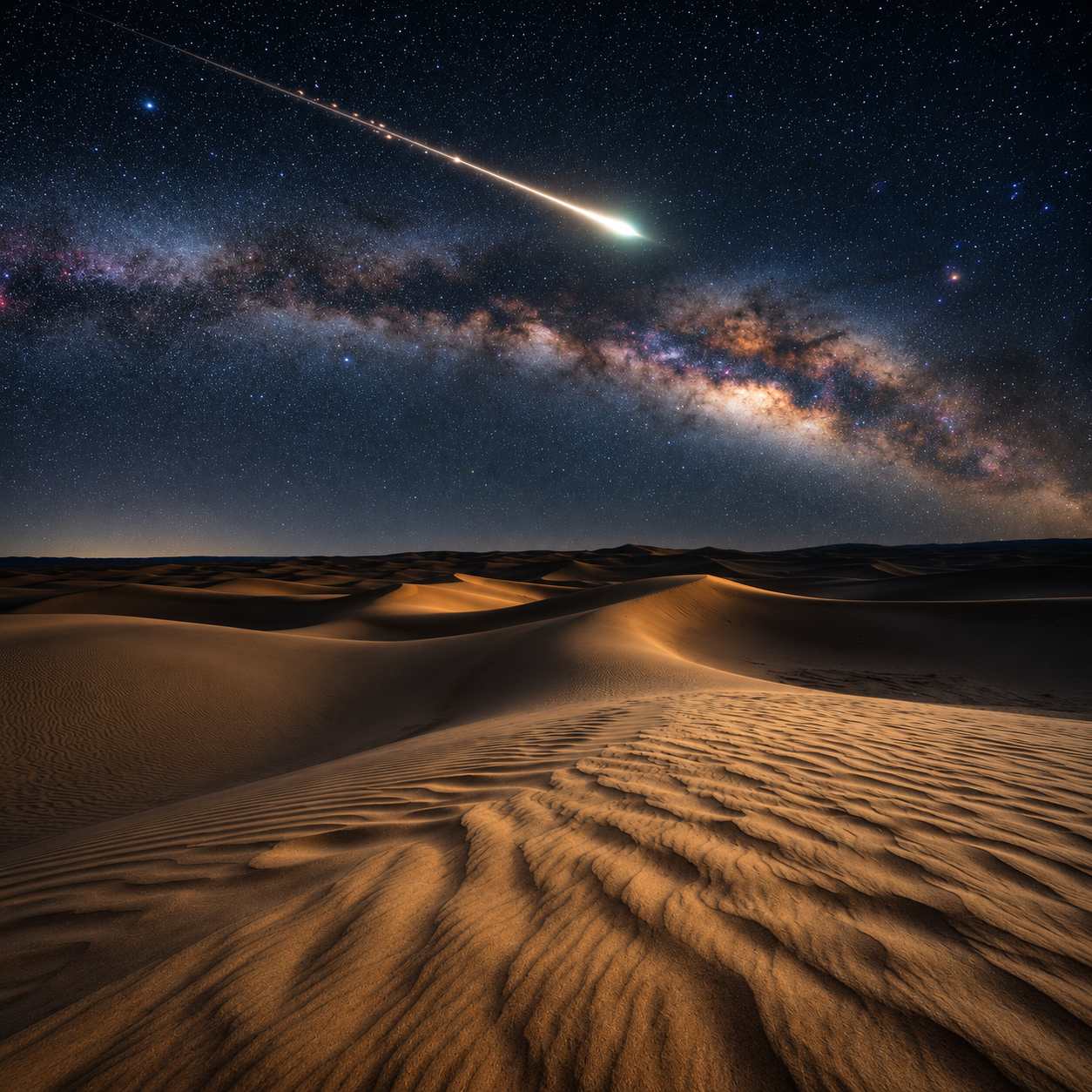
Determining a meteorite’s origin is a scientific detective process, and it never rests on a single unusual feature. Different planetary bodies have distinctive chemistry and mineralogy. Isotopes, the different forms of the same element with different numbers of neutrons, give clues about where and when a rock formed. The textures and minerals reveal the geological environment in which it crystallized, and exposure to cosmic radiation during the rock’s journey helps reconstruct how long it spent in space. Finally, spacecraft have directly measured the surfaces and atmospheres of the Moon and Mars, and those measurements provide reference points against which meteorites can be compared.
Could Other Worlds Send Rocks to Earth, and Could Earth Send Rocks Elsewhere?
Scientists have identified meteorites from the Moon, Mars, and asteroids, and the vast majority of meteorites found on Earth come from asteroids. Material from Earth itself can also be blasted into space by large impacts, and some of it could theoretically reach the Moon or Mars. A possible example is a lunar sample returned by Apollo 14, nicknamed Big Bertha, which some researchers think may contain a fragment of Earth rock, though that interpretation is still debated. Either way, the exchange of material between planetary bodies is not necessarily a one-way process.
Time Capsules and the Search for Life
The Solar System formed about 4.6 billion years ago, and some meteorites preserve material from the earliest stages of planetary formation. A single rock may hold information about the formation of planets, ancient volcanic activity, asteroid impacts, the presence of water, atmospheric chemistry, and planetary evolution. Martian meteorites are especially important in the search for ancient life. Spacecraft have shown that early Mars had rivers, lakes, and groundwater systems, so scientists look carefully for organic compounds, unusual mineral structures, and other possible biosignatures. But finding organic molecules is not the same as finding life, because they can be produced by both biological and non-biological processes, and unusual microscopic structures can have geological explanations. For that reason, scientists require multiple independent lines of evidence before declaring that a meteorite contains evidence of life.
Where the Rocks Are Found
Antarctica has become one of the most productive places on Earth for finding meteorites. They accumulate on the ice over long periods, moving ice concentrates them in certain regions, and the dark rocks are conspicuous against the snow. Deserts are also excellent hunting grounds because dry conditions slow chemical weathering, and some of the most important lunar and Martian meteorites have come from them.
Conclusion
Every Martian or lunar meteorite is a naturally occurring sample-return mission. An asteroid strikes another world, a fragment is launched into space, and it travels for perhaps millions of years before its orbit brings it near Earth. It enters the atmosphere at enormous speed, lands, and is eventually picked up by someone who puts it under a microscope. Even as spacecraft missions grow more sophisticated, these rocks will stay important. A spacecraft can tell us exactly where a sample came from, which a meteorite cannot, and the combination of returned samples, orbital observations, and meteorites gives a far more complete picture of planetary history than any one source could.